All posts by Harry Underwood

Unknown's avatar

About Harry Underwood

Website designer, blogger. Columbus, GA. #LGBT #p2 #wordpress

Berniecrats and Party Discipline

I somehow ended up reading a blog post from a “New Right” “intellectual” blog about the difference between Patronage vs. Constituent Parties, and why the Republican Party is more prone and capable to punish those supporters who do not sufficiently support the party (or specifically the party leader). I will purposefully not link to it, but I found the argument interesting.

In the American political system, the only party structure best suited to sufficiently punish campaign workers and consultants who are blamed for losing an election by casting them into the outer darkness of unemployment is one which swears loyalty to the party leader, not one which embraces its constituent groups and allows for their challenging of party leadership.

The Democrats, in their decades-long post-New Deal incarnation as a coalition of constituencies, do not get to punish or exile their lesser-performing or confrontational apparatchiks, no matter how tiresome they may be. The Republicans, as a vanguard of the old stock Americans and those who seek alliance with such, do.

The desire of Berniecrats to punish Manchin, Sinema and their enablers in the last Dem trifecta reflected a preference for a party structure which doesn’t exist, and is not allowed to exist, in the Democratic coalition.

Not even the DSA, with its own coalition of constituencies which sought to capture the left of the Democratic coalition, could pull off a party machine which punishes those who fail the platform and campaign.

For the left-of-center to discipline or punish its own would require a significant abandonment of diversity, coalition-building and consensus, in favor of patronage, hierarchy and corporate leadership, in which open dissent or failure results in loss of access to party leadership.

tl;dr: Pick your poison. Internal democracy does not make for a strong party machine.

This facility removes more than 600,000 pounds of sludge from #sewage and #wastewater every day.

——————————————————

Insider’s mission is to inform and inspire.

Visit our homepage for the top stories of the day: https://ift.tt/ZV2Pv9B
Insider on Facebook: https://ift.tt/vn7JLXM
Insider on Instagram: https://ift.tt/eMr1Uyi
Insider on Twitter: https://twitter.com/thisisinsider
Insider on Snapchat: https://ift.tt/YMh8n7C
Insider on TikTok: https://ift.tt/6PSsgOJ

via YouTube
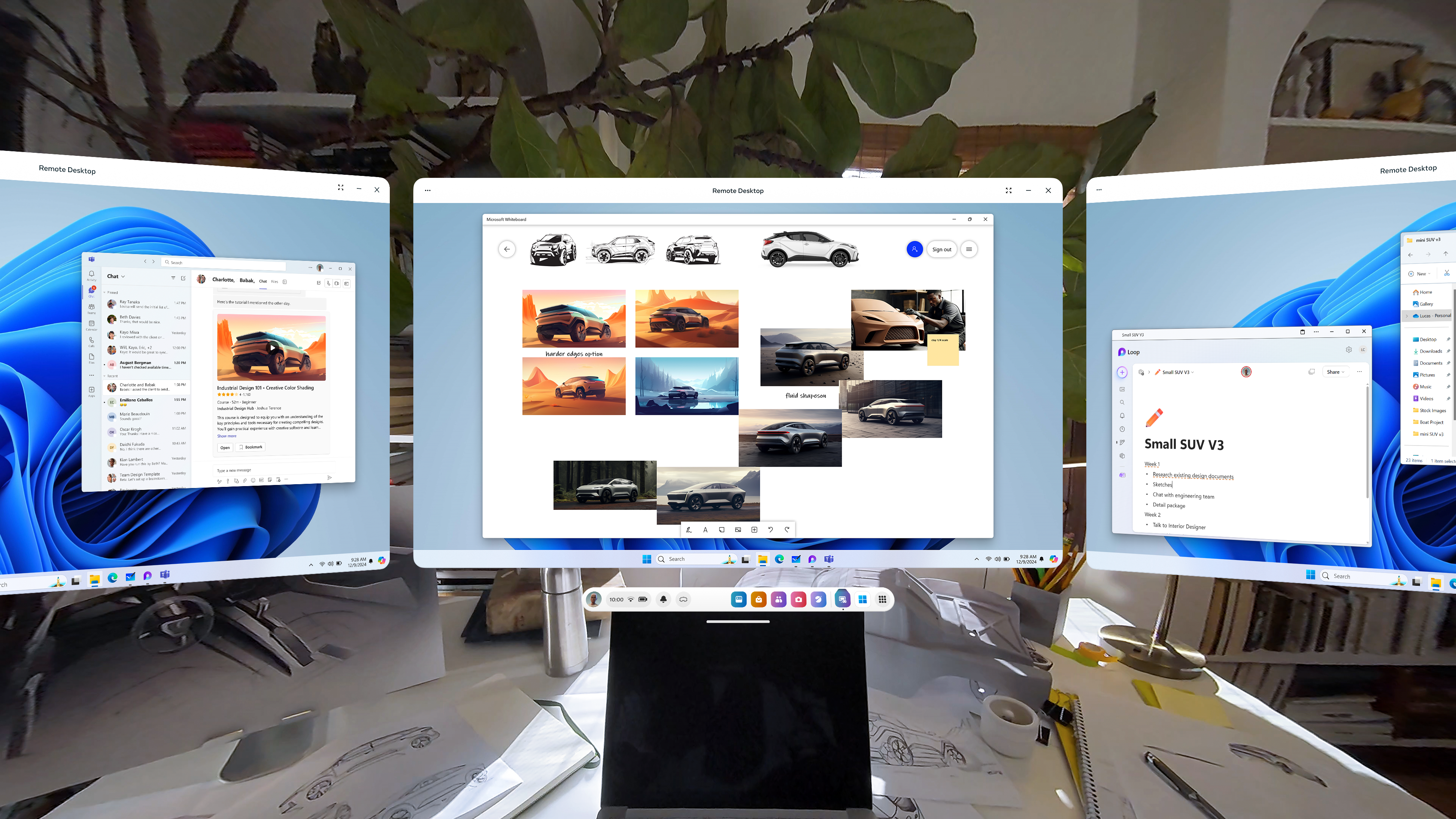
VR + AR Tabs December 2024

Catching up on what has happened in VR/AR since the summer:

  • v68
    • Meta Quest mobile app renamed as Meta Horizon app
    • Light mode added to Horizon mobile app
    • ability to start or join audio calls between the mobile app and Meta Quest headsets
    • Integration of Meta AI with Vision on Quest 3 and Meta AI audio-only on Quest 2 (experimental); replaces older on-device voice assistant (set for August 2024 release)
    • reduced performance latency on Quest 3
    • support for Content Adaptive Brightness Control in Quest 3 (experimental)
    • account management and communication updates in Safety Center
    • updates for the virtual keyboard
    • new Layout app for aligning and measuring real-world objects in physical space
    • new Download and All tabs in Library
    • management of cloud backups
    • ability to pair controller to headset while in-headset
    • audio alert for low battery
    • ability control the audio level balance between microphone and game audio when recording, live streaming, or casting
    • increased screenshot resolution in Quest 3 from 1440×1440 to 2160×2160
  • v69
    • “Hey Meta” wake word for Meta AI
    • v67 New Window Layout moved to default
    • spatial audio from windows
    • ability to completely remove unwanted apps and worlds, including leftover apps already uninstalled
    • quick pairing of Bluetooth peripherals when they are in pairing mode and near the headset
    • ability to keep the universal menu and up to three windows open during immersive experiences
    • Content-adaptive backlight control
    • automatic placing of user into a stationary boundary when user visits Horizon Home
    • Head tracked cursor interaction improvements for staying hidden when not wanted
    • ability to view the last 7 days of sensitive permission access by installed apps
    • Unified control of privacy across Meta Quest and Horizon Worlds
    • Control visibility and status from the social tab
    • support for tracked styluses
    • Oceanarium environment for Horizon Home
    • v69 required to support Horizon Worlds, Horizon Workrooms, co-presence and other Meta Horizon social experiences
  • v71 (v70 skipped by Meta)
    • redesign of Dark and Light Themes
    • redesign of control bar location
    • redesign of Settings menu
    • Travel Mode extended to trains
    • Link feature enabled by default
    • Remote Desktop in Quick Settings
    • ability to use desktop remotely through the Meta Quest Link app on PC
    • in-headset pairing of third-party styluses
    • in-headset controller pairing
    • view app permissions while in use
    • higher-quality casting from headset to PC
    • new Calendar app, with Google and Outlook Calendars integration, support for subscribed Meta Horizon Worlds events or Workrooms meetings
    • ability to share and play back spatial video within Horizon Chat in-headset and mobile
    • Volume Mixer, with separate Call Volume and App & Media Volume
    • support for content utilizing 3 degrees of freedom (DoF) head tracking through Dolby Atmos and Dolby Digital Surround
    • Audio to Expression: machine perception and AI capability deriving facial motion and lip sync signals from microphone input, providing upper face movements including upper cheeks, eyelids, and eyebrows for avatars
    • improvements for Passthrough and Space Setup
  • v72 [link]
    • live captions
    • system-wide virtual selfie cam
    • app folder for PC VR apps
    • launch 2D apps in the room: dragging and dropping the icon into your space
    • refreshed boot screen branding (officially “Meta Horizon OS”)
    • passthrough keyboard cutout with soft gradient when touching physical keyboard
    • dedicated Photo Gallery app
    • smart storage
    • one more slot for pinned apps

Meta Orion

  • Demo of Meta Orion AR glasses at Meta Connect and to tech journalists/vloggers
  • I’m especially interested in the neural wristbands. Definitely the biggest step forward by far.
  • Unfortunate that this will remain testware for the foreseeable future

Xreal One and One Pro

  • Launched early December
  • Basically the XReal Air 2 and Air 2 Pro with an embedded co-processor to enable a 3dof spatial UI
  • Still needs to be connected to a phone
  • Still a pair of movie glasses to be used in stationary settings
  • Still no news on the XReal Air 2 Ultra since it was released to developers in the spring

Other items

  • Release of Meta Quest 3S, replacing 128GB Quest 3
  • Discontinuation of Quest 2 and Quest Pro
  • Merger of separate apps for official Quest casting, PC VR, and remote desktop into Meta Quest Link

Takeaway

These last few updates, including what is currently seen in the v72 PTC, have really capped off a significant improvement in what the Quest 3 can do since its initial release in September 2023. Mixed reality on the device has become less of a gimmick. I’m surprised that I can’t find a anniversary review of the Quest 3 comparing the updates between September 2023 and December 2024. Biggest updates:

  • Passthrough
    • V60: passthrough while loading app (if enabled)
    • V64: resolution and image quality
    • V65: passthrough environment for some system menus and prompts, including lockscreen and power-off menu
    • V66: improvements to passthrough, including reductions in warping
    • V67: ability to take any window fullscreen, thus replacing other windows and replacing the dock with simplified control bar with buttons for toggling curving, passthrough background, and brightness of background
    • V71: improvements for Passthrough and Space Setup
    • V72: generalized passthrough cutout access for physical keyboards
  • Boundary and space setup
    • V59: suggested boundary and assisted space setup (for Quest 3)
    • V60: cloud computing capabilities to store boundaries, requiring opt-in to share point cloud data
    • V62: support for up to 15 total saved spaces in Space Setup
    • V64: automatic detection and labeling of objects within mesh during Space Setup (undocumented, experimental, optional)
    • V65: Local multiplayer and boundary recall with Meta Virtual Positioning System
    • V66: Space Setup automatic identification and marking of furniture (windows, doors, tables, couches, storage, screens, and beds, with additional furniture types supported over time) (documented, optional)
    • V69: automatic placing of user into a stationary boundary when user visits Horizon Home
    • V71: improvements for Passthrough and Space Setup
    • V72: automatic stationary boundary when booting into VR home
  • Avatars and hands
    • V59: legs for avatars in Horizon Home
    • V64: simultaneous tracking of hands and Touch Pro/Touch Plus controllers in the same space (undocumented, experimental, optional)
    • V65: fewer interruptions from hand tracking when using a physical keyboard or mouse with headset
    • V68: ability to pair controller to headset while in-headset
    • V71:
      • Audio to Expression: machine perception and AI capability deriving facial motion and lip sync signals from microphone input, providing upper face movements including upper cheeks, eyelids, and eyebrows for avatars. Replaces OVRLipsync SDK.
      • in-headset pairing of third-party styluses
      • in-headset controller pairing
    • V72: hand-tracking updates: stabilization and visual fixes for cursor; responsiveness and stability of drag-and-drop interactions

The World’s First Omnidirectional Screen

Don‘t miss Bambu Lab’s best deals on October 21st till December 3rd . Find out more via Bambu Lab’s Early Black Friday Page to get the biggest deal of the year. https://ift.tt/yQO0vNG

Mike Andos Youtube channel and website:
https://www.youtube.com/@UCjmGGXTcVEBp3WQmUIPmF-w
https://ift.tt/COiKhwU

Link to the Andotrope STL file
https://ift.tt/8fnmWZg

Haunted Lincoln Illusion
https://ift.tt/7Op8EHl

#bambulab #bambulabA1 #makerworld #bambulabp1s#bambulabs

via YouTube

On racedep and immigration

The wedge argument that the ADOS/FBA/AfAm nativist movements hinges upon is that African Americans who were enslaved on American plantations are uniquely disadvantaged compared to even other Americans (Afrodescendant or otherwise) who immigrated voluntarily.

Unfortunately, the ADOS/FBA/AfAm nativist movements parlay this wedge into helplessness and futility toward the WASP American power structure, as well as a wide-ranging angst and contempt against almost everyone else in the world.

For liberals and progressives, what is the utility of this wedge which separates descendants of the antebellum enslaved in the United States from descendants of those enslaved elsewhere?

How do those who do not share in the mythology of the voluntary immigration experience – particularly of the depiction of immigration as a formative, affirmative rite of passage and ethnogenesis – deal with this wedge in a healthier way than ADOS’ nativism? Or, alternatively, being a Black expat?

I fear that progressives and liberals do not yet have an answer to this wedge, no way to resolve the contradiction of a big tent bringing together descendants of slaves, immigrants, aborigines and settlers.

Enough of the big tent broke ranks to vote against that solidarity and sacrifice some immigrants’ dreams, livelihoods and potentially lives in the name of security and certainty.

We need a better arrangement to bridge this wedge, a liberalism which can respect and celebrate immigrant experiences while respecting that it’s not a formative experience for some ethnicities and may be less pleasant to experience in reverse from the most powerful country on earth.

We need a liberalism which can promote immigration as a benefit for those who did not experience immigration, even for those who are descendants of forced migration and enslavement like myself.

Racedep (race depolarization) happened this election, to the benefit of anti-immigrant, anti-urban conservatives like Donald Trump. Promoting an alternative integrative social contract will be a major task of the post-Obama Democratic coalition.

How Empty Offices Become Apartments In The U.S.

Some U.S. mayors are loosening up rules that determine how developers convert office buildings into apartment complexes. The conversion trend sped up in the 2020s, as the pandemic remote work boom reshaped cities. Declines in office activity are straining tax revenues for city services like education and transit, leading some local leaders to prioritize increased conversion of dated buildings. These rule changes may create some additional housing supply in regions like the U.S. east coast.

Chapters:
00:00 — Introduction
01:45 — Conversions
03:34 — Prices
05:01 — Vacancies
07:00 — Policies

Producer, Editor, and Aerial Photographer: Carlos Waters
Additional Camera by: Andrea Miller
Animation: Christina Locopo, Andrea Schmitz
Supervising Producer: Lindsey Jacobson
Additional Sources: Census Bureau, Jones Lang LaSalle, Kastle Systems
Additional Footage: Athenaeum of Philadelphia, Columbus Metropolitan Club, Getty Images, NBC4 Washington, Office of New York City Mayor Eric Adams

» Subscribe to CNBC: https://ift.tt/HEAhdpo
» Subscribe to CNBC TV: https://ift.tt/wL0xOdB

About CNBC: From ‘Wall Street’ to ‘Main Street’ to award winning original documentaries and Reality TV series, CNBC has you covered. Experience special sneak peeks of your favorite shows, exclusive video and more.

Connect with CNBC News Online
Get the latest news: https://www.cnbc.com/
Follow CNBC on LinkedIn: https://ift.tt/hyagekP
Follow CNBC News on Facebook: https://cnb.cx/LikeCNBC
Follow CNBC News on Twitter: https://ift.tt/6BsIQKV
Follow CNBC News on Instagram: https://ift.tt/roOmeRK

#CNBC

How Empty Offices Become Apartments In The U.S.

via YouTube

Japanese Partnership Registries are Being Standardized

As of November 1, 20 prefectures and 150 municipalities in Japan have joined a sort of “interstate compact” for partnership registries, the “Partnership System Municipal Cooperation Network”. While multiple such agreements were established between cities and some between prefectures, this is the first to be advertised as one which any jurisdiction in Japan can join.

Outside of recognition by the national government and ongoing litigation in national courts on same-sex marriage, this network is the most high-profile effort at a national partnership registry for same-sex and unmarried couples in Japan to date. It is also the most serious attempt at such since the first partnership registry was established in Shibuya ward in Tokyo in 2015.

Should be interesting to watch progress on this network in 2025, despite what’s likely to happen in the United States.

I Tried Real Augmented Reality Glasses!

Trying the only real working Augmented Reality glasses in the world! Are they the future?

Waveform interview with Boz from Meta: https://youtu.be/uhitDZ_6SEA?si=bAkjpOGArg4nALIC&t=4655

MKBHD Merch: http://shop.MKBHD.com

Check out the wallpaper at https://ift.tt/W2BDAyV

Tech I’m using right now: https://ift.tt/5P9Nmih
Playlist of MKBHD Intro music: https://goo.gl/B3AWV5

~

https://ift.tt/9ndgNot
https://ift.tt/bnksSdA

via YouTube

Why people are concerned about single staircase apartments

Why are many concerned about single staircase apartments, and what can we do to make them safer?

Thanks to Urbanarium for partnering with me on this video! Check out all the entries from the competition at https://ift.tt/hSYB1Gl

About Here
Twitter: https://twitter.com/aboutherevideos
IG: https://ift.tt/EORWs5j
Facebook: https://ift.tt/fMsWI7k

Urbanarium
IG: https://ift.tt/VZDke0t
LinkedIn: https://ift.tt/MI07WqY
Facebook: https://ift.tt/fKZd04Y
Website: https://urbanarium.org/
YouTube: https://youtube.com/@urbanariumvancouver4133?si=nnPi7oftmZxmdQOL

via YouTube

On Harris/Walz and Housing

Early feelings after Harris picked Walz

This feels awkward for me to see this play out today. I’ve been following Minnesota politics since at least 2019, when I first started reading about the Minneapolis 2040 plan, which made Minneapolis the poster child of the YIMBY movement.

The news of how the Minneapolis 2040 plan allowed for the suppression of rent increases across the city accompanied the increasing success of movements in Oregon and California to increase housing density.

My interest in Minnesota has grown from that to the George Floyd protests and riots, to the DFL winning the slim trifecta in 2022, to the numerous legislative victories secured over the last two sessions, to the screaming matches accompanying the end of this last session, to Walz now being selected for this campaign as running mate.

But the DFL trifecta, if it holds in November’s state house elections, will have to debate spreading housing abundance at the state level next legislative session. Because, if anything, the decades-long impact of the previous restrictive housing regime – the single-family zoning, parking mandates and legacies of redlining, all enacted at the municipal and county level across Minnesota – led in part to the 2020 riots. But the city governments outside of Minneapolis will not give up that power over zoning easily.

For Harris-Walz, the campaign’s rhetoric in favor of progressive policy on housing will easily run up against strong economic and political forces, but will also lack political gravitas if the campaign does not embrace housing abundance and density-friendly zoning reform federally.

After the Raleigh Speech

The YIMBYs are celebrating VP Harris as the YIMBY candidate after her first policy speech in Raleigh.

Regarding the speech, I wonder how much of her statements on housing reform are a continuation or strengthening of the Biden-Harris “Housing Supply Action Plan” from 2022.

Housing Supply Action Plan

As of August 13, 2024:

  • the Federal Housing Finance Agency had approved policies and pilots to reduce closing costs for homeowners, including a pilot to waive the requirement for lender’s title insurance on certain refinances
  • the Consumer Financial Protection Bureau would pursue rulemaking and guidance to address anticompetitive closing costs imposed by lenders on homebuyers and homeowners.[2]
  • the Department of Housing and Urban Development (HUD):
    • announced a Pathways to Removing Obstacles to Housing (PRO Housing) program to provide $85 million in $10 million grants to jurisdictions which have acute housing shortages and are working to address barriers to housing production and preservation;[3]
    • updated its guidelines to increase the dollar amount threshold at which a multifamily loan for FHA-insured mortgages is considered a large loan and is subject to additional underwriting requirements from $75 million to $120 million;[4]
    • allowed larger loans to participate in the agency’s Low Income Housing Tax Credit (LIHTC) Pilot Program;
    • allowed public housing authorities (PHAs) to more easily use housing vouchers and mixed-finance transactions to create or preserve housing;[5]
    • published new guidance for public housing authorities and multifamily housing owners participating in the Rental Assistance Demonstration;
    • launched a Legacy Challenge to encourage communities which directly receive Community Development Block Grants from HUD to leverage low-cost, low-interest loans for housing investments
    • announced funding for research into commercial-to-residential conversions for a potential guide for state and local governments.[2]
  • the Department of Transportation:
    • announced its Reconnecting Communities and Neighborhoods program to provide up to $3.16 billion for planning and capital construction projects that prioritize disadvantaged communities and improve access to daily destinations, including a $450 million Regional Partnership Challenge to incentivize regional partnerships;
    • released new guidance to streamline and clarify requirements for closing DOT loans for residential development near transit, including commercial-to-residential conversions;[6]
  • the Economic Development Administration (EDA) updated its “Investment Priorities” that guide the agency’s grantmaking to include an emphasis on efficient land use and density;
  • the Environmental Protection Agency (EPA) announced its $27 billion Greenhouse Gas Reduction Fund (GGRF) to mobilize capital for retrofits of existing homes and buildings, construction of zero emissions buildings, and commercial to residential conversions, among others.
  • the Advisory Council on Historic Preservation proposed a method which would exempt several maintenance activities from review under Section 106 of the National Historic Preservation Act for historic preservation of millions of federally-funded, licensed or owned housing units nationwide.[7][8]

We won’t find out more until after this week, but the current HSAP is the most thorough piece of government action in favor of housing density in U.S. history, even though the record amount of housing construction this year is still well below the millions-long backlog.

It may be billed as an “all of government plan”, and it may make heavy use of DOT and HUD, but it doesn’t go far enough in maximizing executive power to push cities to pass pro-density zoning reform.

Harris’ HSAP Part 2

To quote from Harris’ press release:

Vice President Harris knows that our nation’s housing affordability crisis is making it hard for tens of millions of Americans to make ends meet while putting the American Dream of homeownership out of reach for too many working families. That’s why she will launch an urgent and comprehensive four-year plan to lower housing costs for working families and end America’s housing shortage.

  1. Calling for the Construction of 3 Million New Housing Units To End the Housing Supply Shortage in the Next Four Years. There’s a serious housing shortage across America, and it’s driving prices up. Vice President Harris will work in partnership with industry to build the housing we need, both to rent and to buy, and to take down barriers that stand in the way of building new housing, including at the state and local levels. This will make rents and mortgages cheaper.
    • First-Ever Tax Incentive for Building Starter Homes. A Harris-Walz Administration will propose the first-ever tax incentive for homebuilders who build starter homes sold to first-time homebuyers—alleviating the shortage of houses on the market for aspiring homeowners. This would complement the Neighborhood Homes Tax Credit that encourages investment in homes that would otherwise be too costly or difficult to develop or rehabilitate.
    • A Historic Expansion of the Existing Tax Incentive for Businesses That Build Rental Housing that is Affordable.
    • A New Federal Fund To Spur Innovative Housing Construction. A Harris-Walz Administration will propose a new $40 billion innovation fund—doubling down on the $20 billion Biden-Harris Administration’s proposed innovation fund. Like that proposal, it would empower local governments to fund local solutions to build housing. It would also go further to support innovative methods of construction financing, and empower developers and homebuilders to design and build rental and housing solutions that are affordable—with one condition: they must show they will deliver results. This fund will support the expansion of innovative local efforts, like those in Wake County, North Carolina where they are using American Rescue Plan funds to build or preserve 2,400 affordable housing units including a 100-unit development coming online at Kings Ridge and a 176-unit affordable housing development at Tyron Station. Vice President Harris will also take action to make certain federal lands eligible to be repurposed for new housing developments that families can afford.
    • Cut Red Tape and Needless Bureaucracy. These plans will build on the Biden-Harris Administration’s efforts to cut red tape and enable more home building to bring down housing costs—which have advanced record levels of new home construction. Pushing this forward also means streamlining permitting processes and reviews, including for transit-oriented and conversion development, so builders can get homes on the market sooner and bring down costs.
  2. Lowering the Rent for Hardworking Americans by Taking on Corporate and Major Landlords. In addition to ongoing efforts by Vice President Harris and President Biden to expand rental assistance for hard-pressed Americans including for veterans, boost housing supply for those without homes, enforce fair housing laws, and make sure corporate landlords can’t use taxpayer dollars to unfairly rip off renters, today she is proposing plans to:
    • Stop Wall Street Investors from Buying Up and Marking Up Homes in Bulk. Community after community feels taken advantage of by Wall Street investors and distant landlords. Vice President Harris is calling on Congress to pass the Stop Predatory Investing Act, to curtail these practices by removing key tax benefits for major investors who acquire large numbers of single-family rental homes.
    • Stop Rent-Setting Data Firms From Price Fixing To Raise Rents by Double Digits. Corporate landlords are using private equity-backed price-setting tools to collude with each other and jack up rents dramatically in communities across the country. Vice President Harris is calling on Congress to pass the Preventing the Algorithmic Facilitation of Rental Housing Cartels Act, to crack down on these companies that contribute to surging rent prices.
  3. Providing Historic $25,000 Down-Payment Support for First-Time Homeowners. Many Americans work hard at their jobs, save, and pay their rent on time month after month. But they can’t save enough after paying their rent and other bills to save for a down payment—denying them a shot at owning a home and building wealth. As the Harris-Walz plan starts to expand the supply of entry-level homes, they will, during their first term, provide working families who have paid their rent on time for two years and are buying their first home up to $25,000 in down-payment assistance, with more generous support for first-generation homeowners. The Biden-Harris administration initially proposed providing $25,000 in downpayment assistance only for 400,000 first-generation home buyers—or homebuyers whose parents don’t own a home—and a $10,000 tax credit for first-time home buyers. Vice President Harris’s plan will simplify and significantly expand that plan by providing on average $25,000 for all eligible first-time home buyers, while ensuring full participation by first-generation home buyers. It will expand the reach of down-payment assistance, allowing over 4 million first time-buyers over 4 years to get significant down payment assistance.

My view on Harris’ housing plan

Initially, Harris’ initial announced plan to go after price-gouging scared the YIMBYs and enraged Trump supporters, with conservative economists outright denying the existence of price gouging as a major cause for inflation and sticker shock. But the broader plan announced in Raleigh, as described in the press release, turned the YIMBYs back in her favor. Blogger Noah Smith compared her plan on housing to an adaptation of Singapore’s model, in which the government owns 90% of the land, citizens purchase a 99-year lease on the property, and the government issues a helpful grant to first-time homebuyers (and a significantly-lesser grant to second-time homebuyers).

However, if Harris/Walz are elected but lack a trifecta (which is likely at this point), I think the part of her plan that would “make certain federal lands eligible to be repurposed for new housing developments that families can afford”, the most “Singapore-like” portion, is perhaps the most direct action that they could take, but it would need further expansion.

Room for Improvement

What about private or public entities which receive funding from, or have (sub)contracts with, the departments of Education, Defense, Veterans, Health and Human Services, and maybe Interior, not to mention other independent agencies? Could the White House hinge federal funding or (sub)contracts upon recipient institutions and companies reforming their zoning policies along the White House’s preferred model zoning code, as well as expeditious compliance and permitting processes?

Imagine what this could do for on- or off-campus housing for students, faculty or employees of colleges and universities which receive federal funding. Imagine what this could do for military and veteran families who live near military bases and VA hospitals. And imagine the indirect effects for those who don’t live as close to these entities.

Also, this brings to mind what avenues are available for federally-owned land which is within city limits, like properties owned by Veterans Affairs or HUD. But even the VA has suffered under years of mismanagement which allowed issues like what happened to the West Los Angeles VA Medical Center and Home, the only one of its kind in the United States, to fester.

At least for veterans, there should be some level of collaboration between VA and HUD on housing for veterans, since the VA is so myopically focused on healthcare rather than housing. The HUDVeterans Affairs Supportive Housing (HUD-VASH) program (VA.gov, HUD.gov), which combines HUD’s Housing Choice Voucher (HCV) rental assistance for homeless Veterans with case management and clinical services provided, doesn’t seem to be enough. Does the VA need a Veterans Housing Administration, or does HUD need an Office of Veterans’ Housing, to more actively support veterans’ housing needs?

Or maybe this issue of land should involve the Department of the Interior? HUD did sign an MoU with the DOI in August 2023 to allow local communities to acquire federally-owned land in the Las Vegas metro area to build affordable housing at $100 an acre. How much metro-area land is owned by DOI or its Bureau of Land Management (BLM)? Maybe a new BLM Assistant Director for Urban Land Development?

Harris has an opportunity to broaden her HSAP 2.0 into more departments, including Justice, Education, Defense, Veterans, Health and Human Services, and maybe Interior. Like Biden’s National Climate Task Force (including the Energy, Interior and Agriculture Secretaries, the Directors of EPA and CEQ, the National Climate Advisor, the National Clean Energy Advisor and the Special Envoy on Climate Change), Harris will need an Inner Housing Cabinet, consisting of the Secretaries of HUD, Transportation, Interior, VA and Justice, Directors of EPA and CEQ, the National Climate Advisor, and the National Clean Energy Advisor, among others.

So in summary, Harris will need to expand upon her and her predecessor’s HSAP thusly:

  • Create a National Housing Task Force aka “Housing Cabinet”
  • Appoint a National Housing Advisor to the White House
  • Draft a Climate-oriented Executive Order requiring all executive-branch agencies to develop policies which promote housing infill and density on federally-owned land
  • Draft a Climate-oriented Executive Order requiring all federal (sub)contractors and funding recipients to prioritize housing infill and density
  • Create veterans’ housing offices in both VA and HUD
  • Designate an Assistant Director for Urban Land Development in the BLM
  • Acquire land within metro areas or cities to lease to private developers of federally-compliant housing construction
  • Direct the Justice Department to side with YIMBYs in federal court cases challenging Euclid + other decisions and laws allowing for restrictive zoning, attack such laws on 5th + 14th Amendment grounds
  • Defend federal zoning directives from local NIMBYs
  • Promote a model zoning code and building code on federally-owned land.

Supply-Side Progressivism

As of this convention, the parties are in realignment on several issues. Perhaps the most consequential realignment will be on housing, construction and zoning. The Democrats’ new taste for (federally- or state-directed) deregulation of housing may not sit well with existing urban or suburban political leaders, but there doesn’t seem to be any other viable way to deal with not only the housing crisis, but also its centrality to the carbon footprint of the United States.

But the Democrats have a long way to go on supply-side progressivism in general, especially when it comes to both selective deregulation (or is it “alter-regulation”?) and funding for supply. And if housing is something where Democrats are experiencing a realignment in favor of deregulation, where else can Democrats also have such a deregulatory shift? Maybe the supply of doctors?