Category Archives: Essays
Organized Feasts for the Eyes and Mind: An evaluation of historical fandoms and fan consumption of multimedia
Organized Feasts for the Eyes and Mind:
An evaluation of historical fandoms and fan consumption of multimedia
Introduction

The furry fandom is a modern phenomenon with long historic roots and sources of reference. Having been consolidated by 1989 with the launch of the first furry convention, it originated from the speculative fiction fandom subculture that had exponentially grown in geographic representation since 1969. However, instead of a focus upon literary inspirations or cross-media adaptations thereof, the furry fandom has been primarily driven by recognition of a long-running cultural appeal for graphical representations of the anthropomorphic, semi-animal beings that populated a wide variety of artistic depictions from the earliest artistic works created by Homo sapiens.

Differences and similarities in origin, focus and treatment have influenced the characteristics of both fandom subcultures, and re-evaluation or appropriation of past and present corporately-distributed cultural works by fandom subcultures in general have been widely discussed and debated among scholars and experts as pertaining to legal, political and economic ramifications. They have also been perceived by various scholars as being part of modern-day “folk” subcultures by way of adapting and deriving cultural works to non-canonical real-life situations or experiences. Since the 1970s, media fandoms have largely constituted a large minority, if not a majority, of the speculative fiction fandom demographic, and have come to play an increasingly-important role in the interaction between fandom and corporate distribution outlet.
SF and Media fandom
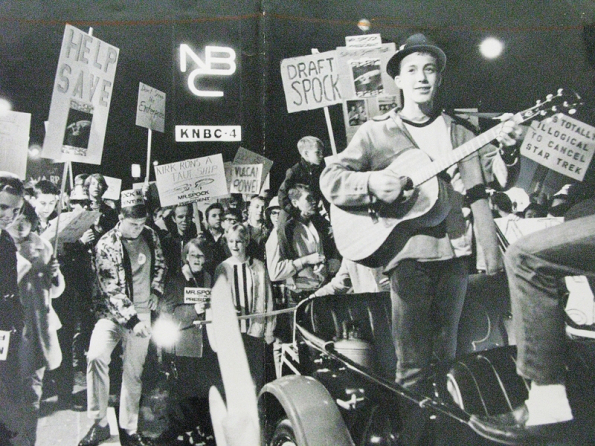
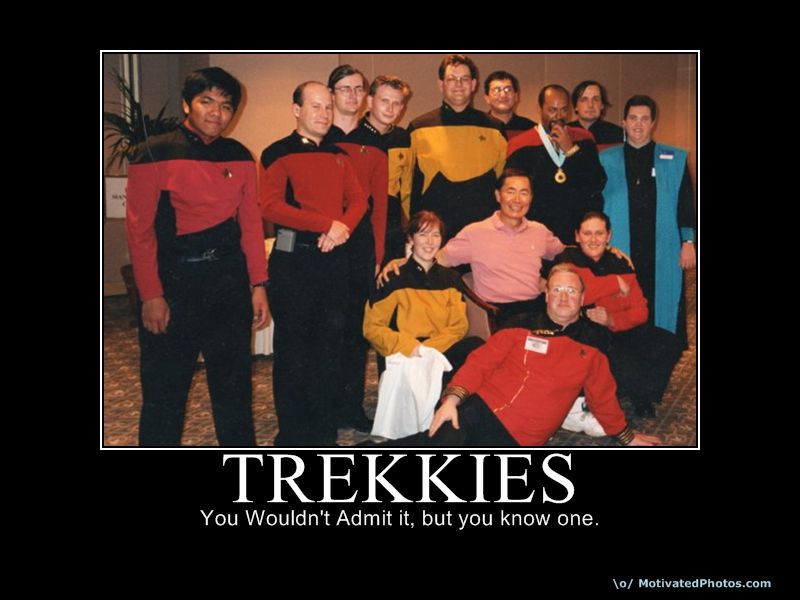
1969 was the year when Star Trek was finally cancelled after three seasons of low ratings on NBC. But it was also the year that dedicated science fiction fans had realized the importance of their viewership in the era of television, due to the fan campaign which kept the series on the air for one more season. Thus, the Star Trek fan groups around the US began to help in organizing various science fiction conventions, with a growth in “Trekkie” attendees and various personnel from the series being in high demand at these conventions. This was the start of an unprecedented period in fandom history, with fans deriving from a larger number of media outlets and franchises than ever before. This trend would continue into the 1980s, buoyed by the impact of 1977’s Star Wars.Throughout the history of SF fandom, the seeming “lifeblood” of the culture has been the literary publication industries, as writers for science fiction or superhero works were the usual guests and vendors at the few SF conventions which existed between 1936-1969, and many future writers, such as Isaac Asimov, often got their start as fandom organizers. Costumes based upon franchise characters (film, comic book/novel/short story, TV) were worn by regular attendees at such conventions from the first SF conventions in the 1930s onward (Flynn).
The growth of science fiction conventions from 1969 onward, however, is most likely due to the growth of another meta-fandom: the media fandom. As Star Trek’s cancellation had served as a catalyst for fascinated viewers in the United States and elsewhere to court the cast and crew of the series in anticipation of news on upcoming releases and events in the Star Trek canon, the science fiction fandom was infused with far larger numbers of convention attendees than in the last 40 years of science fiction history. Cast and crew of television serials were invited to a geographically- and demographically-growing circuit of conventions, and convention goers dressed up in television and film character costumes to celebrate the appeal of the series. This signified a growing split in focus between the fans of the older literarily-oriented concept-driven science fiction (which had predominately constituted the bulk of the fandom until the 1970s) and fans of visual character-driven science fiction. This spilled over into the establishment of the first franchise-specific media fandom conventions in the 1970s for fans of Star Trek, Doctor Who, The Man from U.N.C.L.E., and other franchises.
This also signified the beginning of the corporate interaction to fandom conventions, whereby the distributors of franchises interfaced with the fandoms through the cast and crew who manned franchise booths and panels for autographs and memorabilia. However, as shown with the litigation exercises of George Lucas concerning both fan tribute and commercial appropriation from the watershed Star Wars film series, corporations began to fire the first salvos in the war on infringement of intellectual property, one which notably involved fans who wrote non-canon depictions of Star Wars characters, often in pornographic situations (this phenomenon was not new, as the first fan-fictitious work in fandom history was published in 1967 in the fanzine Spockanalia, and the first homoerotic fanfic to depict the two leading characters of Star Trek in a close relationship was published in 1974, leading to what became known as “Kirk/Spock”). This campaign was further magnified by the rise in popularity of home recording cartridges after 1977, which enabled budding videographers to film their own fan tributes to the franchise for convention exhibition.
The 1980s saw further hints toward diversification that would be entrenched in the 1990s. Roleplaying became a serious pursuit – he RP and video game fan communities partly drew from already-existing wargaming conventions as well as SF – , Japanese animation was increasingly shown to be a highly-developed industry showcasing a wide range of topic and emotion that was sorely lacking in the West, and funny animals, those characters of semi-animal semi-human constitution who were exhibited in animated works throughout the entire history of animation, were extended to become more serious and diverse in emotion and topic than ever previously. All three emerged from the general speculative fiction fandom community with their own conventions and their own fandom subcultures.
Furry fandom
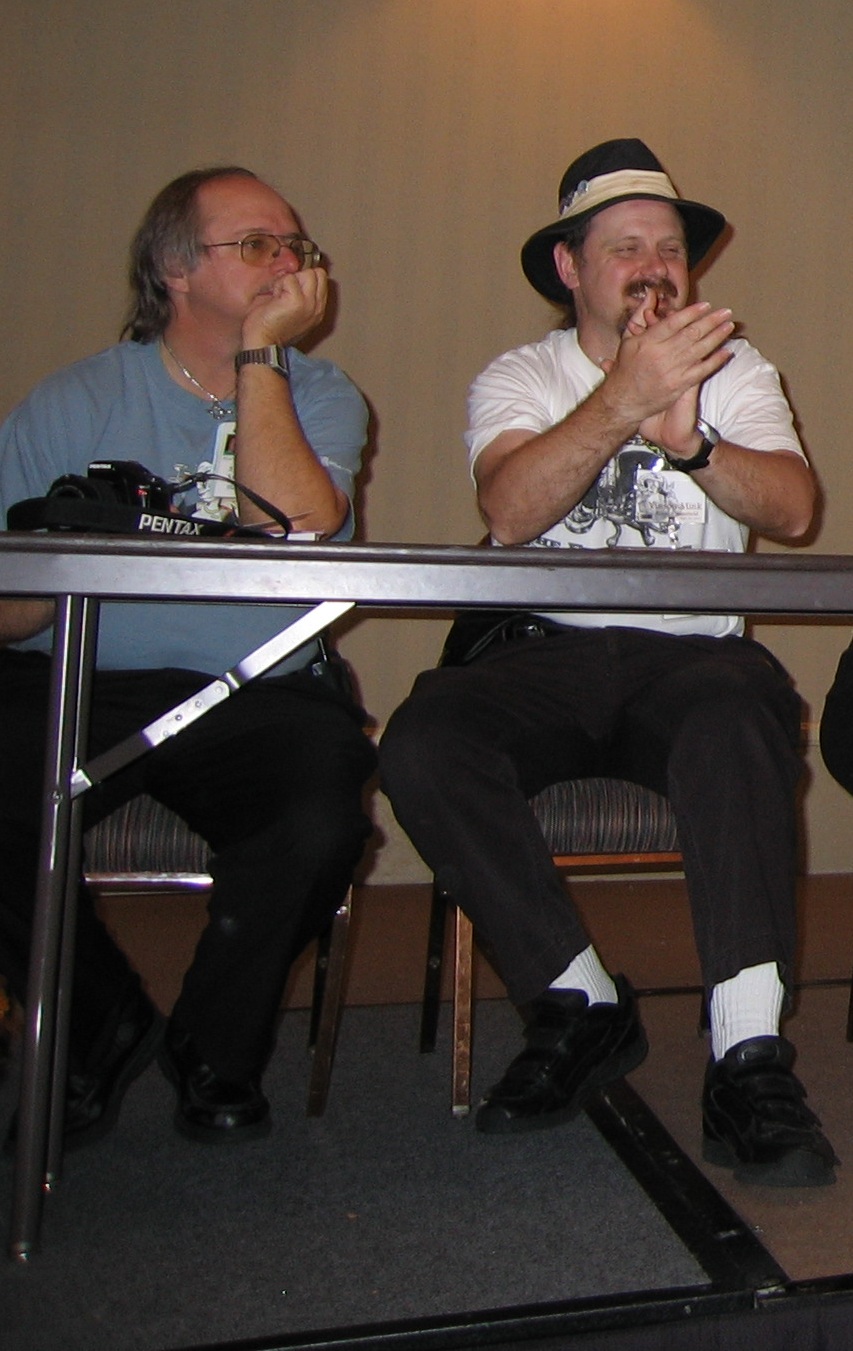
The funny animal fandom, in its transition into the furry fandom, showed several distinctive features. Prior to the introduction of funny animals into serious works of speculative fiction, funny animals were primarily used as a stock trope in various, usually humorous works of fiction for television, film and printed works.
Through the usage of original anthropomorphic characters in serious works of speculative fiction and romance fiction, the humorous or light-hearted stereotype of anthropomorphic characters in fiction was forced to share room with topically and emotionally diverse subject matter. However, at the same time, this newer revision of the anthropomorphic character was not welcomed or expressly promulgated by most multimedia vendors in their own lagging offerings of anthropomorphic characters in film, television and comic books. Thus, the primary couriers of the serious anthropomorphic characters were independent, often amateur graphic artists and writers who self-published or placed their works in the fledgling amateur press associations (APAs) and fanzines of the late 1970s and 1980s (Merlino); unlike the general SF fandom, the products of this movement were far from SF’s major franchise characters (save for rare occasions, when Teenage Mutant Ninja Turtles, originally independently-published, became one of the rare serious anthropomorphic titles to become self-sustaining for its artists), and artists within what became the furry fandom generally drew their own or others’ original characters.
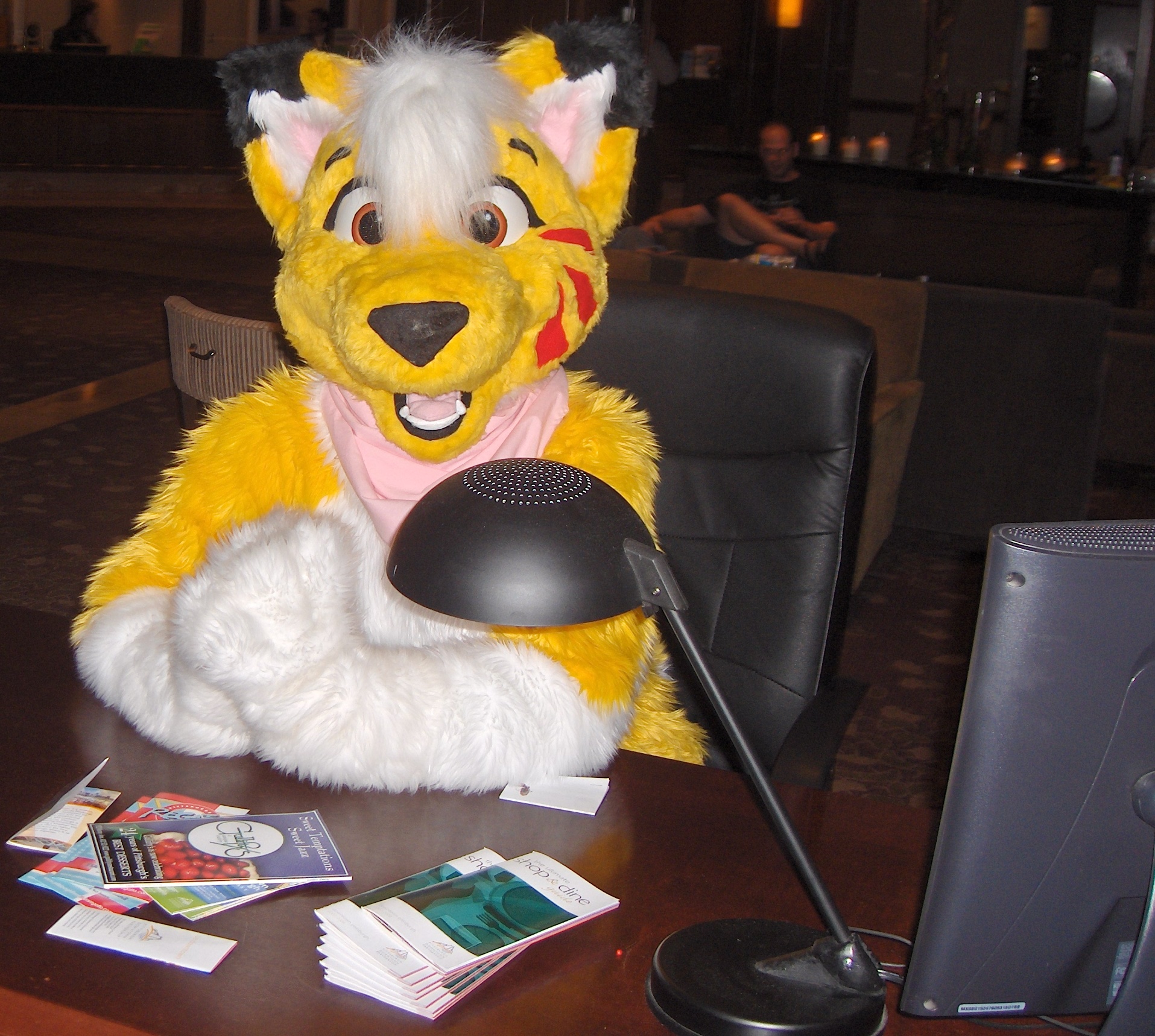
This trend toward focusing upon original characters of one’s own making or the rendering of others within the fandom rather than the characters of major practice of costuming (or “fursuiting”), a practice which increased with the advent of the first furry parties in Southern California in 1985-1986 (themselves initially resulting from overlap between the APA groups’ gatherings and SoCal’s animation-focused Cartoon/Fantasy Organization). Having its roots in the common SF fandom practice of wearing costumes based upon specific characters from popular franchises, fursuiting mostly diverged from the SF tradition by not only focusing upon original characters of one’s own making but also creating a cottage industry of fursuit manufacturing within the fandom that is, to this day, rivaled in focus by the larger costume industry which creates franchise-based outfits for fans.
Following the advent of the first furry convention, ConFurence, in 1989, the rise in usage of the Internet was reflected in the fandom by the establishment of FurryMUCK in 1990 and The Lion King Fan-Art Archive in 1996, both of which served as persistent routes of furry fandom information and media distribution. The growing number of furry properties on the Internet rapidly replaced the importance of the BBSes (which had all but dissipated from general usage in the world by the mid-1990s), APAs and fanzines, and more conventions and “furmeets” were established every year afterward around the world.
Comparison
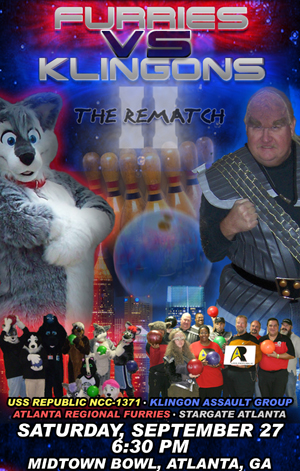
Due to their shared roots, furry and speculative fiction fandoms share many outstanding qualities.
For instance, a strong identification with alternate reality pervades both fandoms. Masquerades using the characters with whom the wearers most identify are a pillar of the fandom, and have been since the first SF conventions in late 1930s Philadelphia.
Congressional events in both fandoms were historically not catered towards by large corporations for most of their early histories, and were initially driven by personally-shared interest in publications by major vendors of fiction or fiction-oriented media at the time. In fact, fandom communities are largely a “labor of love” for their organizers and participants, being inherently driven by fan appropriation and celebration of the impact of relevant media to their own self-perceptions and worldviews.
Contrast
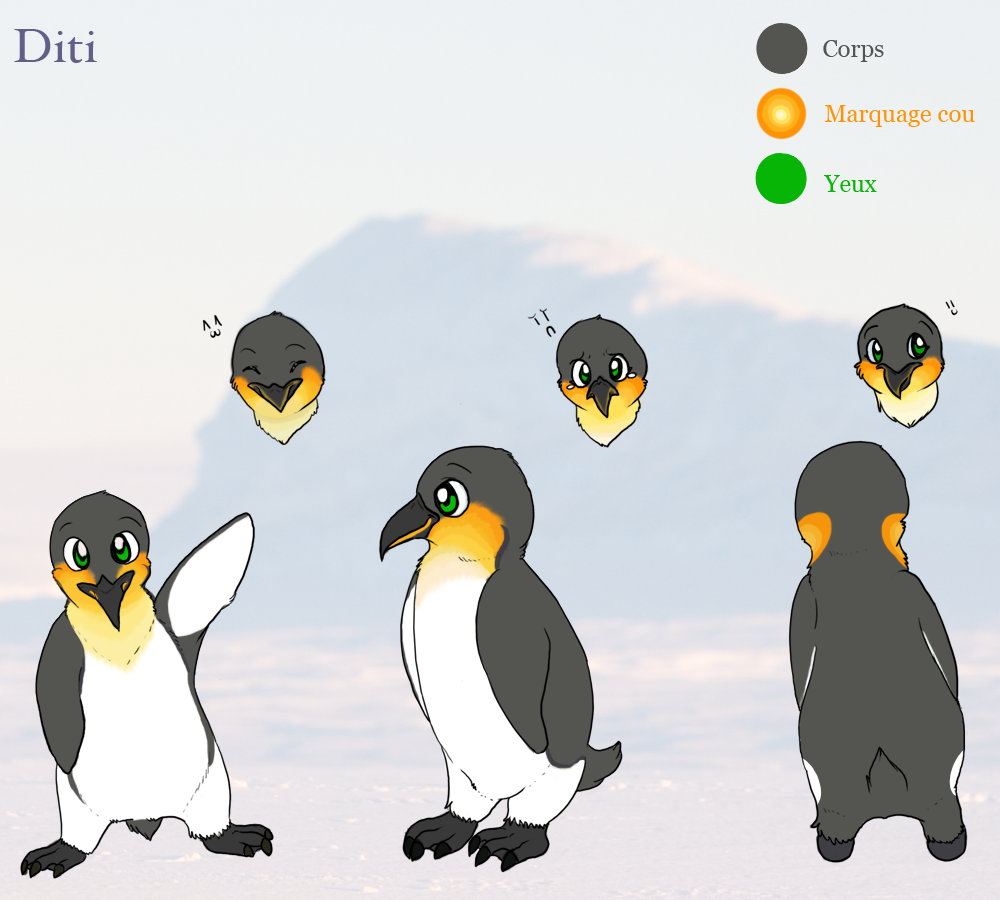
Furry fandom is oriented differently than speculative fiction fandom or media fandom:
- Unlike the SF fandom, which largely drew from literary sources and historically was driven by genre writers, the furry fandom largely derived from graphic expressions in both still and animated form.
- Furry fandom is largely concerned with body phenotypes and graphic depictions thereof, while SF fandom is largely concerned with the settings in which the fiction takes place and the associated concepts which are employed. Media fandom, by contrast to both, is more enamored of character development and relationships.
- Furries adopt fursonas, or furry alter-egos, which usually exist outside of franchises (save for rare occasions when the depiction of the fursona is derived in style from another franchise which was not originally marketed as “furry”).
- Furry fandom is external to genre restrictions and furry fiction can employ any genre or setting under the sun, including SF.
- Furries are more likely to integrate or interpret their fursonas as expressions of their inner selves, or aspects thereof. SF fans are more likely to embrace the character of whose visage they may masquerade for the ideals and role which are most associated with the character in the franchise.
Corporations or large studios are largely a non-presence within the furry fandom:
- The SF fandom has largely been focused upon corporately-funded franchises since the 1970s due to the rise in media fan attendance at the largest conventions. In contrast, furries were largely drawn to franchises’ graphic anthropomorphic media before happening upon the Internet’s furry artwork, which is usually not fan derivations of franchise characters.
- Corporations have largely remained ignorant of the furry fandom, and artists within the employ of large media companies usually only come to furry conventions at their own expence, usually in retirement (in addition, furries are not a target market or audience in the 2010s by any means for major corporate disseminators of fiction). In contrast, SF fandom draws top-dollar guests such as franchise writers, artists, actors, directors and series creators, and corporations often court fan gatherings for advance teasers.
- It is rare to see two or more fursuits of the same character, while it is common for multiple cosplayers to depict the same character or franchise at SF, media and anime conventions.
- SF fans have historically achieved greater ascendancy since the 1960s and 1970s, as fans who happened to be writers (Asimov, for example) were hired to write for major franchises or their works were adapted to film, television, etc. Furries have not yet achieved anywhere near that ascendancy within media establishments at this point.
Fandom relations with corporations
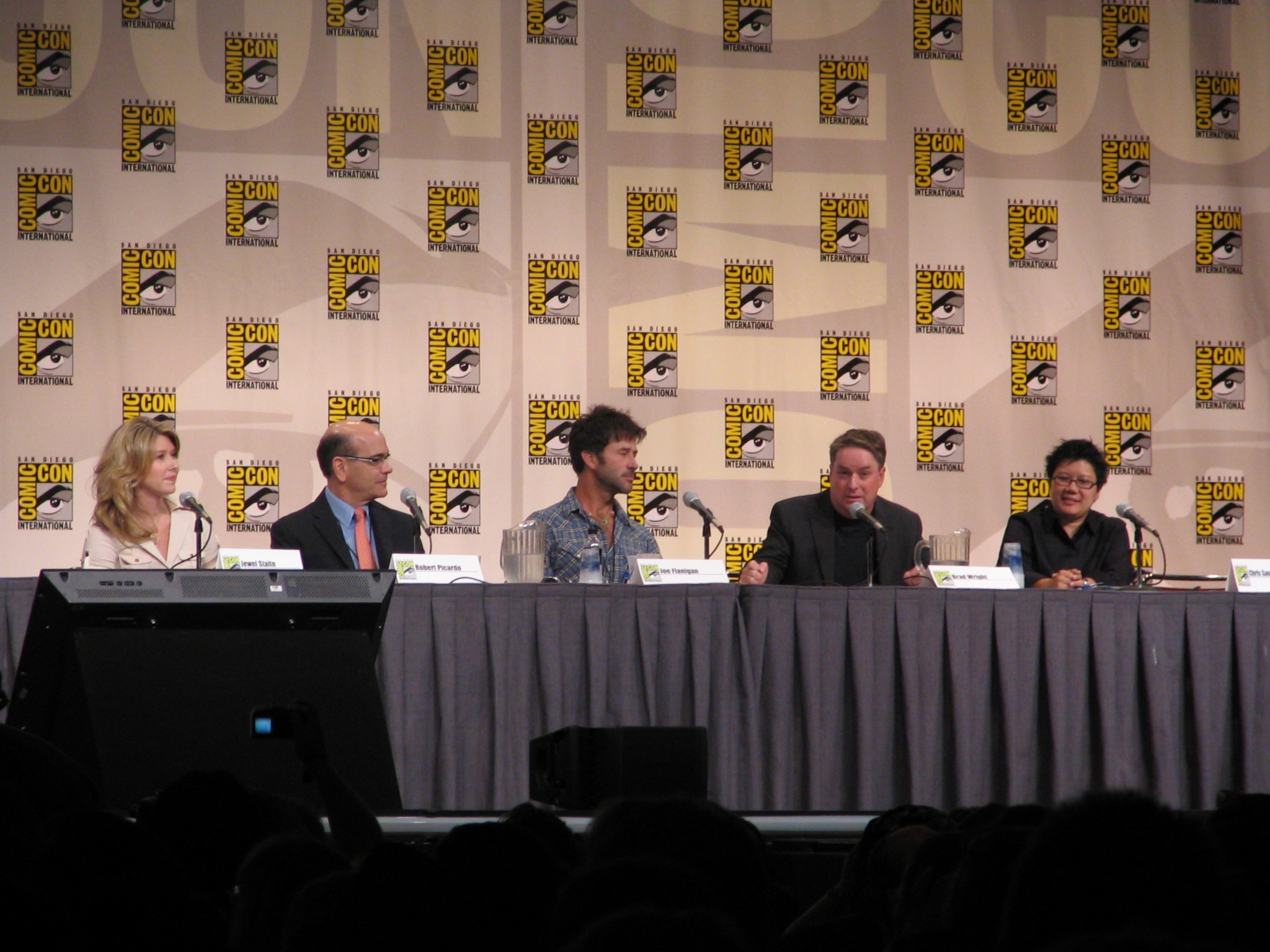
The relationship between the furry fandom, media franchises and the corporate media outlets which maintain those franchises is awkward and fraught with conflicting understandings. While the furry fandom was initially brought together by graphic artists who were inspired by corporate media franchises of graphical depictions of anthropomorphic characters (and archives of fan works inspired by the franchises remain a so-called “gateway” to the fandom on the Internet), the furry fandom has had a distantly-receptive, one-way relationship with corporate media franchises which has not been reciprocated with similarly-positive feedback.
Any reference by a “non-furry” corporately-owned media outlet to anthropomorphic characters is welcomed and appropriated by the furry fandom’s members, and any reference to the furry fandom in particular is readily documented and reviewed by self-described furries. However, because of the tendency for furries to adopt fursonas, the depiction of fursonas or original characters by various artists tends to outweigh the number of specific homages or appropriations of corporately-owned characters on large galleries such as Fur Affinity.
At the same time, corporations which hold the licenses to the media franchises have responded variably to the furry fandom. Even in 2010, the furry fandom is a new and strange development for many employees of the corporations, and a heavy public stigma which is associated with the fandom due to many past corporate media depictions of furries and furry events (including the 2003 CSI: Crime Science Investigation episode “Fur and Loathing”) may deter corporations from expressly appealing to this niche for the foreseeable future.
In comparison, the media fandom that spilled out of the science fiction fandom after 1969 and inherited most of its customs has gradually cultivated a closer relationship with corporations that sees conventions being broadcast on cable television, endorsed by media franchise owners, cast and crew visiting as panelists and booth operators, etc. Corporations and individual rights holders have varied in their stances on fan derivations of their works in recent years, with many allowing for fan fiction and others taking a somewhat hostile stance against it; those who have warmed to fan fiction adaptations and derivations include some individuals who started their writing careers in the fanfiction scene. This is a far cry from the 1980s, when most copyright owners took hostile, litigious stances against the fanfiction phenomena for the sake of keeping a strong hold on the intellectual property or family-friendliness of their series or franchises.
Conclusion
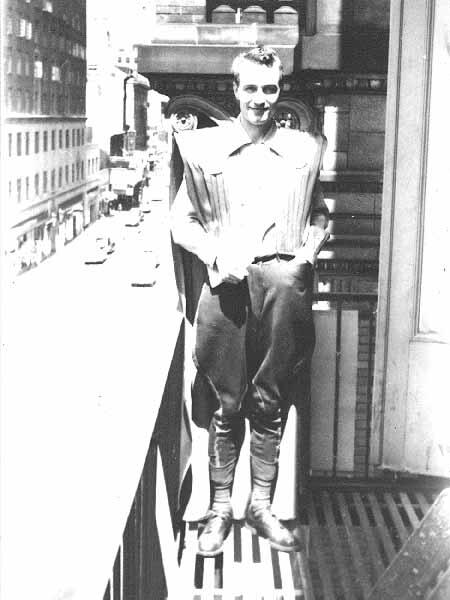
What can certainly be ascertained is that the furry fandom was one of many types of fandom subcultures which developed in the 20th century, one which was influenced by other fandoms and originating from the science fiction fandom. What can also be ascertained is that each fandom – genre-centric, chararacter/relationship-centric, species-centric, origin-centric – is an example of individuals who discovered that there were other people in the world or in their own local proximities who were just as interested in sifting the sensually-pleasing, the intellectually-intensive, the culturally-relevant or other personally-”important” elements from the mass media works of present and past, and celebrating them and their own adaptations.
They are spurred onward by actualities and possibilities which result from such elements and adaptations, and they are far from being immune to corporate co-option or interaction, but they readily exhibit examples of popular or “folk” appropriation of original source material (Jenkins). The canon material is used as a source of “scripting” which details expectations, behaviors and descriptions of real-life situations, with at least a few attempts at establishing new religious movements as outgrowths of fandom communities.
The fandom phenomenon that was first cultivated from the science fiction literary societies of the 1920s and 1930s was transformed by television and its adaptation of text into moving visuals, with media fandom gradually taking precedence in fandom subcultural activities from the 1970s onward. This option by so many to co-opt and derive cultural works from film and television has indelibly redefined the developed world’s perception of popular fiction. It has also influenced the licensing of fictional characters or settings for commercial promotions, as fans will usually be among the first to express vocal disappointment in any corporate deviation from the letter or spirit of the canon material. It is not yet a system of creative checks and balances, but fans of media franchises and the owners of distribution rights over such franchises do often communicate, coalesce or come into open conflict with each other on a frequent basis.
Fandom subcultures will continue to diverge into newer methods of folk interpretation and appropriation of canon for the foreseeable future. The furry fandom, which is young in comparison to the media and literary speculative fiction fandoms, may yet gain economic ascendancy whereby participants in the fandom may be later employed in the larger animation or video game studios for production purposes, or it may develop in an altogether-different manner than the other two fandoms, but it does symbolize a further, somewhat divergent extreme in how those of us who are primarily consumers of fiction media are often motivated to appropriate from past trends or established canon to provide sensory, intellectual or cultural gain.
Works cited
Patten, Fred. “A Chronology of Furry Fandom.” Yarf! 1996. Web. 8 Dec. 2010.
Jenkins, Henry. “The Poachers and the Stormtroopers: Cultural Convergence in the Digital Age”. Massachusetts Institute of Technology. 27 July 2010. Web. 8 Dec. 2010.
Flynn, John L. “Costume Fandom: All Dressed Up with Some Place to Go!” Towson University. 1986-2001. Web.
Chase, Harry. “Star Trek Cancellation Protest.” Los Angeles Times. 8 Jan. 1968. Web. 8 Dec. 2010.
USS Republic NCC-1371. Web. 8 Dec. 2010.
Burka, Lauren P. “The MUDline.” The MUDdex. 1995. Web. 8 Dec. 2010.
Darlington, Steve. “A History of Role-playing.” Places to Go, People to Be. Web. 8 Dec. 2010.
“The Force Is With…Everyone”. Beliefnet. 2002. Web.
Merlino, Mark. “Re: A few questions for fandom research.” Email to the author. 2 Dec. 2010.
Communication Theory in Moon Over Buffalo
Harry Underwood
COMM 3010
Extra Credit Short Essay
4/29/2013
Communication Theory in Moon Over Buffalo
The Expectancy Violations Theory, which attempts to explain how individuals react to violative behavior or violations of expected behavior, comports to the behavior of the characters in Moon Over Buffalo, especially that of George. He violates the expectancy of his wife, Charlotte, by sleeping with an actor from his company, resulting in Charlotte threatening to leave with a rich lawyer. Later, the entry of a drunken George in the wrong costume shocks and embarrasses the other actors who are in costume for another play. In conclusion, George’s muddling of his personal relationships with his profession as an actor results in public embarrassment and near-dissolution as a family, the latter of which is only reversed as he apologetically gets on his knees and makes strategic use of proxemics – holding onto Charlotte’s legs – to acknowledge his need for Charlotte in his life. Charlotte interprets and evaluates the sincerity of this behavior, ultimately forgiving him for his transgressions. Hence, the theory helps to explain how the characters assess the damage and reconciliability of unexpected or unwanted behavior.
Never Turn Your Back on Family: An Analysis of Relationships in Summer Wars
Harry Underwood
Film Analysis
COMM 3010
4/13/2013
Never Turn Your Back on Family: An Analysis of Relationships in Summer Wars
Theories about communication are crafted in order to almost-accurately predict the communicative behavior of individuals in a number of settings and intentions. Within the realm of both old, large families as well as new, young ones, the utility of discerning communication commonalities among participants in these relationships is indispensable. Summer Wars, a 2009 animated film directed by Mamoru Hosoda, is exemplary of a number of theories and principles on communications which have been explored over the history of communications as a subject of academic investigation. Ranging from the interpersonal and nonverbal to the massive and computer-mediated, the film uses the protagonist as a vehicle for exploration of communication as a life- and world-changing agent in human experience.
The Relationship Interaction Stages Model, which offers a suitable rubric for the development of characters’ relationships within the film, shows various stages of interpersonal behavior which reflect the severity of sentiments harbored by the participants of the relationship toward other participants. The model ranges in its stages from “coming together” – the stages of initiation, experimenting, intensifying, integrating and bonding – to “coming apart” – differentiation, circumscribing, stagnation, avoiding, and terminating. It is through this model that the behaviors of a number of key characters in Summer Wars – namely Kenji, Natsuki, Wabisuke, Sakae and Kazuma – can be assessed as fluctuations in relationship status within a large family in the flux of institutional change.
Coming Apart
The differentiating stage is one in which differences between individuals or groups is emphasized by the participants, with resent often being a major sentiment exhibited by the parties. This stage is reached on a group basis by the male members of the Jinnouchi clan following the matriarch Sakae’s death, as they pursue a plan to take Love Machine down while the female members of the family concern themselves with preparations for the funeral. On an interpersonal level, Kenji and Natsuki also experience this stage with each other, with Natsuki angrily running from him after seeing her uncle Wabisuke remove himself from the clan and leave the house. To her, Kenji seems too much of an outsider to understand her feelings.
Circumscribing is a stage marked by the focus of individuals on their own personal matters, actively distancing themselves from each other. This, collectively, is developed by the men and women of the family, with the men, including Kenji, attempting to work on a plan to take on the virus, and the women focusing on the funerary arrangements for Sakae. Members of the two groups complain about each other’s seemingly-misplaced priorities, showing their greater desperation and concern for the matters at their respective hands.
The stagnation stage is marked by a lack of change in relational intensity, boredom, and short answers to questions from relationship participants. Wabisuke, a “love child” of Sakae’s husband who is first shown as a late, ill-welcomed arrival to the reunion, attempts to strike up a conversation with family members, only for most of the adult members of the clan to show their anger at his presence due to past misdeeds. He remains, for a period, on the periphery of family functions with a sense of tedium, with the adult members remaining leery and dismissive of his presence. His lack of change in relationship status vis-à-vis the family reflects the intolerant sentiment blocking the two parties from any progression.
The avoiding stage is one in which mostly physical isolation from other family members occurs with only minimal communication. It is in this stage which we find characters like Kazuma, who isolates himself from the clan while playing in the virtual world Oz as his character King Kazma. He hardly communicates or interacts with other family members or their activities, only involving himself with the family when needed, asked or drawn by a sudden impulse of self-interest.
The termination stage, in which absolutely no contact of a physical or communicative nature is maintained between parties, is reached by Wabisuke, as he had already spent ten years of his life in the United States and had only come back to Japan for the sake of his adoptive grandmother Sakae, who he calls “you old hag” in a semi-joking tone of voice. This termination is renewed after he finds himself at the point of an antique spear wielded by Sakae in anger for his creation and selling of the virus to the U.S. military; he flees in a rage from the estate and remains in isolation from the clan until the one person who has admiration for him, Natsuki, calls him home with the news of Sakae’s death.
Coming Together
The initiating stage, in which individuals first interact with each other, is illustrated from the beginning of the film. Natsuki and Kenji enter this stage when Natsuki, the “prettiest girl in school,” enlists him to join her on her train trip to her family reunion. The two ask questions of each other along the way about their interests and hobbies, such as Kenji’s prowess in mathematics and the size of Natsuki’s family; this stage transforms into something too radical for Kenji’s tastes as Natsuki surprisingly introduces him to Sakae as her fiancée.
The intensifying stage involves probes into, and disclose, each other’s personal morals and values. Sakae participates in this stage when, after he is introduced as Natsuki’s “beau,” she sternly questions Kenji on his ability to protect Natsuki from any harm or danger, receiving a reluctant answer in the affirmative before smiling with assurance. Before he is (temporarily) hauled away for his alleged unleashing of a virus, Kenji shows more of himself to Sakae by disclosing to her his own comparative lack of a family life compared to that enjoyed by the Jinnouchi clan, ending with an expression of appreciation to her and to the clan. Finally, after explosively driving off Wabisuke from her estate, Sakae invites Kenji to play a (final) card game called “hanafuda,” disclosing Natsuki’s shortcomings and wagering (successfully) that, if she wins, he will “promise to take care of Natsuki.” With these trades of inquiry and information, Kenji and Sakae establish a rapport as individuals sharing commonalities in values and interests.
The integration stage, in which the lives of individuals begin to merge and individuals begin to see themselves as participants in a larger collective, is reached by most of the key characters in the film in their own individual ways. Wabisuke’s isolation is ended when Natsuki calls his phone with the news of Sakae’s death, to which he reacts by desperately rushing back to the clan house to pay his respects to his grandmother. This sudden turn of emotion is reciprocated by the family to Wabisuke on Sakae’s written wishes for them to welcome him back. Kazuma also experiences this stage as he begins to emerge from his isolation and become more involved in the family’s struggle to stop the artificially-intelligent Love Machine virus, using his King Kazma character to fight the avatar incarnation of the virus. Natsuki herself is emotionally reintegrated into the clan by being enlisted to play a life-or-death card game of Hanafuda with the Love Machine, waging the Oz avatars of her family members in order to gain hundreds of millions of stolen accounts from Love Machine.
The integration stage is also reached on a monogamous level between Natsuki and Kenji at various points in the film. In the immediate aftermath of Sakae’s death, a distraught Natsuki begs Kenji to hold her hand, to which the reluctant main protagonist eventually complies as she weeps. It is this contact which marks the duo’s first attempt at intimate self-disclosure, with Natsuki, in a time of depression, showing her interest in physical and emotional solidarity from someone who is as interested in playing a positive role in her world. However, given their comparative lack of private self-disclosure to each other throughout most of the story, this moment in their relationship is also indicative of the experimental relationship, as they are now slightly more comfortable and connected with each others’ close presence.
Finally, the stage of bonding is reached by Kenji and Natsuki as they attempt to kiss each other in public for the first time after the clan’s victory over the Love Machine virus. This stage is marked by a public declaration of love, an act which shows the progression of a relationship to a moment of comfort and internal acceptance of one’s status as a participant and partner which would be hardly deprecated in quality if it were to be shown to the view of other parties. At the same time, due to their comparative lack of time spent within each other’s close proximity, this moment of self-disclosure and intimacy can also be associated with the experimenting stage. At this particular moment in time, the two are now more comfortable and willing to embrace the connections forged between each other, although the two continue to carry this budding relationship at a steady pace.
Conclusion
In conclusion, Summer Wars demonstrates to the viewer how the relationship interaction stage model operates within a large family in a moment of violent change. Sakae’s written will and testament advises her surviving family, including Wabisuke, to show resilience in their relationships: “Never turn your back on family, even when they hurt you. Never let life get the better of you.” This statement speaks volumes to the viewer about the film’s message of collective resilience in the face of crisis. The statement can just as well apply to the relationship between two individuals like Natsuki and Kenji, who are separated from each other at various times, but find themselves increasingly drawn to each other in their most-helpless moments. Just as Wabisuke possesses a close, but fluctuating relationship with Sakae and her family, Natsuki and Kenji develop their relationship in stages of interaction with each other and with their clan.
The Safety Net: Communication within coming-out groups for LGBT people
Harry Underwood
Compare and Contrast Pt. 2
COMM 3010
3/26/2013
The Safety Net: Communication within coming-out groups for LGBT people
In the decades since the Stonewall riots of 1969, the mass movement for civil rights for lesbian, gay, bisexual and transgender people has largely depended upon a willingness by the movement’s participants to self-disclose one’s sexual orientation or gender identity as a marker of identity and a challenging of social stigma. In the absence of a visible, persistent demarcation to personally indicate ancestral or other biologically-inherent backgrounds, the process of this self-disclosure, or “coming out”, has resulted in a sea change in the wider heterosexual and cisgender perception of the very concepts of sexual orientation and gender identity, leading to a greater integration of LGBT people into the socioeconomic life of human societies. The process of coming out, however, is one which strongly involves human communication between the “closeted” individual and the recipient of the disclosure, and the role of proper communication in any successful coming-out process is a mutually-sustained role, involving the behavior of the receiver in reaction to such news. This paper seeks to compare and contrast contemporary communication theories with each other in their explanations of aspects of the “coming-out group”, and to also explain the origins and utility of such a group.
The history of coming out to a peer group setting as a phenomenon derives in part from women’s “consciousness-raising” meetings in the 1960s, in which women shared their personal, everyday experiences as women with each other in a group setting. Through these events, women’s rights activists could inspire women to challenge their current lot in life and reassess their own humanity, sexuality and sense of power. An important tool in the growth of political awareness of women’s rights in the 1960s and 70s, consciousness-raising was imported by lesbians who had worked with the women’s liberation movement into the growing number of gay liberation organizations in the United States (Taylor and Whittier, 1998, p. 351). The process of self-disclosure, in itself, also derives from early suggestions by the likes of pioneering sexologists Magnus Hirschfeld and Iwan Bloch to early 20th-century German homosexuals to disclose their sexuality to their family and authority figures in order to push against anti-homosexual legislation (Johannson & Percy, p. 24).
Two theories can be applied to this phenomenon of the coming-out group: symbolic convergence theory and uncertainty reduction theory. These two theories come at the phenomenon of coming out to welcoming peers from slightly-differing perspectives. While uncertainty reduction theory is concerned with how “interpersonal relationships develop as individuals reduce uncertainty about each other,” symbolic convergence theory is more concerned with the development of a symbolic and fantastic narrative which engages, unites and propels the emotions of the participants (Yoo, 2004, p. 191). Uncertainty reduction theory, on the other hand, relies upon the pre-existence or prerequisite development of an active, certain relationship or a mutual openness to such. Furthermore, while symbolic convergence tends to be applied more to group settings, uncertainty reduction theory was largely crafted with interpersonal relationships in mind.
Both theories, however, are similar and compatible with each other in that they each find exhibition in the coming-out group’s changing or challenging prior assumptions about sexuality or gender among the participants. Uncertainty reduction is at play, as newer attendees who are unaware of how to properly approach their own or others’ sexual orientation become more aware of how to conduct their inquiry and exploration further on in the midst of peers. Ramón cites Soliz et. al on how families of LGBT people may become more distanced with their LGBT loved ones “if a new dimension is added to the relationship after a child’s sexual identity has been disclosed” due to the “parents often suffer[ing] cognitive dissonance when trying to understand the conflict between inundation of negative images surrounding homosexuality and the loving relationship they have established with their child” (Soliz et. al, 2010, p. 78-79; Ramón, 2013, p. 20). When such does arise, the next best solution for the LGBT person seeking to develop a social network which is less fraught by such images is to seek out a body of peers who already possess a minimum body of LGBT-affirmative symbolism and more likely to be open to a certain, more familiar process of welcoming of the individual from out of the closet. Stein calls the “coming-out” process “the gay community’s ‘development myth’. It was an account of heroism in the face of tremendous odds and societal pressure that was based on the ideal of being ‘true to oneself’, expressing one’s ‘authentic’ self” (Stein, 1999, p. 83).
In conclusion, there is a synergy which takes place between symbolic convergence and uncertainty reduction theories when it comes to assessment of the communication and interaction styles in a coming-out group. Such groups are likely to possess the prerequisites of both theories – a membership or leadership with a base familiarity and certainty concerning personal and mutual conduct and an oppositional narrative against, or parallel to, negative images – often making such organizations a more affirmative environment for LGBT people than their own estranged biological families. This convergence also demonstrates that coming out just as much involves and impacts the receiver of the news as it does the deliverer, and finding an infrastructure which is welcoming to the individual and prepared to consensually close the distance of uncertainty is paramount in the self-realization of sexual orientation and gender identity.
Works cited
Johansson, W. & Percy, W. A. (1994). Outing: Shattering the Conspiracy of Silence. pp. 24. Harrington Park Press
Ramón, E. K. (2013). “Mom, I’m gay.” Homosexual language used in the coming out process and its effect on the family relationship. (Doctoral dissertation). Retrieved from Texas Digital Library). http://repositories.tdl.org/tamucc-ir/handle/1969.6/398
Soliz, J., Ribarsky, E., Harrigan, M. M., & Tye-Williams, S. (2010). Family communication with gay and lesbian family members: Implications for relational satisfaction and outgroup attitudes. Communication Quarterly, 58, pp. 77-9. Web.
Stein, A. (1999). “Becoming lesbian: identity work and the performance of sexuality.” The Columbia Reader on Lesbians & Gay Men in Media, Society, and Politics. Gross, L. P., & Woods, J. D. (Eds.) pp. 83. New York: Columbia University Press.
Taylor, V., and Whittier, N. E. (1998). “Collective Identity in Social Movement Communities: Lesbian Feminist Mobilization.” Social Perspectives in Lesbian and Gay Studies: A Reader. P.M. Nardi and B.E. Schneider (Eds.). New York: Routledge.
Yoo, J. H. (2009). “Uncertainty Reduction and Information Valence: Tests of Uncertainty Reduction Theory, Predicted Outcome Value, and an Alternative Explanation?” Journal of Human Communication, 12(2), pp. 187 – 198. Retrieved from http://www.uab.edu/Communicationstudies/humancommunication/05_Yoo_final.pdf
2013-2014 Point Foundation Essay
This is my series of answers to questions for the Point Foundation’s 2013-2014 Scholarship. I was semifinalist for the scholarship, and realized the gravity of why I didn’t get the scholarship when the day for finalist notifications was set back another day on the original day of the notifications.
Point Essay #1
How has your work contributed to bring about positive change for LGBTQ persons? How did you influence this change, what was your role and describe the impact and results?
My work as a website designer and social media assistant has often gone to causes or efforts which have helped raise awareness for LGBT rights and support.
My work with PFLAG Macon is something which I note with a sense of pride. Before my involvement with the chapter, the website of PFLAG Macon consisted of no more than 3 static HTML pages which were barely updated because of a lack of time and know-how on the part of the chapter president about maintaining a website. I volunteered my time to install WordPress, a content management system, onto the domain, reposting older media (i.e., photos from past PFLAG Macon events) onto the site, setting up a PFLAG Macon brand page on Facebook and created an account on NetworkedBlogs for the syndication of posts from the new site to the Facebook page. This has allowed for a greater number of Google search hits indexing a greater variety of content posted onto the site, making it easier for locals to find information regarding solidarity and support for the target audience: lesbian, gay, bisexual and transgender people and their straight friends, family and parents.
I also take pride in helping represent the our college’s GSA at events held both on our campus as well as off-campus, be it at conferences and events held at other local institutions of higher learning, churches, political meetings and so on, and I also maintain various web presences for our group, including Facebook and Google+. Through this, I have found ample amounts of opportunities to talk and connect with students from the local area who are frustrated with the lack of, or are yet to be made aware of, of a support and discussion base within reach. I have represented my GSA before at least one television camera to communicate our ideal for marriage equality after President Obama endorsed it. I have connected to various people from the most diverse backgrounds and have pointed them in the direction of of LGBT-affirmative institutions in the Middle Georgia Area, and have also discussed strategy and resources for our group with members of Georgia Equality, our state’s leading LGBT lobby.
Finally, I have also filmed a documentary, “Honor in Equality”, interviewing Sgt. Danny Ingram, the president of the American Veterans for Equal Rights, who lives in Decatur. The immediate effect, for many who have seen it, is that the effects of “Don’t Ask, Don’t Tell” were given a “local” “human” face who they could identify, helping them to better understand a person’s fight to end it and bring equality to our military.
I hope that my actions have inspired others in this area to do the same for others, and I hope to be an asset for other movements or institutions supportive of LGBT persons and their concerns.
Point Essay Part #2
What are you most looking forward to gaining intellectually from your college experience and why?
Intellectually, I seek to engage and be challenged by individuals who understand digital media in all of its presentation and utility. Being raised in the age of the World Wide Web’s rise to prominence as the platform du jour for commerce and campaigns of all sorts, I have long embraced an awareness of how digital media has been a transformative utility in human expression and identity (as well as the myriad uses which we can find in it as our information technology continues to develop), and it is a field in which I seek to contribute both intellectually and physically.
I hope to gain a better understanding of the technology which makes our current tech infrastructure possible, the theories which paved and continue to pave the way for our infrastructure, and the technology which will advance our infrastructure further. I also aim to gain a better understanding of how the Web, and other decentralized media networks, have enabled mutually-beneficial (and not-so-beneficial) human experiences. I also wish to work on student-professor research collaborations which delve into newer tools of communication, such as augmented reality.
Finally, when all is said and done, I not only want to apply my experience in the Information Technology field as a go-to consultant, programmer and teacher for digital media, but also to participate in and affect the building of more liberating and innovate means of communication for the next generation of the commons to enjoy and employ. I hope that what I impart to my protégés from my college experience will lead to disruptive and innovative effects upon our perceptions of, and relations with, each other – all aspects of ourselves, including our sexual orientations and gender identities – and our world.
Discuss your experience with marginalization.
My trouble with marginalization has largely been a force of geo-economic isolation and cultural reinforcement. I live in an area of the country, among many other areas of this country, in which LGBT-affirmative institutions are very scarce and limited. LGBT persons like myself largely start from an economic disadvantage of little personal income and great dependency upon family members, with varying levels of tolerance or respect, for support. In the process of pursuing my education while under such constraints, I find my ability to accommodate or express my sexual orientation to be severely limited.
What is most grating about this experience is the constant insistence from my own family members and peers that “broadcasting” my sexual orientation by disclosing such information on, say, a social network profile or when asked about such in day-to-day conversation makes me “vulnerable” and “unhireable” in the eyes of employers who are feared as being “Internet-savvy” with the usage of search engines and social networks for employee background checks. As I have a long history of using the Internet, as it is the medium through which I realized my sexual orientation, and as it is through this medium that I realized a lack of shame in my orientation, I take a deep umbrage at this fear that my orientation toward men should in any way reduce someone’s perception of me as an employee or colleague.
This fear of disclosure, in my honest opinion, is largely propelled by a toxic combination of our economic situation and our cultural homophobia. In a better, more affirmative culture, disclosure of my orientation, voluntary or systematic, would neither be grounds for “unemployability” nor grounds for fears of such a state. This fear dents my loved ones’ ability to respect my orientation or expressions thereof, which is unreasonable.
Point Foundation Essay #3
a) “Please describe a time you were unsuccessful at bringing about positive change and what you learned from this experience.”
In October 2012, I had scheduled and publicly announced our GSA’s first LGBT Movie Night, screening The Incredibly True Adventure of Two Girls in Love. I and our advisor had prepared for a month for this night, with food being brought and flyers being distributed to all campuses, and, as president of the GSA, I took this as a personal test of my ability to engage the public and bring positive changing of sentiments. However, on the night when the event was to take place, I was sorely disappointed that no members or students were able to come to this movie night, and I blamed myself for its failure.
Surprisingly, some individuals within our group had come to the campus to see the film, but had misidentified another, similarly-named game room in another building on campus as the location of the Movie Night. Worse, not that many people had even known of, or ever visited, the game room in the dormitory where we held the Movie Night. I learned that community events should be held in familiar and accessible venues, and that such events should be comprehensively promoted and discussed as much within the organization as without.
b) “Describe a specific time when you motivated others to reach a particular vision or goal. What did you do? How did you motivate others to achieve this goal or vision? How might this leadership trait translate into future involvement in the LGBT movement and society in general?”
I announced in February 2013 that we would hold an LGBT Public Awareness Event, one which would promote the GSA, its goals and its focus. I requested for all members, by all possible channels of communication, to come to the event to help operate the table and engage the public. I went into the planning of this event in a manner which initially felt haphazard and affected by events like the aforementioned Movie Night, but I personally bought supplies, totalling over $70, on the idea that all such crafts material would be useful to drawing members to participation in the event.
Bringing the crafts to a public table, our secretary immediately took the reins and designed a number of beautiful crafts, including beaded bracelets. Soon, other members joined us at the table, and we raised over $50 from selling the bracelets, and I decided on our advisor’s advice to donate the money to a local AIDS/HIV live-in center for lower-income people. It became my first voluntary attempt at helping raise money for a charitable organization, but I saw that offering opportunities for creativity and allowing members to engage on their own strengths are powerful motivators for social engagement.
Analysis of “Intermediary’s information seeking, inquiring minds, and elicitation styles”
Harry Underwood
Journal Article Critique 1
COMM 3010
2/26/2013
Wu, M.-M. and Liu, Y.-H. (2003), Intermediary’s information seeking, inquiring minds, and elicitation styles. Journal of the American Society for Information Science and Technology, 54: 1117–1133. doi: 10.1002/asi.10323.
Libraries, from the days of the earliest massive archives of written works compiled for traffic and usage by a subset of the population, have had their usefulness to their patrons made dependent upon the ability of library assistants, or intermediaries, to understand and interpret the queries by patrons, in various shades of vagueness, for works which best address their searches. The means of “information retrieval”, or IR, largely lie in the ability of patrons to ask questions which reflect one’s desire for topical information. Two researchers, Mei-Mei Wu of National Taiwan Normal University and Ying-Hsang Liu of Rutgers University, performed a study, titled “Intermediary’s Information Seeking, Inquiring Minds, and Elicitation Styles,” which would analyze and understand behaviors which are involved in the process of “elicitation”, a term which, in the study, “is used to refer specifically to a request for information reflecting speakers’ information needs, state of knowledge, and intentions when people engage in information-seeking dialogues” (1118).
The researchers of the study hypothesized that there are certain measurable “styles” of elicitation which manifest consistently across multiple individuals based on a number of factors, or “dimensions” – namely linguistic forms, utterance purposes, and communicative functions. In order to test this hypothesis, the researchers recruited 30 patrons at random, some from the academic bulletin board or instantaneously at the library desk, and picked 5 intermediaries from various university libraries. Each of the patrons presented their own unique elicitations to the intermediaries, and their questions and intermediaries’ answers were recorded on video and audio for further analysis. Both patrons and intermediaries were then asked to fill out a questionnaire to show their individual backgrounds, their perceptions of the elicitation process, and levels of satisfaction with the answers. The results, based upon the data gathered from both the questionnaires and the video records of the elicitations, showed that there are three types of elicitation style exhibited by patrons, those being (1) situationally oriented, (2) functionally oriented, and (3) stereotyped, and that three types of “inquiring mind” were found among the patrons, those being (1) information problem detection, (2) query formulation process, and (3) database instructions. The research was purposed with a goal “to shed new light on the process of asking questions,” and it was hoped that the results “may bridge the gap between descriptive models of information behavior and operational task interactions in IR systems” (1118).
This study can be evaluated on a number of criteria. The study’s theoretical scope is focused on communication in the library sciences, but is also revealing of the diversity of factors which influence elicitations made by those who seek information, and can be just as applicable in any institution which is a regular go-to source of information. The methodology used in the study is appropriate, with the language structure of the recorded inquiries being measured against the data provided by the questionnaires to ascertain the nature and contemporary state of the patrons who make elicitations of the staff.
The arguments made in the study are valid in that the propositions, properties and participants within the study are all correlated by the process of inquiry and information retrieval, and they are also consistent with each other in their statistical and explanatory utility toward the conclusion of the research. The heuristic value within the study is that it sheds light upon the diversity of patrons and their elicitations of library staff, provides opportunities for the development of more engaging communication skills by employed intermediaries and other assistants with patrons, and helps libraries retool their IR systems to embrace, as much as materially possible, the diversity of patrons’ backgrounds and inquiries. The parsimony of the study is that the theory offered by the study can be broken down into these two simple axioms: “Questions are as diverse as the people who ask them and the reasons for why they are asked” and “Answering questions in an appropriate manner helps lead to correct retrieval of information.”
In conclusion, this study by Wu and Liu provides a strong insight into the nature of human inquiry of information. It is based upon solid, tell-tale and divulged evidence showing that individual patrons and intermediaries are very diverse, yet similar, in how they exchange and retrieve information. It demonstrates that both sets of individuals achieve their greatest potential for information retrieval when they meet each other half-way, when patrons’ backgrounds are taken into account by intermediaries, and when the natures of their questions are correctly addressed.
Queerness as Magic: Puck as the Transformative Agent in A Midsummer Night’s Dream
Harry Underwood
ENGL 3010
Final Paper
Dr. Loretta Clayton
12/10/2012
Queerness as Magic: Puck as the Transformative Agent in A Midsummer Night’s Dream
A Midsummer Night’s Dream is largely a work of romantic comedy which was written for a 17th-century audience by William Shakespeare. Its fantastical elements largely serve to deliver a ribald upset of the status quo and an endearing promotion of marriage based upon “true love” as the better course. But through re-interpretation of numerous events within the play in tandem with modern discourses on gender and sexuality, the play takes on a newer, more subversive hue. The play is most exhibitive of gender and sexuality as volatile structures which are largely defined and falsely structured by the status quo, and offers a strong suggestion to the act of queering as an experience of adjusting the expectations of the status quo and redefining the normative. Such a queering is initiated by a character who stands to gain the most from this upset state, and the society at large benefits from a better understanding, a normalization, of the “queer” and “unseemly” which is just as necessary in the modern era as it was in Elizabethan England.
In his understanding of the play, Green attempts to apply his own queer-oriented analysis of A Midsummer Night’s Dream in a manner which re-reads the passing dialogue and behavior of the characters in tandem with subsequent and modern applications of similar language and behavior which would be best, or very differently, understood from a modern LGBT audience’s perspective. Within the statements and dispositions of Helena, Hermia, Nick Bottom and Puck, he finds “the limitations, slippages and anxieties of the carnival” world in a manner which is most relevant to addressing or even challenging gender and sexual norms (Green 371).
Green explains that the overall tone of the play largely cedes to a notion of heteronormativity, whereby the imperative expectation of heterosexuality, no matter the level of mere homosociality present at any one time in the narrative, largely wins out. But those moments of homosociality or of full-on “disruption,” such as Titania’s unaware tryst with the donkey-headed Nick Bottom or Nick’s abstract sense of comedy, challenge such an imperative. Green also derives a portion of his analysis from plumbing the size and shape of the dialogical “holes” which are left by characters, such as Hermia’s relationship with Helena, as opportunities for queer exploration. Green also repurposes “sodomy” (used in earlier history as a catch-all term for non-vaginal sexual intercourse) as a critique or send-up of the untenable nature of the expectations of female behavior held by males in both the human and fairy societies.
.Because his analysis takes into account the difficulty in interpretation of such parallel reading of the material, one is more likely to assume that only a significant revision of the work could lead to a more obvious inclusion, and a greater inclusion overall, of queer identity in the work. It is in this sense that Green looks toward the character of Puck, the most behaviorally-disruptive of the characters even while operating under constraints, as the one who provides the greatest opportunity for the play’s “queering.” It is he who, through his magic, provides Nick Bottom with the donkey’s head (a “perverse” act in itself), one with whom Titania engages in a drug-addled romantic tryst in which she is allowed much of her own cognizance as to the conduct of her romance, ironically catching Oberon (who had given her the drug which was provided to him by Puck) off guard. Green states that “Puck is the very possibility of the perverse operating within yet against constraints, of pleasures beyond constraints […] the very constraints he has been sent to enforce” (Green 387). It is within Puck and the context of permitting disruptive attraction that Green finally finds the opening for queer questioning of heterosexist assumptions, and in this, Puck paves the way for easier queer-affirmative re-readings and revisions of the play.
It is along this line that quite a few adaptations of A Midsummer Night’s Dream have repurposed Puck. Tom Gustafson’s 2008 musical fantasy film Were the World Mine depicts the plight of a private school student, Timothy, who is largely closeted about his homosexuality. Distraught by the bigotry in his town while being drawn to play the role of Puck in the school’s abridged staging of A Midsummer Night’s Dream, he becomes illuminated to the ingredients of love-in-idleness, which he successfully concocts and sprays upon the faces of various persons in town. This causes disorder as most of those who have been sprayed become lovesick, often in an unrequited manner, for persons of the same sex, but Timothy returns the advances of Jonathan, one other male classmate and star athlete affected by the spray to express his own closeted attraction to Timothy. Once the disorder threatens to impact the staging of the play, his enigmatic theater teacher convinces Timothy to restore the free will of the townspeople at the premiere of the play in his role as Puck by dispersing a concoction which causes all in attendance to lose their lovesickness. After the play ends, however, Jonathan returns to kiss Timothy on the lips, signifying the truth of their love outside of any substance influence or lust (Were the World Mine).
Both works utilize a similar formula of narrative regarding gender norms, but the latter work reforms the narrative in order to accommodate same-sex coupling as a phenomenon which survives the queering. A default heterosexuality ultimately prevails, but not in a manner which is as pervasive or compulsory as it is in the original work. The characters are also placed on or over the edge of their threshold of tolerance, exposing all the characters in the gap between their “normal” and their “queer” behavior as the “fools” who initially lack a full understanding of those “queer” attractions, but become, over time, somewhat wise to the “whys” of such attraction, if not fully endeared to such mechanics. A few of the characters, however, become fully endeared, exhibiting a lingering understanding which was innately desired but previously misunderstood.
What also unifies the film with the play is the treatment of the “queerness” which Puck introduces to the characters through love-in-idleness. In both works, the queerness of non-heteronormativity is something which is built up behind the high threshold of tolerance held by the works’ characters, all of whom are representative of an existing status quo. It is utilized by Puck, the catalyst of queering, in the middle of the carnival atmosphere, in order to cause disruption within the status quo. This queerness is comparatively spent by the end of both works, as the disorder does not last for long, but the lingering effects reside in newer connections and understandings which are more affirmative of those aspects of life which were previously considered “perverse” and “unseemly”.
This approach repurposes queerness, by the fact of its rather large, generalized ascription to all possible “unseemly” things, to be a powerful and volatile property, one which, when applied, impacts the status quo within a class and affects its shared mental models by placing its members in previously-unexperienced positions. In both A Midsummer Night’s Dream and Were the World Mine, Puck exercises his power in a manner which repurposes queerness as a limited property, one which only exists in an othered reality which is considered by the status quo of a class of people to be perverse and unseemly. Once he gains his fulfillment from the upset status quo, he is persuaded to reset it to much of its prior arrangement, with the “course of true love” having arguably become more sound, visible and uncomplicated for all characters as a result of the queer tumult.
This approach also repurposes queerness as a limited property, one which only exists in an othered reality which is considered by a class of people to be perverse and unseemly. After the carnival atmosphere largely dissipates, a sense of normality is restored, but with the previously-sanctioned attractions between characters being more or less normalized in the eyes of the status quo, which has had a walk in the shoes of the “queer”. This normalization necessarily strips any one aspect of its queerness within that class, and dynamically redefines the dimension of queerness and the status quo. Halperin remarks that “Queer is by definition whatever is at odds with the normal, the legitimate, the dominant […it] demarcates not a positivity but a positionality vis-à-vis the normative” (Halperin 62).
A queer reading of both works brings one to the question of the tools of queering, tools which both change the dimensions of the queer as well as the normal. From a queer perspective, a solid argument can be made for the masquerade, or “drag”, and its utility as a protective shield for harsh critique or zealous indulgence of contemporary mores and fashions by “unconventional” actors. Butler suggests that “[t]he critical promise of drag does not have to do with the proliferation of genders…but rather with the exposure of the failure of heterosexual regimes ever fully to legislate or contain their own ideals” (Butler 26).
Another solid argument can be made for the same masquerade as being a tool for the fulfillment of unfulfilled psychosexual fantasy, the cover of the mask becoming an embodiment of the intended range of characteristics and personality imparted to it by the wearer or the creator. In this argument, the wearer becomes “mounted” in one’s own self-sensed awareness of culpability by another personage who assumes control over how the wearer interacts with the world outside of the mask. This new, controlling personage ultimately pulls the wearer forward (against any pre-existing reservations held by the wearer) to a conclusion in which the motivating roots of the fantasy (and, indirectly, the reality) are exposed for all to see. True to the state of trance possession, this personage temporarily alters, or queers, the perspective of the possessed; Jowett observes that “the body itself, so to speak, becomes the ‘mask’ that clothes the identity of the spirit who now inhabits the body” which is “manipulated by the spirits that are temporarily incarnated in him” (Jowett 9). Love-in-idleness ultimately serves the role of this transformative spirit, seizing control of the human faculties and directing them to, or outright exploiting, repressed flirtations or styles of flirtation with the queer and “misgendered.” Jowett further notes that, in the trance state, “this radical and dramatic transformation is visible to all through the physical and psychological signs and symptoms of the trance state” (Jowett 9), an assessment which can be applied to all in the status quo who indirectly behold and inherit the effects of queering the culture.
It is ironic that queering is an action which does not result toward expanding the borders of the queer, but expanding the borders of the normative. This assimilative and integrative process of reform expands the expectations of normative behavior and cognition to account for the non-gender-conformative. Yet, the identification, understanding and eventual integration of the non-gender-conformative depletes that which is “queer” of its potency of societal foreboding, its oppositional and rebellious nature no longer as peripherally-influential upon the status quo’s definitions of acceptability. Those who and which are identified as “queer” are rehabilitated in the eyes of the status quo, their “queerness” now becoming accepted as assets rather than strikes. The magic of queering resides in its ability to be spent in decreasing quantities in its questioning and upsetting of borders of gender and sexuality, and creating a rhetorical opening for showing the non-comformative as normative and definable.
Finally, does Puck also become queered before the eyes of the reader? In his mistake of applying the elixir, he experiences his own expectations being reformed by the behavior of the persons affected by the drug, enjoying, rather than becoming bored at, the spectacle of “what fools these mortals be” (Shakespeare 3.2.110–115). He is an active member of the status quo who enacts such changes and enjoys such activities, indicating a distraction from the usual, normative business of his life as a fairy; he, however, serves the role of the court jester in the fairy court, the consummate “fool” who is crucially allowed to rhetorically challenge the authority of the monarch, meaning that his own description of mortals as “fools” can be taken as an endearment to their capacity to fundamentally question the status quo. The film builds upon this aspect of Puck to cast Timothy as one who is similarly distracted from the normative behavior of being a closeted student in a problematic environment, ultimately changing his own internal definition of normative behavior to include an open exploration of his sexuality’s dimensions.
In conclusion, A Midsummer Night’s Dream, through the action of the character Puck in upsetting the status quo, offers an opportunity for a reader to re-evaluate gender and sexual normativities, and modern adaptations which further exploit this opportunity are not too far removed from the outcome of the source material. The fantastical queering of the characters, the temporary placing of the characters on or across the status quo-influenced threshold of tolerance, allows them to see the world and themselves through the perspective of the “queer,” influencing them in their future relationship with those formerly-ostracized aspects or their allowance for expansion of the status quo’s dimensions. Modern LGBT-affirmative, less-gender-conformative adaptations of the play, as a result, are allowed the application of this queering, this transformative questioning of perspectives, to concerns of gender and sexuality which were not previously publicly broached in Shakespeare’s own time but which now demand to be addressed.
Works Cited
Butler, Judith. “Critically Queer”. GLQ: A Journal of Lesbian and Gay Studies 1.1 (1993): 17-32. Washington: Georgetown University. Martin Irvine, Georgetown University. Web. 10 Dec 2012.
Jowitt, Deborah. “Writing Beneath the Surface.” Moving History/Dancing Cultures: A Dance History Reader. Eds. Ann Dils, Ann Cooper Albright. Middletown: Wesleyan University Press, 2001. 7-11. Google Books. Web. 10 Dec 2012.
Green, Douglas E. “Preposterous : Queer Theories and A Midsummer Night’s Dream.” A Midsummer Night’s Dream, ed. Dorothea Kehler. pp. 369 – 397. New York: Routledge. 2001. Print.
Halperin, David. Saint Foucault: Towards a Gay Hagiography. Oxford: Oxford University Press, p. 62. 1997. Google Books. Web. 10 Dec 2012.
Shakespeare, William. A Midsummer Night’s Dream. The Complete Works of William Shakespeare. Boston: Massachusetts Institute of Technology, n.d. Web. 10 Dec 2012.
Were the World Mine. Dir. Tom Gustafson. Perf. Tanner Cohen, Nathaniel David Becker, Zelda Williams, Wendy Robie, Jill Larson, Judy McLane. SPEAKproductions, 2008. Hulu. Hulu, Inc. Web. 10 Dec 2012.
Light and Darkness as Frames in Elia Kazan’s East of Eden
Harry Underwood
Essay 4
NMAC 4481
12/1/2012
Light and Darkness as Frames in Elia Kazan’s East of Eden
Some of the most emotionally-heavy scenes in any film work best with the timely interplay between light and darkness, a trope which was well-utilized in the black-and-white era of 1940s-era Hollywood film noir. Elia Kazan’s usage of such a trope attempted to adapt it to the era of color and widescreen that became associated with 1950s-era film. His adaptation of John Steinbeck’s East of Eden, set in California on the edge of the U.S. entry into the first World War, effectively uses this interplay to stunning dramatic effect in order to display a full range of human emotion and interaction. Film noir’s most imitable tools – harsh light as inquisition, high contrast light as a frame for darkness, darkness as a frame for light, smoke as an amplification of light, camera tilts to exaggerate the direction of light or darkness, and cast shadow as a symbol of enclosure – are transferred to color film as tools for illustration and symbolism of character behavior and sentiment.
Ambient lighting sets the earliest scenes in the film, with the mid-afternoon sun shining brightly over the people of Monterey, California. Kate, dressed in a dark dress and hat as she marches resolutely to the bank to make a deposit, makes for a visible contrast against the sunny disposition of the surrounding environment. Cal, who notices her and attempts to follow, forms a less-outstanding contrast, his visible face facing away from the sun. From this outset, the audience grasps the notion that Kate and Cal have a less-than-honorable connection with each other, a connection which is in one direction; other facially-visible characters in the scene are less prone to be displayed with such an alignment to the sun, their faces facing in the direction of the sun. Crowther notes that while the usage of the CinemaScope lens for the widescreen capture of the California environment allowed Kazan to capture the “expanse and mood in his California settings” in a manner which was “beyond compare,” the “strain of troubled people against such backgrounds has a clear and enhanced irony” (Crowther).
Lighting plays a large role in establishing conflict, with both lighting and darkness taking their own opportunities to amplify the camera’s capture of the generational conflict between characters. While entering the upper floor of the barn in which Adam preserves large blocks of ice, Cal notices his brother, Aron, flirting with his – Aron’s – girlfriend Abra; the scene is largely set in high-key lighting in order to show the intimacy between Aron and Abra, but lower-key lighting and cast shadowing appear at various times across the characters’ faces, so as to show the incompleteness of such intimacy while under Cal’s gaze. In the view of Rathgeb, the presence of the ice blocks “symbolizes the coldness of Adam’s own house, especially his emotional neglect of Cal” (Rathgeb), a perception that can only be amplified by the prevailing majority of darkness in the barn. Later, the dining room scene places Cal and Adam under the imposition of above lighting, which Adam uses to his advantage in expressing his inquisitorial role in the scene while Cal is shown as repressed, dreary and shying from the pressure. The camera tilt emanates from the direction of the central light, helping to exaggerate the inquisitorial effect.
Lighting, or the decrease thereof, also helps to accentuate transitions. While in the brothel, Cal attempts to get the waitress to direct him to the owner’s room, and the lighting becomes ever darker while Cal wins the waitress over, ultimately moving the two from the smoky lighting of the eatery to the hallway leading to the owner’s personal room. By this time, the lighting switches its role in the depiction from the highlighting of intimate questioning to the display of the emotional chasm which he is about to cross, as Cal’s walk into the hallway away from the light of the eatery takes him through stark darkness to another overhead light above the door of the owner. The camera, with its view from the opposite end of the hallway, places Cal and the waitress in a dark profile against the eatery’s light, further heightening the symbolism of the moment.
Inquisitorial lighting once again appears in the meeting between Cal and Kate in her office. The lighting in the scene gives ground to the imposing Kate, one who commandeers the above lighting alongside the tilted camera angle in order to severely question Cal, who repeatedly shrinks from both the lighting and the camera under her gaze. Ultimately, as she acquiesces to his request for money, it is Kate who eventually seems smaller and darker in countenance to Cal, as she sits down while Cal approaches the desk. At the end, as she orders him to leave, she is standing up but also retreating into the darkness of the room’s corner, a darkness cast upon her by the overhead window panes. This sequence is evocative of Kate’s lingering bitterness against Adam, one which is vocally exhibited toward Cal before her internal wounds and weaknesses are exposed for the viewer.
In a rare positive usage of the interplay in the film, frontal lighting against dark backgrounds is also used in depicting mutual attraction. Cal and Abra sitting on the ferris wheel places their faces as well-lit against the night sky, bringing the two into a closer visual bond; this is a notable usage of chiaroscuro, a visual technique in which faces or objects are highly contrasted by light against an extremely-dark background. In reviewing Kazan’s 1950 film Panic in the Streets, Simmons notes that Kazan had “admired how the Expressionists used chiaroscuro lighting to heighten emotion” (Simmons 2005), a heightening which is more apparent in Abra’s own pained confession of love for Cal.
Darkness and shadows are used to capture the development and formation of emotional initiative and reaction. When Aron approaches and rebukes Cal for his behavior, the camera captures Aron standing against the willow tree which conceals Cal, both of which are set against the filtered light of the moon. Burt notes that “the shot, of necessity, is low-lit and the characters, as well as their facial expressions, are barely discernible,” but that “his [Cal’s] sudden silence and slow, deliberate movement out from under the tree has treacherous implications” (Burt 148). This movement, timed after a long silence of thought formation, shows Cal emerging from the concealment of blended scenery into the immediate foreground as one who has yet to fully accomplish his reaction.
The usage of darkness as a symbolic chasm of acceptability appears once again when Cal introduces Aron to Kate. Cal teases Aron from out of the darkness of the brothel’s hallway into the imposing, sharp overhead light of Kate’s room, abruptly pushing Aron on top of Kate before shutting the well-lit room’s door to plunge much of the visible screen into comparative darkness. In this, the use of bright overhead light is again intended as something which reveals an encounter which is beneficial to neither party under that light’s gaze; the scene also shows Cal as one who, in his own way, uses the light to his own advantage rather than being the recipient of above lighting as an inquisitional tool.
Light, amplified by smoke, once again becomes a frame for darkness. The next time that we see Aron is as a shadow of his earliest self in the film, laughing maniacally after having burst his head through a train window while heading off to the war. The light from closer to the front of the train is accented by the train’s smoke as it piles forward, showing Aron as one who is entering the ghostly border of separation that gradually places him as far away from Adam as possible. The event also slowly shadows Aron’s languishing face while the train moves away from the camera and toward the smoke, symbolically marking his exit from the story of the film, and, by interpretation of the ethereal smoke, his own impending “demise”; this, apparently, is somewhat true to the source material, as the novel shows Aron as dying in the battlefield, an event which causes Adam to have his stroke (Steinbeck 737).
The final bedroom scene in which Adam lays prone from the effect of the stroke is accentuated by the camera’s capture of the remote sunlight hovering above a darkness which largely dominates the wall between Cal, at the door, and Adam in bed. It is this final chasm which Cal crosses as he attempts to engage his father on different terms than in the previous scenes of the film. Upon closer view, the lighting of Adam’s face is of high contrast, his eyes being most well-lit in comparison to his cast-shadowed mouth; to the camera, this shows his eyes, by themselves, as being incessantly accusatory against Cal. The cast shadow upon Abra’s fearful face also is the same as that which appeared in the earlier scene in the barn loft, as Abra was also fearful of the “animal”-like nature of Cal’s inquisitorial gaze upon her and Cal; this time, however, Abra is now fearful of Adam’s refusal to reconcile with Cal for his own misdeed. The cast shadows of the window panes and the gray lighting entering through the windows, however, paint the entire scene in a color of guilt, with all three characters being tried in some form for their prior misdeeds or misconceptions about each other. It is in this setting that Cal, Abra and Adam are, in Hirsch’s view true to Kazan’s usual narrative form as they come to “some kind of emotional resolution” with each other, a trope which is “optimistic and therefore anti-noir” (Hirsch 132).
Kazan’s usage of film noir-style lighting in key scenes in the film, such as the confrontation next to the shadowy willow tree or the cast shadow on the faces of Abra and Aron, ultimately work against the narrative style most associated with the film noir subgenre. Hirsch notes that East of Eden and other films directed by Kazan, such as On the Waterfront and Baby Doll “have vestiges of noir visual style in their high contrast lighting, their smoky environments, their scrutinizing close-ups, their occasional odd camera placement,” but subsequently notes that “Kazan is finally too impassioned for the somnambulist noir style; he is too exuberant to be contained for long within the noir frame and world view” (Hirsch 132).
In conclusion, Kazan utilizes the tropes of film noir-style lighting in a color format in order to illustrate a story of family conflict and human fallacy. Such techniques work primarily with the intended dialogue and behavior of the characters, but other factors are made apparent, such as camera angles and spatial relationships with the camera. Because of Kazan’s own narrative preferences and personal influence upon the decade, however, these techniques mark the evolution and separation of 1950s film from their grim, hard-boiled predecessors of the prior decade, directing light and shadow alike toward the eventual presentation of redemption and reconciliation.
Works cited
Burt, George. “East of Eden: Climactic Scene.” Indiana Theory Review. vol 11. pp. 145-164. 1991. IUScholarWorks. Web. 3 Dec. 2012.
Crowther, Bosley. “The Screen: ‘East of Eden’ Has Debut; Astor Shows Film of Steinbeck Novel”. Rev. of East of Eden, dir. Elia Kazan. The New York Times 10 Mar. 1955. Web. 3 Dec. 2012.
East of Eden. Dir. Elia Kazan. Perf. James Dean, Julie Harris, Richard Davalos, Raymond Massey, Jo Van Fleet, Burl Ives. Warner Bros., 1955. SockShare. SockShare. Web. 3 Dec. 2012.
Hirsch, Foster. The Dark Side of the Screen: Film Noir. Cambridge: Da Capo Press, 2008. Google Books. Web. 3 Dec. 2012.
Rathgeb, Douglas L. “Kazan as Auteur: The Undiscovered East of Eden.” Literature/Film Quarterly 16(1) (1988): 31-38. Humanities Full Text (H.W. Wilson). Web. 3 Dec. 2012.
Simmons, David Lee. “Panic Attack.” Gambit. Best of New Orleans. 5 Apr. 2005. Web. 3 Dec. 2012.
Steinbeck, John. East of Eden. London: Penguin Books, 1992. Scribd. Web. 3 Dec. 2012.
Review of “Preposterous Pleasures” by Douglas E. Green
Harry Underwood
Critical Analysis
ENGL 3010
11/24/2012
Review of “Preposterous Pleasures” by Douglas E. Green. Published in A Midsummer Night’s Dream: Critical Essays, pp. 369 – 397. New York: Routledge (2001). Accessed from Google Books.
Green attempts to apply his own queer-oriented analysis of A Midsummer Night’s Dream in a manner which re-reads the passing dialogue and behavior of the characters in tandem with subsequent and modern applications of similar language and behavior which would be best, or very differently, understood from a modern LGBT audience’s perspective. Within the statements and dispositions of Helena, Hermia, Nick Bottom and Puck, Green finds “the limitations, slippages and anxieties of the carnival” world in a manner which is most relevant to addressing or even challenging gender and sexual norms (371).
Green explains that the overall tone of the play largely cedes to a notion of heteronormativity, whereby the imperative expectation of heterosexuality, no matter the level of mere homosociality present at any one time in the narrative, largely wins out. But those moments of homosociality or of full-on “disruption,” such as Titania’s unaware tryst with the donkey-headed Nick Bottom or Nick’s abstract sense of comedy, challenge such an imperative. Green also derives a portion of his analysis from plumbing the size and shape of the dialogical “holes” which are left by characters, such as Hermia’s relationship with Helena, as opportunities for queer exploration. Green also repurposes “sodomy” (used in earlier history as a catch-all term for non-vaginal sexual intercourse) as a critique or send-up of the untenable nature of the expectations of female behavior held by males in both the human and fairy societies.
However, what stands out from this article are the stark limitations in drawing queer ideas from the sparse theoretical kernels contained within the text, constraints under which Green takes great pains to make his analysis. For example, etymological evidence (the use of “arse,” “ass” and “bottom” as telltale vocabulary hinting toward the perverse, despite their differing definitions in the context of the play and its era of publication) has to be stretched at times in order to further justify the thesis. To reiterate, Green finds his greatest strength in analyzing the almost-pervasive textual silence in order to take the reader along logical paths into the thicket of relevant questions such as “who does the seeing”, “who does the acting”, “who does the paying”, in order to provide the reader with a non-narrative, participatory context (383).
.Because his analysis takes into account the difficulty in interpretation of such parallel reading of the material, one is more likely to assume that only a significant revision of the work could lead to a more obvious inclusion, and a greater inclusion overall, of queer identity in the work. It is in this that, toward the end, Green looks toward the character of Puck, the most behaviorally-disruptive of the characters even while operating under constraints, as the one who provides the greatest opportunity for the play’s “queering.” It is he who, through his magic, provides Nick Bottom with the donkey’s head (a “perverse” act in itself), one with whom Titania engages in a drug-addled romantic tryst in which she is allowed much of her own cognizance as to the conduct of her romance, ironically catching Oberon (who had given her the drug which was provided to him by Puck) off guard. Green states that “Puck is the very possibility of the perverse operating within yet against constraints, of pleasures beyond constraints […] the very constraints he has been sent to enforce” (387). It is within Puck and the context of permitting disruptive attraction that Green finally finds the opening for queer questioning of heterosexist assumptions, and in this, Puck paves the way for easier queer-affirmative re-readings and revisions of the play.
