- They’re moving the smartwatch display to a monocular lens.
- The neural wristband is as important and vital to the glasses as the display, if not more so.
- This is a first step toward what was shown in the Project Orion demo.
- This is not 3D or 6DOF, no obvious uses for games.
- This is meant for displaying information and basic 2D interaction:
- phone calls (audio/video)
- photos
- shortform video
- notifications
- messages
- basic local navigation
- This is definitely NOT an entertainment device.
- Unlike the smartwatch, this is also probably not a health device (potential room for Apple here).
- Meta remains one of the scummier conglomerates in Silicon Valley.
Category Archives: personal
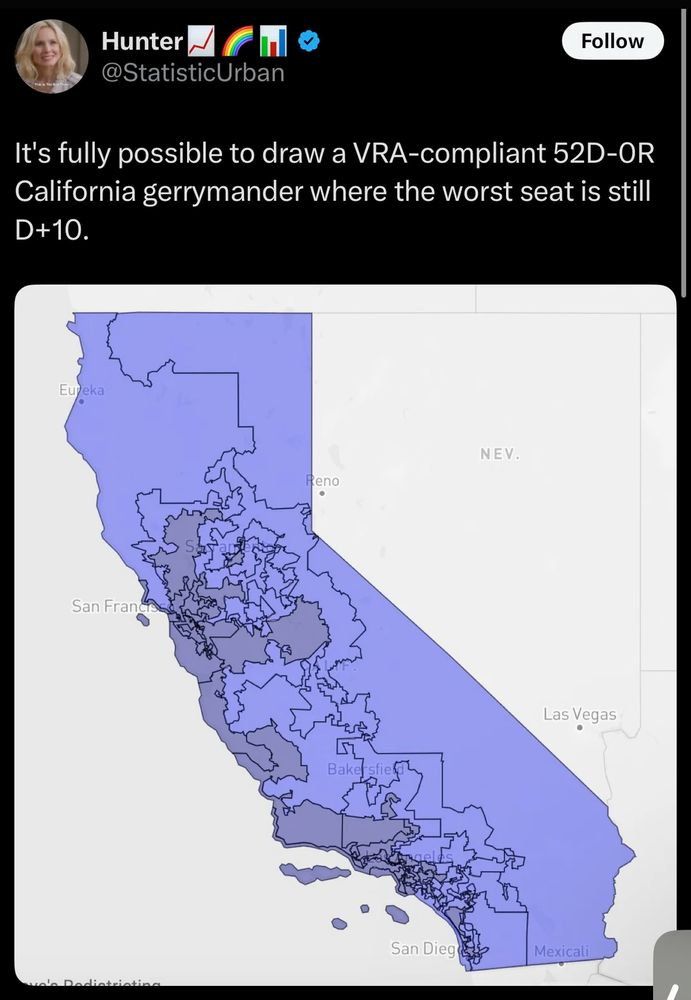
California and Other Blue States Should Declare a Congressional Redistricting Emergency

In 2008, California voters established the California Citizens’ Redistricting Commission to redraw state legislative districts, and in 2010, extended its powers to redraw congressional districts.
Within portions of the California Democratic Party in 2025, the latter power to redraw congressional districts is widely perceived as an act of unilateral disarmament when it comes to the empowered Republican legislative majorities in Florida, Texas and North Carolina. And now that both Trump’s White House and the Texas Republican Party want to eliminate as many as five more Democratic-held metropolitan seats in Congress, the idea of Newsom calling a special legislative session to refer an amendment to the voters to restore partisan gerrymandering powers to the legislature is being trafficked to news outlets.
In my opinion, California should keep their citizens’ redistricting commission, but should amend their constitution to provide for a “congressional redistricting emergency” period for legislative redistricting of congressional districts until the majority of congressional districts nationwide (217 out of 435 seats), or more broadly, every state assigned three or more congressional districts through reapportionment after each census, are covered by state constitutions which provide for citizens’ redistricting commissions.
Based in part off of the 2016 Interstate Compact for Fair Representation Act (SB 0322), which was proposed by then-Illinois State Senator (now Illinois Attorney General) Kwame Raoul, and passed the State Senate before dying in committee in the State House, here’s how I would amend the California State Constitution Article XXI Section 1 to carve out this exception:
“(b) In the year following the year in which the national census is taken under the direction of Congress at the beginning of each decade and in which at least one state with three or more congressional districts at the time of redistricting has not enacted the terms of Article XXI in substantially the same form in their own state constitution as applies to the constitutional districts of their state, the Legislature shall retain the right to amend a map of congressional boundary lines as proposed by the Citizens’ Redistricting Commission and to approve said amendments by majority vote of both houses and approval by the Governor. The Legislature shall retain the right to amend said boundary lines in an intervening year if any state enacts a similarly-timed adjustment of congressional boundary lines which fails to espouse the terms of Article XXI. Such compliance with this subsection shall be determined by the Secretary of State, who shall declare a state of congressional redistricting emergency to terminate upon determination of such compliance.”
This way:
- only a small portion of Article XXI would be amended to carve out the time-dependent congressional exception, since we’re wanting more states to adopt Article XXI in substantially the same form for their state government.
- Furthermore, it would encourage more Democratic-led states to keep their congressional gerrymandering powder dry for when it is needed for when interstate and anti-presidential conflicts arise.
- it would allow the Legislature to respond to mid-decade redistricting by another state if necessary.
- Finally, it would empower the Secretary of State to determine if any state has failed to adopt the terms of Article XXI in their state constitution to trigger legislative intervention.
This power should not be held by the legislature in perpetuity. This should be an emergency power that is used to stabilize Congress in a time of interstate conflict. It would be a departure from unilateral disarmament, instead treating interstate relations as a theater in which to seek diplomacy, mutual defense and good government.
But I can see such a move irking those who have pushed for decades in the trenches to unilaterally enact citizen redistricting by ballot initiative or legislation. I also acknowledge that Republican-led states like Arizona and Montana would be within their right to adopt similar exceptions to nonpartisan redistricting for congressional gerrymandering. Yes, this could become a “race to the bottom” as put by State Assemblymember Alex Lee.
In the Anglophone hell that is our first-past-the-post, single-winner elections for legislative branches nationwide, unilateral disarmament is no virtue, and keeping your gerrymandering powder dry to force concessions from other states is no vice.
I encourage readers to read this Penn State Law Review paper by Zachary J Krislov as well as this University of Chicago Law Review paper by Samuel P. LeRoy for great breakdowns on these “interstate compact” trigger laws on redistricting, the histories of such proposals and their potential efficacy.
Arreguin’s SB 9 and its possibilities
SB 9, authored by freshman state senator Jesse Arreguin, was the first major pro-housing bill passed by the California State Senate this session. It now goes to the Assembly.
SB 9 was originally written to “remove the requirement of property occupancy and amend parking standards” for ADUs, but was amended in committee to simply allow the California Department of Housing and Community Development (HCD) to 1) void any noncompliant local ADU ordinance 2) substitute with state ADU law until local govt passes remedial fixes.
Also noting that, under AB 72 (2017), the HCD is allowed to decertify a local government’s noncompliant housing element (after locals’ nonresponse to repeated notices), which results in “builder’s remedy” kicking in until a complaint housing element is approved. This is the most direct enforcement action possible for HCD under current law.
SB 9 (Arreguin) would give some more teeth to HCD’s reactive enforcement powers beyond simply informing the AG of violations to trigger litigation. Theoretically, it would also function as another “builder’s remedy” for developers seeking to build more housing in the interim. (Would have been nice to keep the original text as well, but whatevs.)
Thinking that if SB 9 (Arreguin) becomes law for ADU ordinances, this could also become a template for future bills allowing HCD to temporarily void other implementing ordinances (as allowed by the HOME Act, SB 10, SB 6, AB 2011, etc.) and trigger builder’s remedy.
I’m getting the sense that Arreguin’s bill received better treatment in the Senate than Scott Wiener’s SB 79 (or Buffy Wicks’ AB 609, which just passed the Assembly this week) will likely receive because legislators are more receptive in this term to codifying stronger enforcement of existing state law rather than expanding allowed types of housing, exempting them from certain barriers, or investing more money into “affordable” housing.
Given that HCD will likely be placed by Newsom’s budget under a new California Housing and Homelessness Agency (CHHA), Arreguin’s SB 9 (if passed) will strengthen the state’s hand (and that of housing developers) against intransigent counties and cities in the years to come.
On the DPG’s Transition in 2025


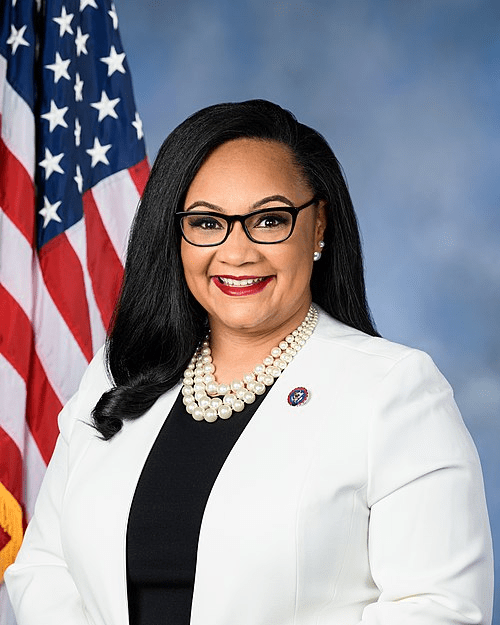
This past Saturday (March 29) in Lexington, Georgia, the Democratic Party of Georgia’s State Committee voted to amend the bylaws to make the next DPG Chair a full-time, full-paid position, one which does not hold any concurrent elected/appointed public office. This language was advocated by Chair and Congresswoman Nikema Williams.
On the morning of March 31, Williams emailed all State Committee delegates announcing her resignation as Chair of the DPG, making 1st Vice Chair and former State Representative Matthew Wilson the new DPG Chair until the next election for Chair in Q1 2027. Williams, who wishes to remain as U.S. representative for GA-5, cited the new bylaws as the reason.
Wilson, who has served as 1st Vice Chair since 2023, is also the first openly-gay person to serve as DPG chair, and was the second openly-gay person elected to the state legislature. He resigned to run for Insurance Commissioner in 2022 but was defeated in the primary by Janice Laws Robinson.
The next elected chair will also ostensibly be the first full-time Chair since former state representative Jane Kidd, who once represented the area of Oglethorpe County and helped secure Oglethorpe High School as the venue for the meeting. Kidd, who served as Chair from 2007 to 2011 and previously served in the State House from 2005 to 2007, herself was given a bouquet of roses onstage from Williams and DNC members Wendy Davis and Maria Banjo following the announcement of the result for her service to the party.
On Nikema Williams’ tenure
It must be noted that Williams, who previously served as 1st Vice Chair (2011-2019) under Mike Berlon and then DuBose Porter and briefly served as interim Chair following Berlon’s resignation in 2013, was the first Black woman and second African American to serve as Chair of the Party after former state representative Calvin Smyre, who was appointed to the position by then-governor Roy Barnes from 2001 to 2004. Williams herself is a former state senator who ran for John Lewis’ former seat in Atlanta (GA-5) following his death from cancer in 2020.
Williams can attest to a tenure as Chair complete with electoral ups and downs:
- In the 2020 cycle alone, Williams led the party to flip the state for Joe Biden, win two U.S. Senate seats by runoff with candidates Jon Ossoff and Raphael Warnock, and increase the party’s share of congressional seats to its highest in a generation with the election of Carolyn Bordeaux in GA-7. In addition, the party continuously increased its net share of seats in the State House throughout her term, and secured Warnock a full Senate term in 2022. Finally, she presided over several revisions to the DPG bylaws and platform and oversaw expansion of both the voter protection program as well as vote-by-mail outreach.
- She also presided over bitter electoral losses in 2020, when Daniel Blackman lost a close runoff for Public Service Commissioner; 2022, in which Democrats won none of the statewide executive row offices (and lost worse in terms of percentage compared to 2018); and 2024, when Kamala Harris lost Georgia for President to Donald Trump. In addition, in the 2020 and court-ordered 2023 redistricting cycles, the Kemp Republican trifecta took several casualties in both houses of the legislature, forced Carolyn Bordeaux out of GA-7, and took casualties in some county commissions as well.
What’s in Store for the Next Chair
Depending on who becomes the next Chair, whoever succeeds Wilson will be tasked with leading the party through upcoming special elections for Public Service Commission this spring, municipal elections in the fall, as well as a bid for all state row offices and the re-election bid of Jon Ossoff in 2026. Ossoff, who is the only Democrat up for re-election in a state flipped by Trump, will be a top linchpin candidate for Democrats to retain in 2026, as there are few other target states which Democrats have a reasonable chance at flipping.
While Williams managed to lead the party through some necessary changes and had incredible success in 2020, I believe that the party began to decline in electoral fortune after she took office in Congress.
In comparison, the next Chair will be a full-time Chair whose job it will be to serve as top cheerleader and organizer every day of the week, akin to Ben Wikler in Wisconsin or Anderson Clayton in North Carolina. It was also adopted last June by Texas Democrats at their state party convention, which was followed after the presidential election by the resignation of longtime chair Gilberto Hinojosa (for unrelated reasons), and will be first applied to whoever will be the next TDP Chair in time for the 2026 budget.
Special Elections and More
On April 4, adding to the excitement, State Sen. Jason Esteves also announced his resignation as Treasurer of the DPG.
On the same day, Wilson announced the call for a special in-person State Committee meeting set for May 3 at the Teamsters Local 728 (aka DPG headquarters) in Atlanta. Among the items up for a vote:
- special elections for Chair and Treasurer (deadline to file: April 23)
- endorsement of Daniel Blackman in four-way primary for PSC District 3 special election (requires 2/3s)
- amendment to bylaws regarding gender of sitting Vice Chair if next specially-elected Chair is of the same gender (requires 2/3s)
What this means so far:
- It is likely that Esteves will run for Governor, which would make him the first Latino nominee for governor if nominated.
- Wilson wants to stay on as First Vice Chair so he won’t run for Chair, and this proposed amendment would resolve that issue
- Blackman, who has ran twice before for PSC (both against incumbent Lauren “Bubba” McDonald), needs all the help he can get.
Chair candidates so far


Three candidates have announced so far for Chair, as of April 7:
- Charlie Bailey, former Fulton County District Attorney who was the nominee for Attorney General in 2018 and Lieutenant Governor in 2022.
- Nabilah Islam Parkes, Georgia State Senator (SD-7), first Muslim woman elected to State Senate
- James “Jay” Jones, Member of the Chatham County Board of Commissioners, Chatham County Democratic Committee Chair, DPG Congressional District Chair for GA-01
- Wendy Davis, DPG member to the Democratic National Committee (2012-present), Democratic nominee for GA-14 (2022), former city commissioner in Rome, Georgia (2014-2021)
- Jamie Allen, Senior Policy Advisor for the State House Democratic Caucus (2025-present), former Contracted Capacity Building Specialist for Kaiser Family Foundation (2015-2022), former HIV Prevention Coordinator for the Georgia Department of Public Health (2021-2024)
Bailey launched his campaign with an email touting notable names for endorsements, including former Governor Roy Barnes and Atlanta mayors Andre Dickens and Shirley Franklin.
Islam Parkes launched her campaign with her electoral background, both for others and her own time as State Senator, and her platform:
“Turn Georgia into a fundraising powerhouse to support every level of the ticket
Invest in full-time organizers across the state
Launch new training programs to build the next generation of Young Democrats
Give rural Democrats the resources and tools they need to win
Build out cutting-edge digital, data and influencer programs
Run a party that’s transparent, accountable and focused on winning.”
Jones’ platform states “five commitments”:
- A Party That Reflects the People We Serve
- A Party That Sees Us, Serves Us, and Stands With Us
- Rural Georgia Deserves More Than a Mention
- Year-Round Organizing Is Non-Negotiable
- Unity Doesn’t Mean Uniformity
Wendy Davis:
Jamie Allen:
- Year-round, statewide voter engagement—especially in rural communities, communities of color, and among young voters
- Real investment in county committees, with tools and training to help them thrive
- A long-term, sustainable fundraising strategy to fuel grassroots organizing
- Intentional leadership development to grow the next wave of Democratic talent
- A commitment to unity, transparency, and accountability across all levels of the party
What I’m looking for
As a State Committee delegate, here’s what I’m hoping for in a State Party Chair:
- Treats all nonpartisan elections – statewide and municipal, including judgeships – as partisan elections worthy of recruiting and endorsing candidates;
- Supports streamlining our affiliates policy to allow for mass, paid membership for all Democrats, regardless of gender or age, as well as an indigenous source of fundraising;
- Supports treating affiliates as a third leg of a three-legged stool of the party base, alongside the county committees and the elected Democratic public officials;
- Supports Establishing a Code of Conduct for the party, its affiliates and its elected public officials;
- Supports a requirement that 1) caucuses and councils consist solely of State Committee members and 2) have at least two regional vice chairs;
- Supports establishing a party-owned news outlet (digital, print, video and audio) with a part-time editor-in-chief to reach voters across the state with progressive messaging and counter anti-progressive narratives;
- Supports a reconsideration of the role of the quadrennial State Party Convention, whether to make it an annual convention or to remove the mandate for the state convention from the party rules entirely;
- supports establishing a Labor Council and an Indigenous Caucus;
- supports merger of the platform and resolutions committees into a single standing committee;
- supports coordination of efforts for county committees to acquire brick-and-mortar county headquarters.
In short, I’m looking for a party chair who can make the party a thermostatic, attention-holding force for progressive liberalism within and beyond the electoral space across the state.
Can these candidates bring any of this before the gubernatorial election? Let’s find out.
Deleting Facebook and Twitter at 38
I turned 38 on February 5.
I have had a Facebook account since November 2005, which I created while I was a freshman at Oglethorpe University, when college classmates were encouraging each other to create a Facebook profile to converse with each other, back when smartphones weren’t a thing yet, back when most computers on campus were connected using DSL.
In 2016-2017, I deactivated that account, in which so many of the “friends” from earlier in my life, from Warner Robins and Macon State and Oglethorpe were not too keen on my increasingly “political” posts, and created this account.
What has transpired over the last month should not have been the impetus for me to do this, and I know that I should have done this years ago.
I am now about to delete this account, that previous account, and maybe two other accounts. Not merely deactivate, but delete them entirely. No more of me on here.
This month, I’ve marked three Twitter accounts, two Instagram, two Threads, and four Facebook profiles for deletion, which should finish by the beginning of March.
This will be a new experience for me. Taking greater charge of the data I write about myself, of downloading and backing up what I can take, even of deleting what Facebook won’t let me download (i.e., group posts). I’ve spent some of this week deleting groups and pages I’ve created over the years, and there were several of them, at least until Facebook ran into “problems” with deleting groups of which I am admin.
The last year has shown me a bit about what and who I will have to cut myself off from, with what and whom I have to burn bridges and live without. And now, so are many of you. Funny how that works.
And Facebook has long shown its age, and its demographic is aging hard. So has Twitter.
So I will no longer age with them, and vice versa. Separately, but not together.
None of you have to age with a centralized silo like this, one which keeps so much of your data and connections hostage.
This is an act of one taking more control over their life, one with potential ramifications for one’s future as a human being but which can also slowly free oneself from what someone once called “poaster’s madness” (yes, they spelled it “poaster’s” with an “a”).
This is not a heroic thing to do. This is the least I should do at this moment. This is basic mental health in a time when madness is rewarded with misguided catharsis, a time which I am sure will get worse before a (dis)proportionate reaction comes around.
I apologize to the 1.4k Facebook friends I had from my recent profile, to the many more friends I made along the way, as well as to the many political individuals whom I first met over Facebook since 2005.
I also apologize to many of my college friends, of whom I made far more through Middle Georgia State (formerly Macon State) and the Warner Robins campus of Central Georgia Tech (formerly Middle Georgia Tech). I also apologize to those who I’ve made through the odd jobs I’ve done for them: candidate and issue campaigns, website design, and more.
Erasing Oneself from the Narrative
I feel that healing the rot caused by the roots of the housing supply crisis, which social media silos like Facebook and Twitter have only inflamed, is a mass, interpersonal struggle, not merely a personal trifle.
Wresting control over one’s attention and self-awareness away from car-brain and (for-profit) social media brain is crucial for where we end up next in our politics.
I see both of these mentalities emanating from the same alienating, atomizing root, in which one can live in the “wealthiest, most powerful nation-state in the history of the human species”(™) and find oneself increasingly isolated in exurbs and isolated alongside 3 billion others on Facebook.
And we wonder why radicalization toward misanthropic, illiberal politics has increased in purchase.
But if the single-family, car-centric zoning of housing is a crisis facilitated by its design toward consumption of land, can that be linked to the design of not only the social media algorithms feeding posts and ads to users’ eyeballs, but also the functional design of continuous scrolling?
It is time to allow ourselves to densify our housing and build inward, build more apartments closer to public transit, build more public transit, build away from the Sunbelt, and build away from wildland-urban interfaces.
Similarly, it is time to choose media which respects our autonomy and right to self-moderate, respects our attention and does not continually feed us more content without our deliberation, allows us to retain and relocate our data and identity, allows us more control in how we wish to present ourselves, allows us to seek more consensus rather than contention in the projection of reality, allows us to refuse a platform to the misanthropic.
The status quo that we have right now does none of those things.
Therefore, as I have fed into this status quo for nearly 20 years of my life, as part of the West Coast burns, as the federal administrative state is set on fire from inside the White House, I erase myself from this narrative. I deny this beast any more of what I’ve fed it, and reclaim my time. I begin the healing process which I’ve denied myself all of these years. And I will try to actually blog long-form more often.
Dear reader, I hope you do, too.
I am now thinking frequently about these lyrics from Philippa Soo’s performance as Eliza in Hamilton:
“I’m erasing myself from the narrative
Let future historians wonder
How Eliza reacted when you broke her heart
You have torn it all apart
I’m watching it
Burn
Watching it burn
The world has no right to my heart
The world has no place in our bed
They don’t get to know what I said
I’m burning the memories
Burning the letters that might have redeemed you
You forfeit all rights to my heart
You forfeit the place in our bed
You sleep in your office instead
With only the memories
Of when you were mine
I hope that you burn”
Per The Fediverse Report:
Tumblr has reconfirmed that it is working on connecting to the fediverse. In late 2022, Automatic CEO Matt Mullenweg said that the site was going to add ActivityPub support ‘soon’. Plans changed for Tumblr, including staff layoffs, and for a long time it was unclear if this plan was actually going to happen. In summer 2024, Tumblr announced that they would be working on moving the backend of Tumblr to WordPress. In an AMA this week, the company said that this migration of Tumblr to WordPress means that Tumblr can also use the plugins of WordPress, including the ActivityPub plugin. This means that people will be able to add ActivityPub to their Tumblr blogs. Not much is known about how this would work in practice.
Let’s see. Not holding my breath.
This year was interesting
Had quite a few experiences this past year:
- I visited Texas for the second time, and:
- One sister got married in San Antonio
- I drove an e-scooter for the first time
- I met my oldest sister in person for the first time in 11 years, with her having driven down from Montana to Georgia;
- Elections, elections, elections all over;
- Briefly had a job canvassing for voter registration;
- Elected to the DPG State Committee;
- Went to two funerals, one in Fort Valley and one in Sandy Springs;
- had my public student loans forgiven;
- reached 150lb in weight, 29in in weight circumference, 0.42 in waist-height ratio for the first time since high school;
- developed lots of flaking all over my face;
- began driving my Mom’s car full-time;
- saw our local Pride festival organization melt down because the director had drug charges thrown at him.
This year, my goals:
- get a job
- get therapy
- get a PCP
- get health insurance
- buy an e-bike
- date?
- get a used car?
- clear out the storage
- get dental work done