Category Archives: Politics

Japanese Partnership Registries are Being Standardized

As of November 1, 20 prefectures and 150 municipalities in Japan have joined a sort of “interstate compact” for partnership registries, the “Partnership System Municipal Cooperation Network”. While multiple such agreements were established between cities and some between prefectures, this is the first to be advertised as one which any jurisdiction in Japan can join.

Outside of recognition by the national government and ongoing litigation in national courts on same-sex marriage, this network is the most high-profile effort at a national partnership registry for same-sex and unmarried couples in Japan to date. It is also the most serious attempt at such since the first partnership registry was established in Shibuya ward in Tokyo in 2015.

Should be interesting to watch progress on this network in 2025, despite what’s likely to happen in the United States.

On Harris/Walz and Housing

Early feelings after Harris picked Walz

This feels awkward for me to see this play out today. I’ve been following Minnesota politics since at least 2019, when I first started reading about the Minneapolis 2040 plan, which made Minneapolis the poster child of the YIMBY movement.

The news of how the Minneapolis 2040 plan allowed for the suppression of rent increases across the city accompanied the increasing success of movements in Oregon and California to increase housing density.

My interest in Minnesota has grown from that to the George Floyd protests and riots, to the DFL winning the slim trifecta in 2022, to the numerous legislative victories secured over the last two sessions, to the screaming matches accompanying the end of this last session, to Walz now being selected for this campaign as running mate.

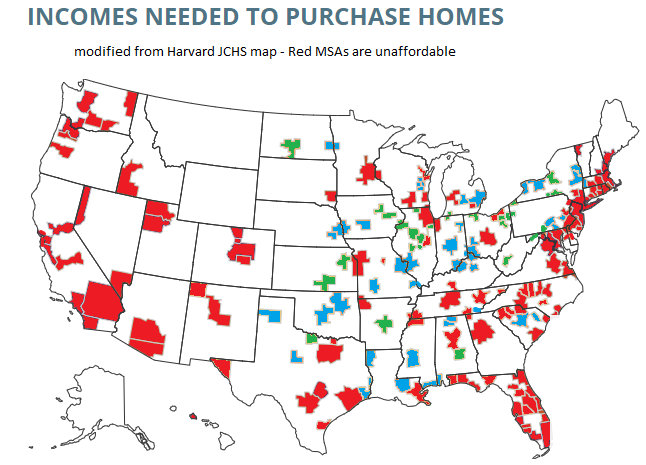
But the DFL trifecta, if it holds in November’s state house elections, will have to debate spreading housing abundance at the state level next legislative session. Because, if anything, the decades-long impact of the previous restrictive housing regime – the single-family zoning, parking mandates and legacies of redlining, all enacted at the municipal and county level across Minnesota – led in part to the 2020 riots. But the city governments outside of Minneapolis will not give up that power over zoning easily.

For Harris-Walz, the campaign’s rhetoric in favor of progressive policy on housing will easily run up against strong economic and political forces, but will also lack political gravitas if the campaign does not embrace housing abundance and density-friendly zoning reform federally.

After the Raleigh Speech

The YIMBYs are celebrating VP Harris as the YIMBY candidate after her first policy speech in Raleigh.

Regarding the speech, I wonder how much of her statements on housing reform are a continuation or strengthening of the Biden-Harris “Housing Supply Action Plan” from 2022.

Housing Supply Action Plan

As of August 13, 2024:

  • the Federal Housing Finance Agency had approved policies and pilots to reduce closing costs for homeowners, including a pilot to waive the requirement for lender’s title insurance on certain refinances
  • the Consumer Financial Protection Bureau would pursue rulemaking and guidance to address anticompetitive closing costs imposed by lenders on homebuyers and homeowners.[2]
  • the Department of Housing and Urban Development (HUD):
    • announced a Pathways to Removing Obstacles to Housing (PRO Housing) program to provide $85 million in $10 million grants to jurisdictions which have acute housing shortages and are working to address barriers to housing production and preservation;[3]
    • updated its guidelines to increase the dollar amount threshold at which a multifamily loan for FHA-insured mortgages is considered a large loan and is subject to additional underwriting requirements from $75 million to $120 million;[4]
    • allowed larger loans to participate in the agency’s Low Income Housing Tax Credit (LIHTC) Pilot Program;
    • allowed public housing authorities (PHAs) to more easily use housing vouchers and mixed-finance transactions to create or preserve housing;[5]
    • published new guidance for public housing authorities and multifamily housing owners participating in the Rental Assistance Demonstration;
    • launched a Legacy Challenge to encourage communities which directly receive Community Development Block Grants from HUD to leverage low-cost, low-interest loans for housing investments
    • announced funding for research into commercial-to-residential conversions for a potential guide for state and local governments.[2]
  • the Department of Transportation:
    • announced its Reconnecting Communities and Neighborhoods program to provide up to $3.16 billion for planning and capital construction projects that prioritize disadvantaged communities and improve access to daily destinations, including a $450 million Regional Partnership Challenge to incentivize regional partnerships;
    • released new guidance to streamline and clarify requirements for closing DOT loans for residential development near transit, including commercial-to-residential conversions;[6]
  • the Economic Development Administration (EDA) updated its “Investment Priorities” that guide the agency’s grantmaking to include an emphasis on efficient land use and density;
  • the Environmental Protection Agency (EPA) announced its $27 billion Greenhouse Gas Reduction Fund (GGRF) to mobilize capital for retrofits of existing homes and buildings, construction of zero emissions buildings, and commercial to residential conversions, among others.
  • the Advisory Council on Historic Preservation proposed a method which would exempt several maintenance activities from review under Section 106 of the National Historic Preservation Act for historic preservation of millions of federally-funded, licensed or owned housing units nationwide.[7][8]

We won’t find out more until after this week, but the current HSAP is the most thorough piece of government action in favor of housing density in U.S. history, even though the record amount of housing construction this year is still well below the millions-long backlog.

It may be billed as an “all of government plan”, and it may make heavy use of DOT and HUD, but it doesn’t go far enough in maximizing executive power to push cities to pass pro-density zoning reform.

Harris’ HSAP Part 2

To quote from Harris’ press release:

Vice President Harris knows that our nation’s housing affordability crisis is making it hard for tens of millions of Americans to make ends meet while putting the American Dream of homeownership out of reach for too many working families. That’s why she will launch an urgent and comprehensive four-year plan to lower housing costs for working families and end America’s housing shortage.

  1. Calling for the Construction of 3 Million New Housing Units To End the Housing Supply Shortage in the Next Four Years. There’s a serious housing shortage across America, and it’s driving prices up. Vice President Harris will work in partnership with industry to build the housing we need, both to rent and to buy, and to take down barriers that stand in the way of building new housing, including at the state and local levels. This will make rents and mortgages cheaper.
    • First-Ever Tax Incentive for Building Starter Homes. A Harris-Walz Administration will propose the first-ever tax incentive for homebuilders who build starter homes sold to first-time homebuyers—alleviating the shortage of houses on the market for aspiring homeowners. This would complement the Neighborhood Homes Tax Credit that encourages investment in homes that would otherwise be too costly or difficult to develop or rehabilitate.
    • A Historic Expansion of the Existing Tax Incentive for Businesses That Build Rental Housing that is Affordable.
    • A New Federal Fund To Spur Innovative Housing Construction. A Harris-Walz Administration will propose a new $40 billion innovation fund—doubling down on the $20 billion Biden-Harris Administration’s proposed innovation fund. Like that proposal, it would empower local governments to fund local solutions to build housing. It would also go further to support innovative methods of construction financing, and empower developers and homebuilders to design and build rental and housing solutions that are affordable—with one condition: they must show they will deliver results. This fund will support the expansion of innovative local efforts, like those in Wake County, North Carolina where they are using American Rescue Plan funds to build or preserve 2,400 affordable housing units including a 100-unit development coming online at Kings Ridge and a 176-unit affordable housing development at Tyron Station. Vice President Harris will also take action to make certain federal lands eligible to be repurposed for new housing developments that families can afford.
    • Cut Red Tape and Needless Bureaucracy. These plans will build on the Biden-Harris Administration’s efforts to cut red tape and enable more home building to bring down housing costs—which have advanced record levels of new home construction. Pushing this forward also means streamlining permitting processes and reviews, including for transit-oriented and conversion development, so builders can get homes on the market sooner and bring down costs.
  2. Lowering the Rent for Hardworking Americans by Taking on Corporate and Major Landlords. In addition to ongoing efforts by Vice President Harris and President Biden to expand rental assistance for hard-pressed Americans including for veterans, boost housing supply for those without homes, enforce fair housing laws, and make sure corporate landlords can’t use taxpayer dollars to unfairly rip off renters, today she is proposing plans to:
    • Stop Wall Street Investors from Buying Up and Marking Up Homes in Bulk. Community after community feels taken advantage of by Wall Street investors and distant landlords. Vice President Harris is calling on Congress to pass the Stop Predatory Investing Act, to curtail these practices by removing key tax benefits for major investors who acquire large numbers of single-family rental homes.
    • Stop Rent-Setting Data Firms From Price Fixing To Raise Rents by Double Digits. Corporate landlords are using private equity-backed price-setting tools to collude with each other and jack up rents dramatically in communities across the country. Vice President Harris is calling on Congress to pass the Preventing the Algorithmic Facilitation of Rental Housing Cartels Act, to crack down on these companies that contribute to surging rent prices.
  3. Providing Historic $25,000 Down-Payment Support for First-Time Homeowners. Many Americans work hard at their jobs, save, and pay their rent on time month after month. But they can’t save enough after paying their rent and other bills to save for a down payment—denying them a shot at owning a home and building wealth. As the Harris-Walz plan starts to expand the supply of entry-level homes, they will, during their first term, provide working families who have paid their rent on time for two years and are buying their first home up to $25,000 in down-payment assistance, with more generous support for first-generation homeowners. The Biden-Harris administration initially proposed providing $25,000 in downpayment assistance only for 400,000 first-generation home buyers—or homebuyers whose parents don’t own a home—and a $10,000 tax credit for first-time home buyers. Vice President Harris’s plan will simplify and significantly expand that plan by providing on average $25,000 for all eligible first-time home buyers, while ensuring full participation by first-generation home buyers. It will expand the reach of down-payment assistance, allowing over 4 million first time-buyers over 4 years to get significant down payment assistance.

My view on Harris’ housing plan

Initially, Harris’ initial announced plan to go after price-gouging scared the YIMBYs and enraged Trump supporters, with conservative economists outright denying the existence of price gouging as a major cause for inflation and sticker shock. But the broader plan announced in Raleigh, as described in the press release, turned the YIMBYs back in her favor. Blogger Noah Smith compared her plan on housing to an adaptation of Singapore’s model, in which the government owns 90% of the land, citizens purchase a 99-year lease on the property, and the government issues a helpful grant to first-time homebuyers (and a significantly-lesser grant to second-time homebuyers).

However, if Harris/Walz are elected but lack a trifecta (which is likely at this point), I think the part of her plan that would “make certain federal lands eligible to be repurposed for new housing developments that families can afford”, the most “Singapore-like” portion, is perhaps the most direct action that they could take, but it would need further expansion.

Room for Improvement

What about private or public entities which receive funding from, or have (sub)contracts with, the departments of Education, Defense, Veterans, Health and Human Services, and maybe Interior, not to mention other independent agencies? Could the White House hinge federal funding or (sub)contracts upon recipient institutions and companies reforming their zoning policies along the White House’s preferred model zoning code, as well as expeditious compliance and permitting processes?

Imagine what this could do for on- or off-campus housing for students, faculty or employees of colleges and universities which receive federal funding. Imagine what this could do for military and veteran families who live near military bases and VA hospitals. And imagine the indirect effects for those who don’t live as close to these entities.

Also, this brings to mind what avenues are available for federally-owned land which is within city limits, like properties owned by Veterans Affairs or HUD. But even the VA has suffered under years of mismanagement which allowed issues like what happened to the West Los Angeles VA Medical Center and Home, the only one of its kind in the United States, to fester.

At least for veterans, there should be some level of collaboration between VA and HUD on housing for veterans, since the VA is so myopically focused on healthcare rather than housing. The HUDVeterans Affairs Supportive Housing (HUD-VASH) program (VA.gov, HUD.gov), which combines HUD’s Housing Choice Voucher (HCV) rental assistance for homeless Veterans with case management and clinical services provided, doesn’t seem to be enough. Does the VA need a Veterans Housing Administration, or does HUD need an Office of Veterans’ Housing, to more actively support veterans’ housing needs?

Or maybe this issue of land should involve the Department of the Interior? HUD did sign an MoU with the DOI in August 2023 to allow local communities to acquire federally-owned land in the Las Vegas metro area to build affordable housing at $100 an acre. How much metro-area land is owned by DOI or its Bureau of Land Management (BLM)? Maybe a new BLM Assistant Director for Urban Land Development?

Harris has an opportunity to broaden her HSAP 2.0 into more departments, including Justice, Education, Defense, Veterans, Health and Human Services, and maybe Interior. Like Biden’s National Climate Task Force (including the Energy, Interior and Agriculture Secretaries, the Directors of EPA and CEQ, the National Climate Advisor, the National Clean Energy Advisor and the Special Envoy on Climate Change), Harris will need an Inner Housing Cabinet, consisting of the Secretaries of HUD, Transportation, Interior, VA and Justice, Directors of EPA and CEQ, the National Climate Advisor, and the National Clean Energy Advisor, among others.

So in summary, Harris will need to expand upon her and her predecessor’s HSAP thusly:

  • Create a National Housing Task Force aka “Housing Cabinet”
  • Appoint a National Housing Advisor to the White House
  • Draft a Climate-oriented Executive Order requiring all executive-branch agencies to develop policies which promote housing infill and density on federally-owned land
  • Draft a Climate-oriented Executive Order requiring all federal (sub)contractors and funding recipients to prioritize housing infill and density
  • Create veterans’ housing offices in both VA and HUD
  • Designate an Assistant Director for Urban Land Development in the BLM
  • Acquire land within metro areas or cities to lease to private developers of federally-compliant housing construction
  • Direct the Justice Department to side with YIMBYs in federal court cases challenging Euclid + other decisions and laws allowing for restrictive zoning, attack such laws on 5th + 14th Amendment grounds
  • Defend federal zoning directives from local NIMBYs
  • Promote a model zoning code and building code on federally-owned land.

Supply-Side Progressivism

As of this convention, the parties are in realignment on several issues. Perhaps the most consequential realignment will be on housing, construction and zoning. The Democrats’ new taste for (federally- or state-directed) deregulation of housing may not sit well with existing urban or suburban political leaders, but there doesn’t seem to be any other viable way to deal with not only the housing crisis, but also its centrality to the carbon footprint of the United States.

But the Democrats have a long way to go on supply-side progressivism in general, especially when it comes to both selective deregulation (or is it “alter-regulation”?) and funding for supply. And if housing is something where Democrats are experiencing a realignment in favor of deregulation, where else can Democrats also have such a deregulatory shift? Maybe the supply of doctors?

Thoughts on the Last day of Veepstakes

I’m rooting for MN Governor Tim Walz to be VP Harris’ running mate. He has the rare experience of being in both federal legislative and state executive roles.

I would be surprised if PA Governor Josh Shapiro became VP Harris’ running mate. Not too disappointed, just surprised.

The last time either major party nominee selected a running mate with no federal legislative experience was Sarah Palin (R, 2008). The one before that was Sargent Shriver (D, 1972). Earlier:

  • Spiro Agnew (R, 1968, 1972, won, resigned in second term)
  • Earl Warren (R, 1948, lost, later became Supreme Court Chief Justice)
  • John W. Bricker (R, 1944, lost, later became a senator)
  • Henry A. Wallace (D, 1940, won)
  • Frank Knox (R, 1936, lost)
  • Charles G. Dawes (R, 1924, won)
  • Charles W. Bryan (D, 1924, lost)
  • Calvin Coolidge (R, 1920, won, later became president)
  • Franklin D. Roosevelt (D, 1920, lost, later became president)
  • Thomas R. Marshall (R, 1912, 1916, won)
  • John W. Kern (D, 1908, lost, later became a senator)
  • Theodore Roosevelt (R, 1900, won, later became president)
  • Garret Hobart (R, 1896, won)
  • Arthur Sewall (D, 1896, lost)
  • Whitelaw Reid (R, 1892, lost)
  • Chester A. Arthur (R, 1880, won, later became president)
  • Richard Rush (N-R, 1828, lost)
  • Daniel D. Tompkins (D-R, 1816, won)
  • Jared Ingersoll (F, 1812, lost)
  • Charles Cotesworth Pinckney (F, 1800, lost)

Just saying, it would be most wild for VP Harris to pick PA Governor Josh Shapiro, who does not have federal legislative experience, for this single reason. Only one person with no federal legislative experience becoming vice president since WWII is not a good sign, IMO.

Syllables

Another thing: the last time that a nominee for president had a running mate with more syllables to their last name than themselves was Bush-Cheney 2000 and 2004.

Others:

  • Gore-Lieberman (D, 2000, lost)
  • Mondale-Ferraro (D, 1984, lost)
  • Nixon-Cabot Lodge (R, 1960, lost)
  • Willkie-McNary (R, 1940, lost)
  • Smith-Robinson (D, 1928, lost)
  • Cox-Roosevelt (D, 1920, lost)
  • Taft-Sherman (R, 1912, lost)
  • Taft-Sherman (R, 1908, won)
  • Bryan-Stevenson (D, 1900, lost)
  • Cleveland-Stevenson (D, 1892, won)
  • Blaine-Logan (R, 1884, lost)
  • Hayes-Wheeler (R, 1876, won)
  • Grant-Wilson (R, 1872, won)
  • Grant-Colfax (R, 1868, won)
  • Cass-Butler (D, 1848, lost)
  • Polk-Dallas (D, 1844, won)
  • Clay-Frelinghuysen (W, 1844, lost)
  • White-Tyler (W, 1836, lost)
  • Jackson-Van Buren (D, 1832, won)
  • Clay-Sergeant (NR, 1832, lost)
  • Clay-Sanford (DR, 1824, lost)
  • King-Howard (F, 1816, lost)
  • Clinton-Ingersoll (F, 1812, lost)
  • Adams-Jefferson (DR, 1796, won)

Conclusion

The only reason why Shapiro may already be selected is that it would be awkward to announce someone who is not Shapiro at the Philadelphia rally meant to debut the ticket. But at the same time, prioritizing winning Pennsylvania to this extent seems silly when you’re trying to imagine working with this running mate for (hopefully) 8 years of your life.

But either way, unity is needed, no matter who the running mate may be.

Why the American system of candidate nomination has led us to fascism (again)

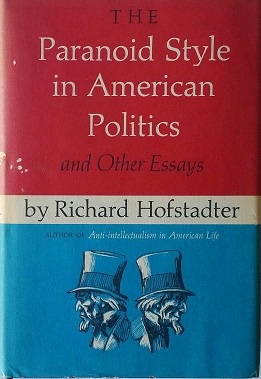
Cover of “The Paranoid Style in American Politics and Other Essays” by Richard Hofstadter
With regards to Richard Hofstadter

I very much favor how the Labour Parties in the UK and Australia nominate candidates for public office compared to the way that American parties nominate theirs, even though they have a parliamentary system compared to our presidential.

The primary and the caucus, which has been in increasing use by both major parties in the United States since the early 20th century but especially after the 1960s, are both paranoid, time-consuming, irresponsible, expensive garbage in comparison.

The primaries and caucuses have placed us in such a position that we are bowing down to:

  1. the millionaire and billionaire donors and barons who fund primary candidates’ campaigns and think tanks;
  2. the Republican, anti-democratic state governments who control the primaries;
  3. pollsters and TV talking heads who have a vested interest in the dramatic rot and instability of the republic for their ratings and ego.

Things should not be this over-engineered. We should not feel this helpless and listless. Democracy should not involve sacrificing any political party’s freedom of association for the sake of financial expediency and outsourcing of responsibility to people with conflicting and divergent interests.

We should not use primaries and caucuses, both of which necessitate the demand for more money and advertising unleashed by the Citizens United decision.

But this century-long snowballing disaster has come to dominate our political thinking, at the expense of democracy in the republic.

Getting Biden to withdraw will not begin to fix the fundamental rot caused by the primary as an extension of the general election.

Reforming our elections toward various flavors of nonpartisan blanket primary will not solve this rot, either. In fact, it may further it, I’m sorry to say.

We are not a multiparty system because the primary and caucus, combined, is treated as an extension of the first-past-the-post general election, as a public utility to be regulated by state governments, even if they are ran by rival parties.

And now, fascism and feudalism govern so many states – and maybe soon the White House again – because our two-party system does not allow for building a cordon sanitaire, a clean rope, against anti-democratic forces.

Europe’s parliamentary systems understand this. Latin America’s presidential but proportional systems (except for Argentina, I guess) are made starkly aware of this, even as those presidential systems lead to rival parties in control of either branch of government and coming to frequent blows against each other. Their citizens often know which parties to block from power.

They also, mostly, understand to let parties be parties, and to not outsource the responsibility of nominating candidates or authoring legislation for legislative or presidential office to the state or to think tanks.

But to Americans, such thinking is foreign. Parties have long been weakened and demonized as an institution at all levels of government by the paranoid majority for generations.

We have become ideologically polarized, but have not allowed ourselves to split parties, represent those who support us, and not appeal to anti-democratic constituencies.

Why didn’t we? Why haven’t we?

And are we too late?

How much longer do we this rot fester before we start treating parties as parties, respecting their role in society, and let them flourish on their own power?

Hopefully this election will lead to that reckoning, one which we thoroughly deserve.

Or, alternatively, we will experience further, misguided destruction of the republic.

Democrats Need Focus

Not interested in the present White House contest

I’m not interested in the present bullshit.

Remain focused on the state legislatures, governors and attorneys general. They are the true sources of power in this country. The Supreme Court is 6-3, and Congress is incredibly hamstrung, thanks to the votes and laws of multiple state governments over decades. The balloons which they trial often make it into law or increase in popularity with like-minded counterparts across the country, and then sometimes flow upward into federal policy.

You may fear SCOTUS and what more they may allow, or what Trump will bring if he is elected again, but so many of you live under decades-long dark-red state rule with no option but to wait for demographics to shift in your direction just a little bit more each year, or each decade.

And what has that brought you? Learned helplessness, stuck in the suburbs of some red state, stuck being disappointed by the latest flow of bullshit from your state legislature.

And you pontificate on switching out the incumbent president for another nominee from whatever state while the sand continues to shift under your (and their) very feet.

Learn your history. Get some perspective. Relocate strategically. Plan accordingly.

Why liberals and socialists are reacting with hair on fire

I don’t think it’s a “circle jerk”, as a friend described it, at least not a total circle jerk. I have several thoughts about it.

They’re turning inward and insular because they’re being starkly reminded of the fragility of their appearance-dependent relationship with the nationalized centrist-Esque media and their donors, and they have no seeming refuge atm beyond, what, MeidasTouch? Lincoln Project? YouTubers?

Too many liberals want to be loved by nationalized media, and to keep their current relationship with that same media. Just as they’ve been with the judicial and executive branches of government, they may want to turn against nationalized media for now because things are going bad, but they always come back and never build out their own comparable counterpart to the conservative parallel economy. And their donors, small dollar and large all, are flighty as hell.

And the nationalization of the media apparently happened during the same period as the growth of the local news(paper) desert and the growth of Republican capture of state legislative majorities.

And the center-left are also lacking yet again for a strong bench of unifying personalities from outside the nationalized media to countervail the prevailing narrative, or to even fill a portion of the power vacuum which will be left if Biden withdraws or (worse) 25th-Amendments his remaining (first) term.

We may not have a Macron at the helm, but we also definitely don’t have a (less-problematic) Melenchon to offer an alternative, polarizing populist vision or personality. In leadership, We have a bunch of institutionalists and up-and-comers with the personality or relatability of a wet paper bag outside of their constituencies, none of whom are helping to build the parallel polis to protect their interests and narratives.

So we now see a circle jerk for those who only have (or seek) some distance from the nationalized centrist media and its blowback, not a full-blown parallel polis to buffer them ideologically from centrist blowback in a multitude of ways like what Trump has at his disposal.

Not even pro-Bernie people, as resentful as they may continue to be about 2016 or 2020 DNC, or people further left have built out much of their own parallel polis, unfortunately.

Free advice to Biden’s campaign

In France this week, Macron’s own prime minister, Gabriel Attal, got him to stop talking publicly about the election for the rest of this last week, because Macron, in his 40s, kept firing his mouth off at the political left (especially rival Jean-Luc Melenchon) at a time when that is absolutely not needed.

Macron may have looked at the numbers and decided that it would be better for the RN to grab a majority, appoint a far-right prime minister and try their hand at governing in such a way that the French public would be turned off afterwards.

Attal, OTOH, is actually fighting against this apathy, this resignation to an RN majority, and is not fighting those to his left. He’s actually committing to this “Republican front” strategy, and actually hates the far right more than he disagrees with the far-left. He knows ball.

This “Republican front” may have helped reduce the likelihood of a majority for the far-right National Rally in the runoff tomorrow, as per polls from yesterday. (UPDATE: It did, and Attal announced his resignation effective Monday. UPDATE: Macron rejected his resignation, wants him to stay until after the Olympics.).

If this is what’s needed to keep Biden in the election and keep Dems viable, then do it. Have him talk with a voice assistant at all public events like Jennifer Wexton. Have his surrogates campaign for him instead where necessary.

His actual voice is a worthy sacrifice if he’s that serious about running.

But if you’re going to side with anyone:

  • it must be Harris
  • you must support Harris completely, with no reservations.

We don’t need primaries

Hot take: French and British political parties do not use publicly-funded, state-ran primaries to nominate their parliamentary candidates, nor do they perceive their nomination contests to be public, mass affairs or extensions of the general election season which should be open to all party members or even non-party members.

Maybe we in the U.S. should reconsider using primaries (closed or open) to nominate our candidates or inviting participation from independents. Primaries add unnecessary expenses and time to campaigns and are incredibly inflexible to quality control concerns.

We really don’t need primaries, let alone open primaries.

Legalize proxy voting

Hot take: Legalize proxy same-day in-person voting.

It may violate the secret ballot, but if you want high turnout without relying upon early voting, drop boxes or the postal service, you’d allow voters to waive their right to a secret ballot and formally, temporarily give their power of attorney to another registered voter.

If you’re the type who wants to know the results on the night of and would rather that people show up on the day of, then proxy voting is the way to go.

France shows that it can work.

Good news from the states so far this year

  • Delaware’s legislature passed a repeal of their *statutory* death penalty, which awaits signature. 
  • Delaware Supreme Court legalized no excuse permanent absentee voting and early voting, overruling a lower court.
  • California will have a total ban on slavery on the ballot in November.
  • Wisconsin’s Supreme Court voted on party lines to legalize ballot drop boxes for upcoming elections. 
  • Ohio’s Citizens Not Politicians dropped off 730k signatures from the majority of Ohio counties for their amendment to institute a nonpartisan redistricting commission, which now awaits vetting by the Review Board.
  • Arkansas voters dropped off 100k signatures for an abortion legalization amendment, which now awaits vetting by the Review Board
  • Nevada will have an abortion amendment on the ballot in November
  • Michigan and Minnesota passed bans on gay/trans panic defense
  • California, Colorado will vote on marriage equality amendments, while Hawaii will vote on repealing language allowing the legislature to restrict marriage to opposite sex couples.
  • Maryland and New York will vote on inclusive equal rights amendments. 
  • Colorado, Florida, Maryland, New York, Nevada and South Dakota will vote on abortion legalization amendments. 
  • Nevada and Oregon will vote on adopting ranked choice voting in blanket primaries. Campaigns in Washington D.C. and Idaho have submitted ballot signatures for pro-RCV measures, and a campaign in Colorado have until August to submit 125k signatures. 
  • Florida and South Dakota will vote on cannabis legalization amendments.  
  • Minnesota passed a State Voting Rights Act and banned prison gerrymandering.

On Sheriffs, Counties and Connecticut

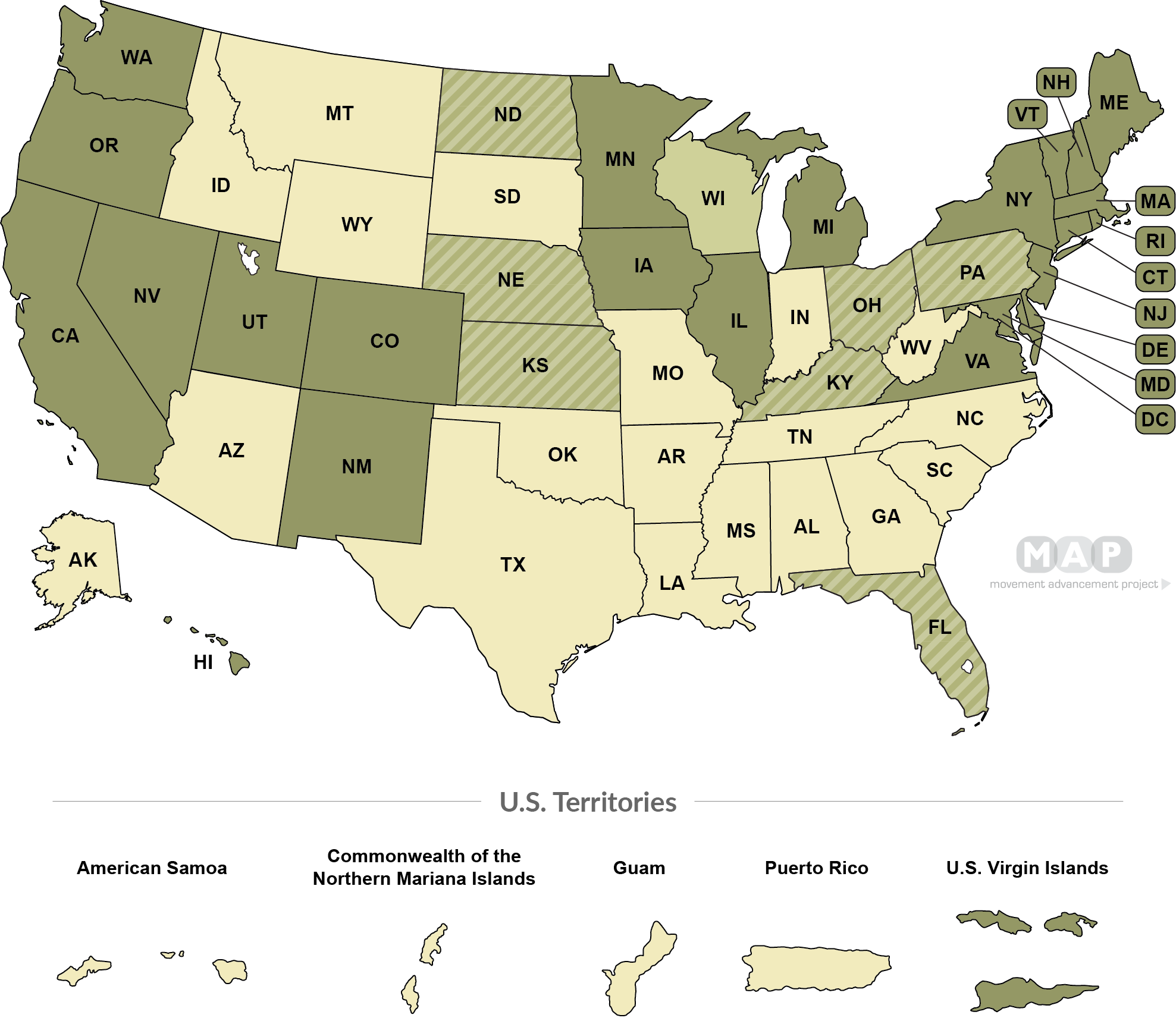
In regards to this October 2023 post from Democracy Docket about the non-necessity of elected sheriffs, I looked up which states abolished the role of sheriff. Turns out that there are few, but notable, examples:

  • Only Alaska and Connecticut lack an office of sheriff
  • Alaska does not have county governments.
  • Connecticut voters moved to abolish the office of sheriff in 2000, replacing the elected office with both state marshals and judicial marshals, which are both non-elected contractors.

But also, who runs the jails if not a sheriff?

Connecticut seems to be far ahead of most states on the question of the relevance of sheriffs, as well as the role of counties, to modern-day government and corrections. This also eliminates the nonsense of “constitutional sheriffs”, and the corruption and feudalism inherent to the office itself.

Imagine such abolition taking place in larger states. How much efficiency would this allow to state government when it comes to zoning, housing, infrastructure, and more?

Georgia Democrats Qualify for a Variety of Seats in a Presidential Year

Qualifying for the May 21 Democratic primary and nonpartisan election ended last Friday at noon.

Statewide:

  • John Barrow is running for Andrew Pinson’s seat on the Supreme Court. This is the first likely-substantial contest against an incumbent justice in years. This “nonpartisan” election is on May 21.
  • There will be a “nonpartisan” contest for an open seat on the State Court of Appeals. Attorney Jeff Davis will face off against Cobb County Magistrate Judge Tabitha Ponder. This “nonpartisan” election is on May 21.
  • The Public Service Commission elections have been cancelled again, and the current commissioners will remain on the ballot for the next two years. It’s likely that we will be voting on all five commissioners in 2026.
  • We are now running for 38 seats (2/3rds) in the Senate and 135 seats (3/4) in the House. To compare, since 1992, we’ve ran for at least 75% of the House in 1992, 1994, 1996 and 2020. 
  • We are running for District Attorney positions in 14 circuits. There will be Republican challengers in three circuits: Atlanta, Chattahoochee and Eastern.
  • Democrats are running for all 14 congressional districts. There will be Republican challengers in all but GA13.
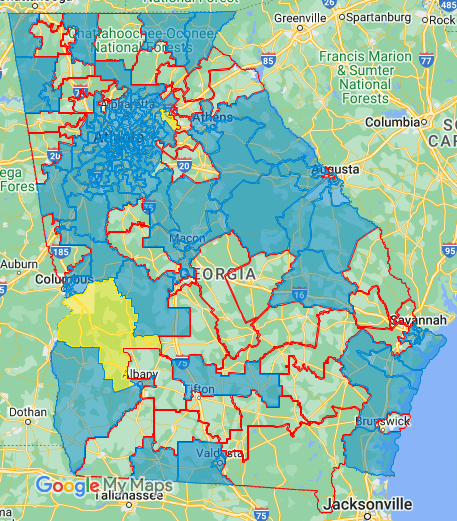
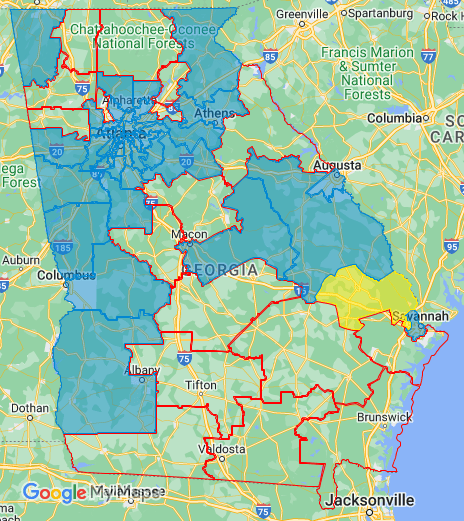
  • At the end of qualifying, we left HD104, a Biden district in Gwinnett County, HD151, a slightly-Trump voting district in Southwest GA, and SD4, a Biden district near Savannah, on the table. 

And now for local elections around Columbus:

  • We will have a Democrat, Carl Sprayberry, for HD139 (open).
  • We will have a Democrat, Ellen Wright, for SD29. 
  • Debbie Buckner in HD137 will have a primary challenge from Carlton Mahone Jr and a Republican challenger. 
  • Teddy Reese in HD140 will have a Democratic challenger in Alyssa Nia Williams. 
  • There will be a Democratic primary for the open seat in deep-red GA03. Val Almonord, who was the Democratic nominee in 2020 and 2022, will have a challenge
  • There will be a Republican challenger for GA02. 
  • We now have a Democrat running for District Attorney in Chattahoochee Circuit: criminal defense attorney Anthony L. Johnson. He has no primary opposition, and will be on the ballot in November against Republican and acting DA Don Kelly. We are also challenging a Republican for DA in Eastern Circuit as well. 
  • Our incumbent Sheriff Greg Countryman is running for re-election as a Democrat. He will be opposed in November by Republican Mark LaJoye.
  • Our incumbent state court solicitor Suzanne Goddard, who previously held office as a Democrat, is running for re-election as a Republican. We have a Democratic challenger in Shevon Sutcliffe Thomas. 
  • Buddy Bryan is running for re-election as Coroner as a Democrat. He will be opposed in the May primary by Royal Anderson. No Republican is running in November. 
  • Lula Lunsford Huff is not running for re-election as Tax Commissioner. David Britt is running as a Democrat for the position and is unopposed in May and November. 
  • We will likely not have a challenger to Gary Allen for Council District 6. A potential candidate fell through. I am sad about this as well since I live here.
  • Toyia Tucker will have a challenge in Council District 4. This “nonpartisan” election is on May 21.
  • There will be a four-way race for Council At-Large 10. This “nonpartisan” election is on May 21.
  • There will be a contest for Board of Education District 7, with Lakeitha Ashe challenging incumbent Pat Frey. This “nonpartisan” election is on May 21.
  • Incumbents unopposed in May and November: Danielle Forte (D) for Superior Court Clerk, Reginald Thompson (D) for Clerk of Municipal Court, Marc D’Antonio (D) for Judge of Probate Court. 
  • No contests for HD138 (Vance Smith (R)), HD141 (Carolyn Hugley (D)), City Council Districts 2, 6 or 8, Board of Education District 1, 3, 5, or At-Large 9, nor State Court Judge (Temesgen). 
  • In addition, there may be some party primary advisory ballot questions. 

Retirements:

  • Both Senate Minority Leader Gloria Butler (SD55) and House Minority Leader James Beverly (HD142) are not running for re-election to either house.
  • Other Senate Democratic retirements: Valencia Seay (SD34) and Horacena Tate (SD38).
  • Other House Democratic retirements: Doug Stoner (HD42), Roger Bruce (HD61), Mandisha Thomas (HD65), Pedro Marin (HD96), Gregg Kennard (HD107), Gloria Frazier (HD126), Patty Bentley (HD150).

Idea: Remote state residency

As more people move out of (or are displaced from) California, maybe the state government should consider a type of state residency which can be exercised from other states.

Idea: a remote state residency.

  • Would allow for the following to apply as remote residents of the state without physical, permanent domicile in the state:
    • Non-residents
    • former residents
    • prospective transplants from other states
    • those born in the state of California 
    • Non-residents who apply for any state volunteer program
    • Non-residents who apply to study remotely or in-person at any California public college or university
  • Would allow for participation in in certain, but not all, activities and services accessible to active California residents
    • Would issue remote residency cards to successful applicants
    • Easier process for applying to CSU, UC and CCC colleges for remote study
    • Easier, discounted process for applying online to California-based public libraries for digital assets
    • Easier process for applying to California Virtual Academies (or state-operated online K-12 public school)
    • Invitations to voluntary programs
      • California State Guard (CSG)
        • Maritime Component
        • Army Component
        • Air Component
      • Programs of the Chief State Officer
        • College Corps
        • California Climate Action Corps
        • Youth Jobs Corps
        • AmeriCorps California
        • Disaster Volunteer Management
        • Alumni Network
    • Automatic application to remote residency for non-residents who volunteer for the above
    • Easier remote company formation, banking, payment processing, and taxation
    • Zoom marriages certified and officiated by California county clerks
  • Must be renewed every five years
  • Why:
    • Many people are driven out of California by the housing crisis
    • Many are hoping to leave other current states of residency due to policy
    • No state services are afforded to those who study online in CSU, UC or CCC systems
    • No state services are afforded to those who work remotely for California-based businesses and organizations
    • Remote work and service is an increasing reality, as is the growing interconnectedness of communications
    • The e-residency programs in Estonia and Lithuania offer a forward-looking attempt to extend the concept of citizenship to those who wish to do business in either country
    • This remote residency program would empower many more people to empower California, and would be an investment in our own future as a state

New Electoral Theory Just Dropped

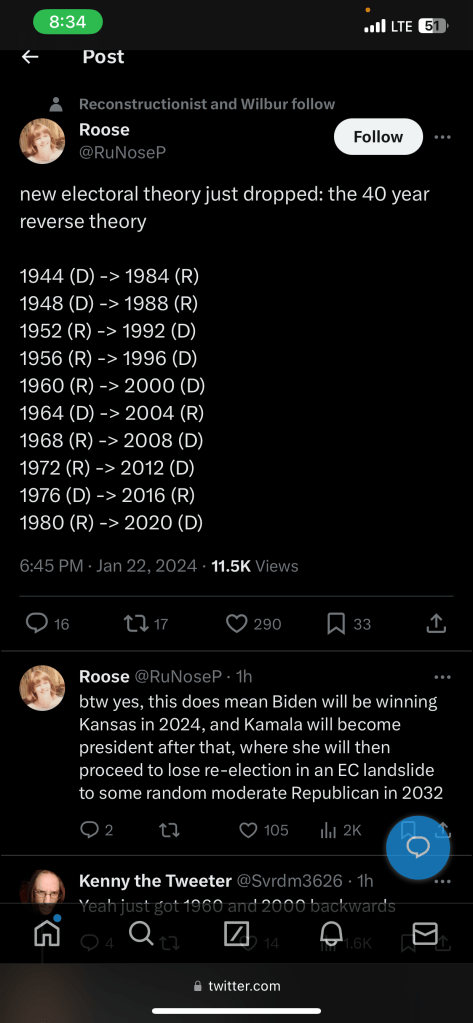
“new electoral theory just dropped: the 40 year reverse theory…. 1944 (D) -> 1984 (R), 1948 (D) -> 1988 (R), 1952 (R) -> 1992 (D), 1956 (R) -> 1996 (D), 1960 (R) -> 2000 (D), 1964 (D) -> 2004 (R), 1968 (R) -> 2008 (D), 1972 (R) -> 2012 (D), 1976 (D) -> 2016 (R), 1980 (R) -> 2020 (D)”

“btw yes, this does mean Biden will be winning Kansas in 2024, and Kamala will become president after that, where she will then proceed to lose re-election in an EC landslide to some random moderate Republican in 2032”

Posted 6:45pm, Jan 22, 2024 by Twitter user @RuNoseP

As noted by someone, this gets 1960 and 2008 backward in terms of party. Also, it’s missing “1940 (D) -> 1980 (R)”, although it likely wouldn’t work for 1936 (D) -> 1976 (D).

but still. This is very interesting to think about. This could mean that Dems have eight more years in the White House.

But a bigger question: does that mean that Democrats are headed to winning full control of Congress in a 2034 Democratic Revolution? And does that mean that Democrats will win back the majority of state legislative seats by the 2040s?