Category Archives: Politics2

Tools and Theaters for Progressive Federalism

Reading more about “progressive federalism”, or using “states’ rights” to enact progressive policy. Might have to put “progressive federalism” in your vocabulary. 

Honestly, it’s hard for me to come to grips with it because of the abuse of “states’ rights” and the greater trust. Progressives and liberals have invested so much trust into federal, national remedies as a matter of ending the “patchwork quilt” of some states having more progressive laws on an issue than other states. So many key rulings liberalizing society have come from SCOTUS throwing a wrench into prohibitive state laws. Now we have to abandon this and go fight within the states as a matter of tact in fighting the White House? It sickens me that this is how this century’s civil rights advances will have to be determined, but here we are. 

I also don’t think we can truly exercise progressive federalism without “initiative & referendum” (I&R) at the state level. Almost all of the states which have I&R are west of the Mississippi, and except for two states in the South, no other Southern states east of the Mississippi allow civilians to draw up petitions and gather signatures to put questions on the ballot. Some liberalizing laws at the state level have come from I&R, especially on decriminalizing/legalizing cannabis and regulating gerrymandering. With conservative supermajorities in state legislatures, we will have to make some deals to make I&R more available to the rest of the South. 

Progressive federalists must be willing to fight at any and every level for every possible tool to enact empowering reforms. The era of relying on SCOTUS and White House EOs to make key progressive decisions is over, but it shouldn’t mean that we’re on our own.

Atlanta/Fulton County as a Theater for Progressive Federalism

An example of progressive federalism as an act of dissent: Atlanta. 

When Atlanta City Council passed cannabis decriminalization (or, more precisely, “defelonization”), political leaders at the state level spoke out against the reform, claiming that only the state government can decriminalize it. When I asked him about it, even Rep. Calvin Smyre, our State House Dean, noted his opposition to cities taking this lead. 

But is there a state law mandating that a city has to use its resources to enforce state law? And should Democrats run away from, or embrace, cities and counties scaling down their resources from being used to enforce state law to the letter?

Now, even Fulton County has followed Atlanta and South Fulton city in defelonizing cannabis. And as both the largest city and largest county in Georgia, there should be a “spillover” effect to other parts of Metro Atlanta. 

Maybe we should embrace this municipal rebellion, because it calls the Georgia anti-cannabis lobby’s bluff, calls them to put up or shut up. This can apply to sanctuary cities, cities with non-discrimination laws protecting LGBT people, local minimum wage hikes, city ID cards, etc. If we can’t dissent municipally, how can we show our policy work at the state level? If we can’t dissent state-wise, how can we propel progressive change at the federal level?

Let’s embrace the spirit of dissent of Atlanta and Fulton County as a policy for more Georgia cities, and take charge of the political conversation.

Black Lives in Progressive Federalism

It’s thrilling and stressful that African-American activists will now be even more cognizant and promotive of the role of local political power in , as we don’t have the ear of Republicans or conservatives who are ascendant in the federal level of government. But even during the Obama years, the Bush years, the Clinton years, those who advocated for 

Progressive Federalism Reader

Indivisible, Not Yet the Tea Party

Reading about the Tea Party movement in Texas, it looks like it became something different and longer-lasting than other Tea Parties in the United States; the Tea Party in Texas has become the backbench of the Texas GOP, taking control of local offices throughout Texas, especially in Tarrant County. 

The Tea Party is now this incredibly powerful hardline faction of the state legislature’s Republican caucus (“Freedom Caucus” in the House, “Liberty Caucus” in the Senate), often seeking to undermine the moderate Republican Speaker Joe Strauss in often very underhanded or arguably bigoted ways (Strauss is Jewish). The Tea Party arguably controls the Texas GOP’s platform, calling for every possible recrimination against LGBT people other than outright restoring sodomy laws. 

Meanwhile, despite the inspiration from the Tea Party movement’s tactics, the avowedly-nonpartisan Indivisible movement hasn’t become anything like the Tea Party except in holding local mass protests, lobbying federal legislators and holding meetings with guest speakers. The hardline progressive faction of the Democratic Party, meanwhile, also hasn’t garnered the sort of local power that the Tea Party Republicans have gained since Obama first became president.

Right now, there is no avowedly liberal or hard-left rump faction which has built a political machine like the avowedly-partisan Tea Party movement in Texas. We might need that: local, decentralized hard-left political machines which take over school boards and local governments, and don’t apologize for their power.

Bad Georgia Laws Applied in Racially-Charged Ways

In my most sympathetic moment, I entertain the notion that maybe so many of those who support police actions in spite of the incredible violence of so many of those actions are, at the very least, selective authoritarians who trust the police in enforcing the law to the very letter. 

If that is the case, then so many of them don’t read the law as written, nor do they read the history of such laws, nor do they care to because it takes too much time and energy to think that these laws are terrible when enforced literally (“if you hate the law, change it!”). 

It’s not even a matter of Faulknerian references to how the past is still present, but that we never challenged nor removed these laws from the books.

Bad Georgia Laws Applied in Racially-Charged Ways

  1. school disturbance law (like Georgia Code 20-2-1181)
  2. Anti-loitering laws
  3. Cash bail for nonviolent offenses
  4. A Georgia law designed to allow teachers at segregated private schools to join desirable state pension programs
  5. Laws prohibiting insults to public school officials (like Georgia Code 20-2-1182)
  6. Laws allowing the governor to close public schools or suspend compulsory education laws
  7. Law authorizing state tuition payments to private schools
  8. Law authorizing leasing of school property to private institutions

Queer Possibility and Black Love in Wakanda

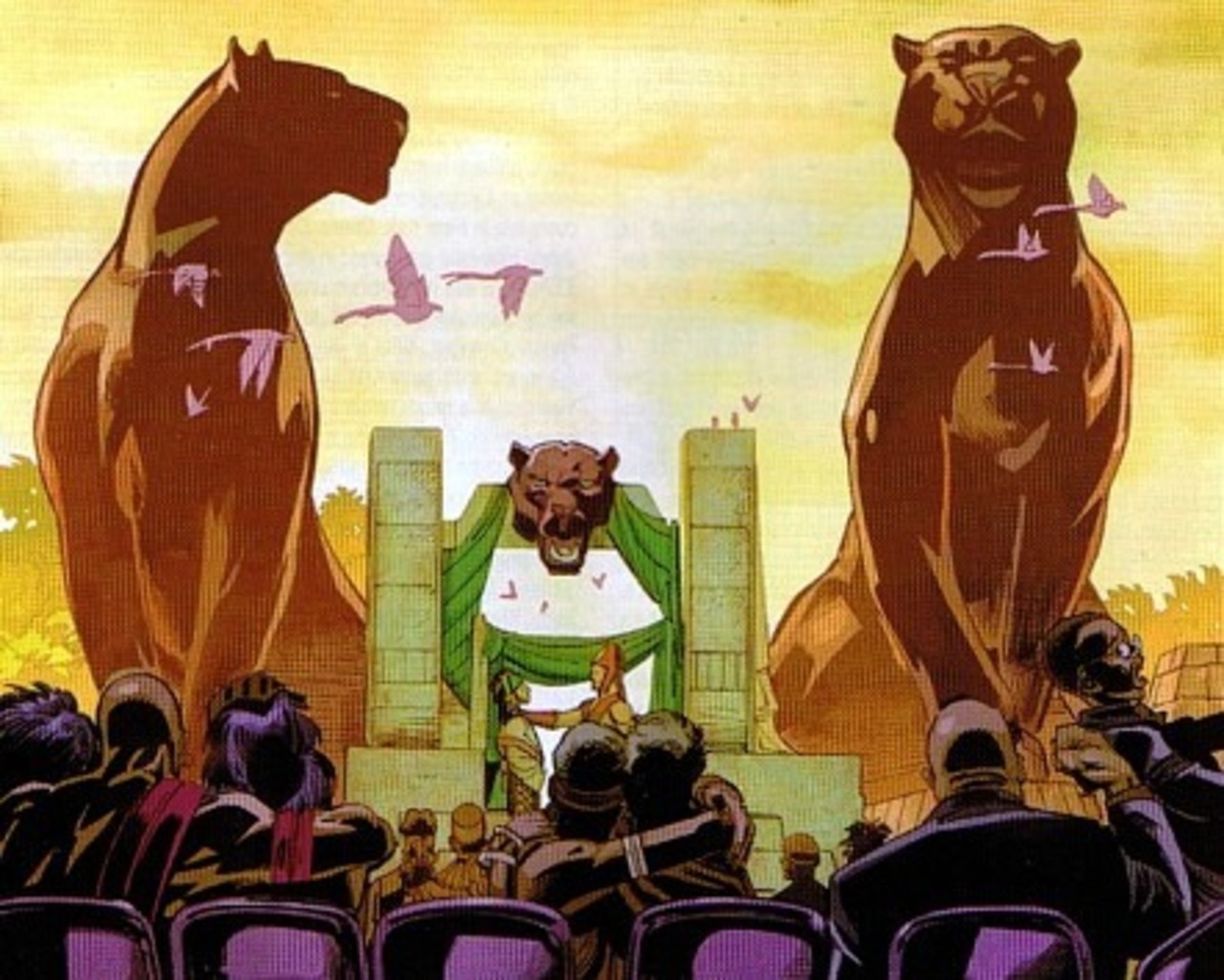
wakanda1jpg-652e17_1280wI guess I do want to see Black Panther when it comes out. The social media hype has been thick for at least two years now, and from the early reviews by those who attended the premiere in LA, it’s supposed to “change the superhero genre forever.”

But one thing I thought about today is the possibility of queer representation in the fictional country of Wakanda. If Wakanda is a country which was never colonized by another country, and also a country in which the majority religions are the Heliopolitan cults brought there from ancient Egypt (assuming that neither Christianity nor Islam have made a dent), then maybe – just maybe – it is a country where sexuality, sexual orientation and gender identity are held much more maturely discussed by citizens and government compared to their surrounding ex-colonized neighbors.

What would life be like for a same-gender-loving and/or gender-nonconforming Wakandan? Would they not have to live in fear of their parents or the royal government drumming up violent mobs or secret police to drag them out of their homes, beat them senseless and torture them to death? Would they not live under the hostility of those who proclaim that the sexual and gender minorities are “committing the sin of Lut/Sodom and Gomorrah” and “deliberately infecting people with AIDS?” Would they not live under such lies, or lies like “they’re pedophiles” or “they’re practicing an un-African lifestyle” or “they’re threats to our civilization”?

How would the Hieropolitan cults view sexual and gender minorities? How would the royal government view them or treat them? How would the Wakandan language and literature (writing system?) describe them? And would Wakandan culture describe SOGI minorities in different linguistic frames than how even LGBT-friendly Westerners frame them?

Dare I imagine: same-sex marriage in Wakanda? Lesbian warriors in the Dora Milaje?

Wakanda is a symbol of imagined, alternate-history “uncolonized Africas”, ones in which science and technology advanced without the dominant intervention of European or Asian actors. I want to imagine that, in such a fictional African country, that LGBT Wakandans not only exist, but go through their own struggles and live their own stories in a more mature, less sexually-draconian regime than most real-life African countries. If not in the movie, if not in the comics, then maybe in my thoughts – “headcanon”, if you will.

Perhaps Wakanda would still have a great deal of patriarchy going on, even with the semi-egalitarian politics within the film. But, in the face of a non-Abrahamic patriarchy, perhaps same-gender love and trans identity could still be entertained and accommodated without hysterics or fear. I know that this more “liberal” approach to sexuality would be “letting down” the boisterous gender-essentialist “kings-and-queens” black nationalism that, no doubt, finds desperate refuge in the Wakanda idea.

I say all of this as a gay black man and a sci-fi/fantasy fan. But I also write this as a fan of black love, in which we feel comfortable enough in our skin and color to embrace each other and manifest our variety of love for each other and our authentic selves.

I want to believe that Wakandans, in such a different environment, can be a bit more understanding toward people who don’t fit heterosexual, cisgender molds.

EDIT: io9 on Marvel’s missed opportunity for queer representation in superhero film.