Disgusting. Not surprising, but disgusting.

Disgusting. Not surprising, but disgusting.

So we’re finally making videoconferencing a truly cross-platform thing? Cool! #Firefox
#Turkey #QueerFest #LGBT
Pink Life QueerFest will kick off tomorrow in Ankara for the 4th time. Having started its journey in 2011, the first and only queer film festival in Turkey will also have a 3-day-long screening in Istanbul this year in collaboration with Baska Sinema.
Source: Ömer Akpınar, “Turkey’s first and only queer film festival to kick off for the 4th time”, kaosGL.org, 14 January 2015, http://kaosgl.org/page.php?id=18497
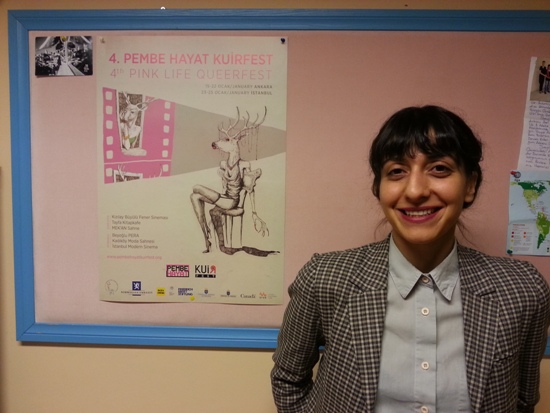
Festival director Bilge Tas has a lot of experience organizing film festivals but she says organizing a queer film festival is much more difficult: “Because you cannot make use of state or local funds.”
However, Tas feels glad not to feel “the shadow of state” over the festival:
“The more support you get from the state, the more suitable it will be for your manners to speak from the mouth of state and to reflect what it says.”
Queer films will be shown in…
View original post 145 more words

Nice!
On Worker-Owned Co-ops (like Publix!):
Worker cooperatives, where the workers are also owners of a company, may be an effective way to counter the trend towards large, multinational corporations which have resulted in the enormous degree of economic inequality currently plaguing our economy. The idea of continuing to follow a business model with a multinational hierarchical structure easily lends itself to greater degrees of income inequality and a sense of powerlessness on the job for many at the lower end of the hierarchy. It also tends to lead to behaviors on the part of the few at the top of the hierarchy that further exacerbate the problems of an already unequal distribution of wealth, and of tax avoidance that enables the sort of tax avoidance strategies that have become apparent and more blatant on the part of corporations and wealthy individuals in recent years.By enabling this sort of behavior, society is allowing some of its…
View original post 1,451 more words
A Black American (daughter of Muhammad Ali), a Black Briton (Los Angeles Times video journalist) and a Black Russian (former Russian television presenter of African-American descent) – all journalists – meet again at the Los Angeles Times. The African Diaspora in its complexity:
France is a former colonial power which fought a bitter war against nationalists in Algeria. Most Muslims in France are from Algeria, North Africa and most former French colonies in Africa. Most Afro-French Muslims live in poor “suburbs” on the outskirts of cities like Paris.
France has long played a role in destabilizing and propping up dictatorships in their former African colonies/client states. Chronic racism against Africans and Arabs within France + a paternalistic, antidemocratic attitude abroad = radicalization.
The paternalistic and violent history of UK, France and US in Sunni Muslim Arab, African states gives us our current world. Let’s talk about “freedom of speech” when we begin to listen to speech of those who come from politically-broken peoples. Until then, #MarcheRepublicaine is masturbatory, self-congratulatory, opportunistic, jingoistic nonsense from a country that hasn’t addressed its violently-bigoted history.
The bodies of innocent dead are not yet cold while the defense of historically-racist French “way of life” is ratcheted upward for the world. Attacks like that on #CharlieHebdo and their attackers are useless, wasteful and bloody expressions of ethnic derangement. But that derangement has a long history and does not comes from a deep, dark vacuum.
If we’re so concerned about threats to the French, or European, or U.S. or Canadian “way of life” by way of violent, rhetorically-explosive Sunni Muslim protests against cartoons of Muhammad of Quraysh, then why is it that we Westerners station militaries in, and bomb the shit out of, predominately-Muslim countries? If we’re so concerned about threats to our freedoms, why is it that we’re so glad to invest militarily in conflicts in these regions? If the French people are so concerned about safety and civil peace, why does France go out of its way to maintain corrupt post-colonial relationships with dictatorships and support violent interventions in order to keep post-colonial borders largely intact?
Why is it that we practically invest into the undoing of former colonies as well as, by indirect way of when citizens of these post-colonial states migrate to countries like France, our own undoing?
Why can’t we in the West practice abroad what we preach at home?
We don’t have to have hypocrites in leadership or violently-hypocritical foreign policies. We can enforce our own absolute neutrality in foreign policy and let the chips fall as they may. We can stop investing militarily in post-colonial conflicts. France can end its “Francafrique” relationship with terrible governments on the African continent. We can stop being so invested in the instability of nations, which could result in troubled migrants being invested in their home countries and stable governances there.
But that would take us taking the thumb out of our assholes, stop pitying about our “decline”, rethinking our status quo and treating Black and Brown lives with more dignity, wouldn’t it?
His book came out yesterday.

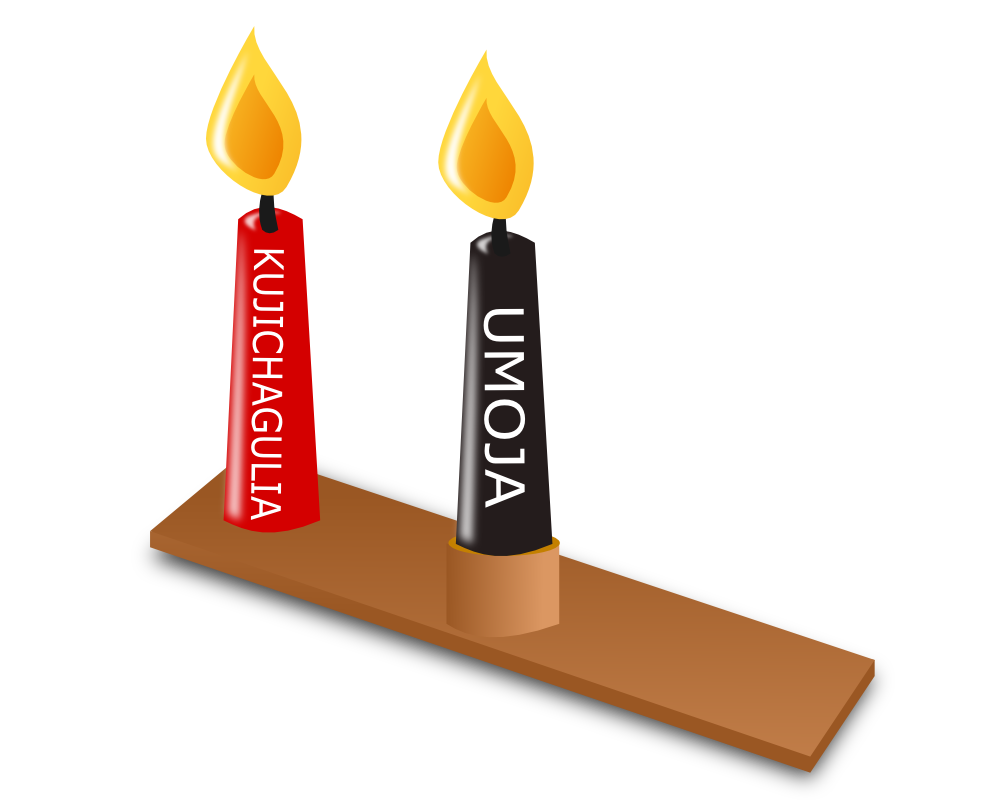 Habari Gani? Today’s principle is Kujichagulia. It is the principle which embodies the right to determine the destiny of the self – “To define ourselves, name ourselves, create for ourselves, and speak for ourselves.” This idea of the “self”, in human history, has applied just as much to the individual as it has to any collective of individuals, as has any act negating this right to determine any self’s destiny. In human society, especially in the history of the concept of individual human rights, the rights of the individual have expanded in number, ranging from the right to equal justice under law (and other expectations of treatment by the state or other prevailing collective) to the right to clean water and fair housing (and other rights to material access). But in respect to yesterday’s Umoja, collectives have often faced difficulties in their ability to collectively determine their own destiny as a group, usually facing opposition from other groups with rivalrous claims to legitimacy. Bids to form new nation-states have faced often-fatal opposition from other established nation-states or, when resorting to armed warfare to solidify their bid, have engaged in violent conflict or maintain standing militaries to protect their sovereignty. Labor unions have faced constant opposition to their existence from corporations and trade groups. (Ir)religious communities have faced physical, bloody opposition to their existences from other, more established religious groups (and single-party or single-ideology states). Demographic “suspect classes” are resented by previously-privileged classes for their demands of justice, freedom and unity. And so on… Yet, the idea that one should be able to choose one’s destiny (not negating the other principles) is an idea that is difficult, yet necessary in the name of justice, to extend to more demographics of people, both individual and collective. Kujichagulia – whether it manifests in choosing what to wear today or choosing what to create tomorrow – places responsibility for how to conduct or govern one’s life with the self, not with an unwilled, nonconsensual third party. Our ability to exercise kujichagulia, however, depends largely on the freedom and dignity which are expected in a society, or in our world at large. If we don’t take the initiative to guarantee the platforms for self-determination within a peaceable, amicable framework which respects our individual (and shared) identities and experiences, then we are not a free community. Let’s be a free, responsible, active, just people. Let’s observe kujichagulia – in our lives and in the world.

 Habari Gani?
December 26th is the day of Umoja (Unity).
It is “E Pluribus, Unum”. It is being the sum of our parts. It is understanding that our individual experiences – by shades of skin color, by ethnonational origin, by historical accident, by circumstance of birth, by the state of our bodies, even by “mere” affinity – are shared by somebody, somewhere, and that they are points at which we can connect and change somebodies’ destinies.
Umoja is the state in which we embrace these shared experiences and understand how these experiences are treated by both ourselves and the larger society.
It is through Umoja that we understand that until all are at peace, none are at peace; until all are treated with justice, none are treated with justice; until all are free, none are free.
It can also imply symbosis and balance. Even one who is an island to oneself is surrounded by a body of water, and the behavior of that water impacts anyone who lives on that island. One who lives in the middle of a vast forest is impacted by whatever impacts the stability of that forest.
In other words, the balance, the state of play, the causality of things, how nothing takes place in a vacuum – all imply that everything in existence is, has been, and will be impacted by another action. In this, there is Umoja.
So whether we embrace or are indifferent to the world around us and the shared experiences which are similar to our own, we have Umoja. We can be united by accidental pain, we can be united by intentional pleasure, we can be united by experiences which impact us or by actions which we wish to carry out.
We are united in our individual bodies, just as we are united in our larger society. And whatever action we take, no matter how isolated it may be, will impact ourselves and likely someone else.
Let’s maximize the positive, ethical actions in our lives within the framework of this Umoja. Let’s recognize the Umoja of all things and all actions.
Harambee.


