via First same sex marriage license issued in Arizona and same sex wedding! – YouTube.
Category Archives: To Export
Arizona joins the marriage equality pantheon, effective immediately
Project ROSE: An example of the police state colluding with religion
LGBT, Minority Rights Focus of Several Bills Signed in Last Legislative Session | Diversity | Agenda | KCET
California has really progressed on LGBT rights this past session. Cheers to Gov. Brown and the California Legislature Dems in Sacramento!
Now if only the regular police patrol were not armed, and gun control applied to both the government and the public. Hopefully someone can take up that idea next session.
Shouldn’t this be a call for a new sect of Islam?
That is part of the problem. We have a lot of politicians who are simply unable to understand what exactly is going on here. But in future we will hopefully have other politicians, and a generation of Muslims who are sick of constantly being the victims of radicalism. This sort of process starts in the schools, then extends to politics, and then it becomes part of the inner-Muslim debate. That’s the only way we can achieve our goals. Admittedly, I don’t see any great chance for this right now, but we can’t give up! We have to carry on and continue to give young people alternatives.
Mr. Mansour, there are Muslims who are carrying out liberal Islam in their lives, not just in the US but also in France. You should look at their work, perhaps for your country. Someone will benefit.
via ′There is no alternative to a reform of Islam′ | Germany | DW.DE | 16.10.2014.
Coming Out Smart
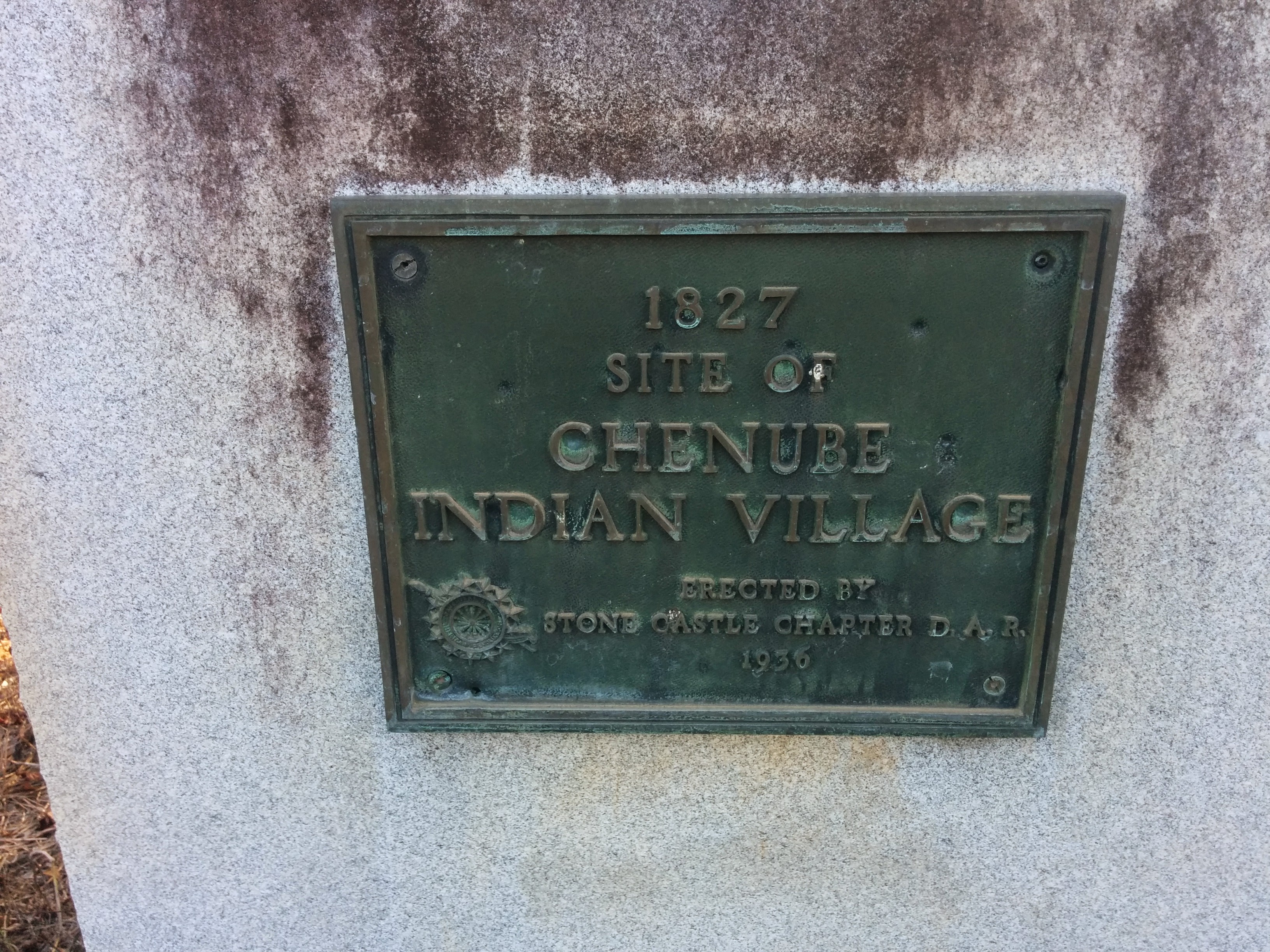
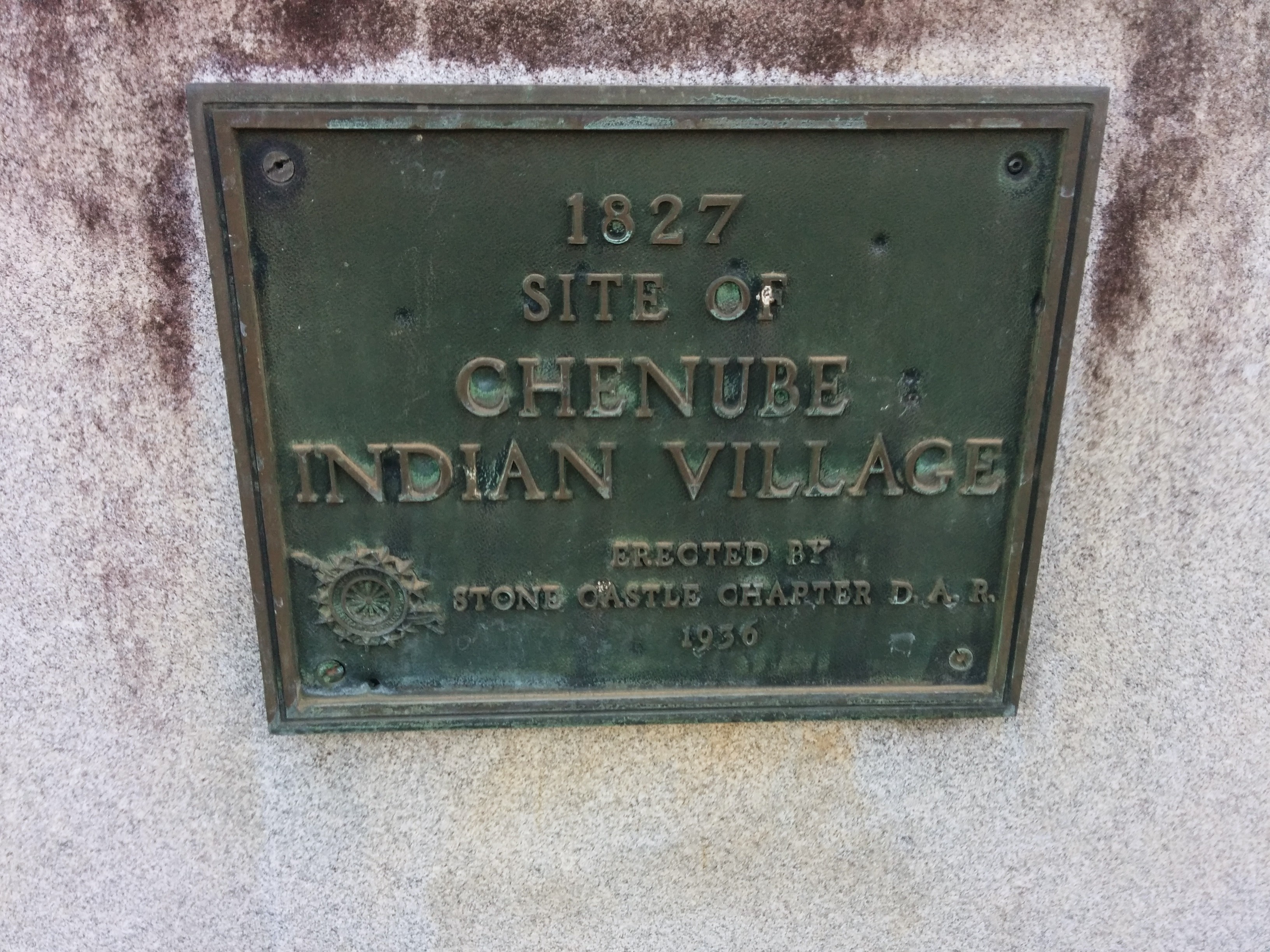
Sole Marker of a Bygone Era: Chenube Village
This was the site of a Native American village which existed in the 1820s, before the Trail of Tears. Nothing is left of the village, just a little stone-brass marker set up by the roadside over a century after the village’s disappearance.
I took these on the way back from a business trip in Albany. It’s located in Terrell County.


Drag Performance, Brand Pages and Personal Identities
The issue of the “Real Name” policy, whereby users are told to use “real” names (not necessarily actual names, but “real-sounding” names), is problematic for social networking services (SNS). It’s especially problematic when SNS operators refer users to use brand pages – profiles which are maintained and moderated corporately by one or more users for organized purposes such as promoting a brand or a movement – as alternatives to using pseudonyms on their personal profiles. The reason is that such a solution is half-baked on the sites which most emphasize the use of “real names” for users’ profiles, particularly Facebook (and formerly Google+).
Functionality issues
The suggestion by Facebook for preferably-pseudonymous users to use their pseudonyms on brand pages ignores the fact that pages on Facebook offer less interactivity than personal profiles. Facebook pages don’t allow pages – which are built to serve organizations rather than pseudonymous personalities – to form or join groups. In relation to this, Facebook also does not allow brand pages to automatically invite other users to events; compare this to Facebook groups, which allow for automatic invitations of all members to event pages.
Google+ Pages, in comparison, offer a bit more interaction, with the ability to create and join “communities” (equivalent to groups) as your brand page. In addition, G+ Pages can also add user profiles to circles (a more advanced version of Facebook’s “adding friends”) and invite followed profiles, circles of profiles and whole communities to events.
Presentation issues
However, in the case of pseudonymous users being “nudged” to create pages for their pseudonyms, G+ and Facebook both suffer from a high learning curve and a lack of tailoring toward personal identity pseudonyms.
Facebook’s “Create a Page” has six main options: “Local Business or Place”, “Company, Organization or Institution”, “Brand or Product”, “Artist, Band or Public Figure”, “Entertainment”, and “Cause or Community”. The closest to a means of controlling a personal pseudonymic identity is “Artist, Band or Public Figure”, which is limited alongside other Facebook pages in its interaction abilities.
By comparison/contrast, G+ only has “Storefront (Restaurant, Retail Store, hotel, etc.)”, “Service Area (Plumber, pizza delivery, taxi service, etc.)”, and “Brand (Product, sports team, music band, cause, etc.)”, which is even more confusing from the outset by the grouping of so many options into just three categories.
The ideal page
The ideal brand page system which would work perfectly for personal pseudonyms at the intimacy perhaps most desired by drag performers in an SNS, IMO, is a combination of Facebook’s presentation and G+’s functionality and interactivity:
- Having at least 6 page-creation options including “Artist, Band or Public Figure”, or even a 7th “Character or Pseudonym” option.
- Having the ability to follow/be followed by users and create/join groups “as” the brand page.
- Have the option to switch to a preferred brand page identity upon login to one’s personal user identity.
- Have the ability to restrict access to one’s personal profile while simultaneously operating a brand-page identity.
In such a system, performance artists such as drag performers would have the full ability to interact with their fans as their pseudonyms or public personas, to organize their fans into discussion groups (both public, private and secret) under their personas, and to easily invite fans to events (or even games and apps), all without revealing or exposing any of their personal profiles to the public.
When the brand pages are not fully baked, not fully conceptualized as alternative identities for both individuals and corporated groups, the ability to control your presence is hobbled. Performers like Sister Roma offer an opportunity for Facebook, G+ and the SNS sites of our era to not only listen more to their users, but to make their brand pages more useful for more people. The “Real Name” policy (as well as the restriction against multiple profiles on sites like LinkedIn) only hurts privacy, doesn’t help the quality of conversations on Facebook, and is not remedied by half-baked brand page tools.
The Big Tent Sucks
Watching last month’s general election in Sweden, I was once again treated to the non-majoritarian nature of proportionally-representative election systems like Sweden (although the Feminist Initiative barely missed the 4%). It is not as zero-sum as ours: a total of 8 parties are now represented in the Swedish parliament (Riksdag), encompassing a range of variably-compact ideologies in a variety of portfolios.
I favor proportional representation due to its ability to better reflect the political diversity of the voting population, as well as its ability to let candidates be more honest and thorough about their ideologies.
In this year’s election, the Social Democrats gained the largest vote share and is tasked with forming a coalition that can back the next prime minister and cabinet; possible partners include the Left Party and the Green Party. On the opposite end, the anti-immigrant Sweden Democrats gained more seats from the free-market parties of the outgoing Alliance coalition, such as the Moderate Party, Liberal People’s Party, Christian Democrats and Centre Party.
In the United States, potential candidates and their supporters at the federal level would be grouped into just two parties – Democratic and Republican, Blue and Red, Liberal and Conservative, etc.
I contend that the sheer forcing of multiple ideologies together under two roofs is stifling. It forces all of the partisans who may not be predisposed to a whole-hog ideology to adopt such an ideology for the benefit of an unwieldy party unity. As a result, reasonable-minded people may find themselves trapped in an unpopular party because of the words, policies and actions of fellow partisans.
If you need to switch to another party, it shouldn’t have to make the news as some sort of epiphany or “I’ve seen the light” moment, whether it is the Charlie Crists, Lincoln Chafees, Gary Johnsons or Cynthia McKinneys of American politics. The candidate or voter shouldn’t have to feel like some sort of “traitor” for switching or creating new parties.
That’s why I support the Single Transferable Vote. I support having more options in Congress and state legislatures, including more equal representation for the six most-popular parties in the United States: Democratic, Republican, Green, Libertarian, Working Families, and Constitution.
I could see Rand Paul as an LP senator, Bernie Sanders as a WFP senator, at least a quarter of the House Republican caucus being Constitution Party members (including the likes of people like Louie Gohmert), a quarter of the same caucus being LP members (including some of the Tea Party-backed members like Justin Amash), most of the Congressional Progressive Caucus being members of the WFP or Greens, and so on, while center-right or center-left candidates would stick with more uniform, less-problematic Republican or Democratic parties.
Maybe after all the libertarians and socio-conservatives left for their own parties, the GOP would revert back to its image as the “Party of Lincoln”, or even to the pro-civil rights stance of the Radical Republicans of the Reconstruction era, or even to the likes of Eisenhower. I could imagine people like Rob Portman and Ileana Ros-Lehtinen remaining in this incarnation of the GOP.
Maybe after the progressives of the CPC left to join the Working Families Party and Greens, the Democrats would get much more pushback against their acquiescence to pro-MRI policies. Centrists like Dianne Feinstein, Kay Hagan and Harry Reid would still likely remain in this incarnation of the Democratic Party.
Maybe after the far-right Republican Study Group joins the Constitution Party, that party would be marginalized in their socially-far-right politics by the other parties in Congress through a sort of cordon sanitaire.
Any of these possibilities would perhaps prevent people from associating “fright-wing” politics with a plurality of the voting population, and allow voters to make a better distinction between the candidates for whom they would vote, as well as the issues on which they would campaign.
I just want more diversity of party labels to choose from, not this frustrating, debilitating duopoly in which we’ve been stuck for so long. And to have more diverse party choices in our politics, we need to dispense with the idea that anyone has to win a majority to be part of the political process.
We just need to win 4%.
A quarter-century of civil recognition of same-sex relationships
Today, 25 years ago, we celebrate the first civil recognition of same-sex couples. On 1 October 1989, Denmark made history with approving a law for gender-neutral “registered partnerships” (registreret partnerskab). Among the first couples to be partnered in civil unions were activists Axel and Eigil Axgil, who had spent most of their 40-year-coupled lives fighting for rights for LGBT people in their country. Another couple that registered their union, Ivan Larsen, an ordained minister of the state-supported Evangelical Lutheran Church of Denmark, and Ove Carlsen, a psychologist, were profiled in this recent BBC Witness clip:
via BBC News – The day same-sex civil unions became legal in Denmark.
What fascinates me about this is how things may have been different if civil unions, rather than marriage, would have remained the popular wisdom. What if the United States had been more accepting to civil unions at the federal level, and had not placed DOMA into place as a bulwark against any federal recognition? Even more so, even in the post-DOMA era of federal recognition for same-sex marriages, the present lack of federal recognition of state-level civil unions is perplexing.
Right now, there are three states which still have only domestic partnerships or civil unions: Wisconsin, Nevada and Colorado. Waiting for the judicial trajectory to move marriage equality to more states still doesn’t speak to the issue of unequal civil recognition of relationships, or the obvious overall federal favoritism to marriage as opposed to civil unions.
I’m of the opinion that marriage and civil unions should both be available as options to both same- and opposite-sex couples, at both federal and state levels.
