Category Archives: To Export
In re: John Becker on “Indifference”
John Becker from The Bilerico Project demands, with reason, that the rest of us don’t say to survivors of the RCC’s anti-gay abuses two statements which we’re apt to use: “what did they expect?” and “why do they belong to an organization that hates them?”
Well, how else do we who are not or were never raised Catholic respond to a profoundly-undemocratic, intelligence-insulting, hierarchical culture that encourages the firings of church employees over LGBT identity? How do we respond in regards to Mormon excommunications of LGBT people (and feminists)? Or less-episcopalian polities like some rinky-dinky SBC Baptist church?
We’re outside of the culture, and there is no means for us to respond to their behavior except through the civil sphere or the liberal-religious niche outlets like Religion Dispatches, fully knowing that we will not be listened to or considered. So what can we say when our options are limited in communicating to members of a religious sect that their rhetoric is uncivil and bigoted?
Some of us tune them out. We tune out the bald-faced lies and scaremongering apocalypticism. We don’t dissect any of it, or at least we stop trying to dissect it. We just treat it like a bad dream on the periphery of our eyesight.
After so long of angrily tuning it out, we then hear of the firings, the excommunications, the “loyalty oath”-like contracts, and we hear of those turned out of their small lower niche of the religious hierarchy for their LGBT identity or their feminist critique. We wonder “how was I ever in such a position when I’ve lived my life in reality for so long?”
We remember our own subjection to abuse and bigoted rhetoric. Then, freshly recalling the trauma, we ask “what did they expect?” and “why do they belong to an organization that hates them?”
We were traumatized. Our intelligence was insulted. But we tuned all of it out. We don’t maintain contact with most members. We ultimately “other” the organization, leading to our wondering about how anyone, including ourselves, could stay in such an organization.
We project our trauma, even with such trauma being distinct in some way from someone else’s experience. Maybe it is not appropriate. Maybe it is an unthinking reflex.
But because we tuned out the experience for our own mental stability, we may not have the proper words, let alone actions, to expressing our solidarity.
What are those words of solidarity? What are those actions of solidarity? What are those expressions which can transcend between my “non-denominational” experience and the experience of those raised in the “Catholic” religion?
And how can we even begin to move forward in that solidarity?
We’re being told that it probably isn’t beneficial to encourage survivors of anti-LGBT abuse to leave their religion altogether, or that it is rather smug to encourage survivors to choose another religion or congregation that is more welcoming. What is the necessary solidarity?
Until these questions are answered, until *real* progress is possible at such levels, our questions of “what did they expect?” and “why do they belong to an organization that hates them?” will be the default.
via LGBT Catholics Deserve Respect, Not Indifference | The Bilerico Project.
Following up on African-American children’s TV
Following up on my past post, I just sent this email to the contact emails of five African-American-oriented TV channels: TV One, BET, Bounce TV, Soul of the South and Aspire.
To whom it may concern,
I am an African-American who is concerned that there is little programming on African-American TV channels that is dedicated to children and youth.
There are several channels on television which offer children/youth blocks of shows, both animated and live-action, and the lack of such content on African-American television channels is disappointing due to the alienation of that audience in their daily lives.
Would it be possible for your channel to feature a children/youth’s television block featuring Black lead characters? I think oncoming generations of Black TV-viewing youth will benefit and be positively impacted by such an action.
Sincerely,
Harry Underwood
Fort Benning, GA
Mormonism/LDS is the most honest Abrahamic sect
The fact that Joseph Smith Jr., questionable as he may have been in his ethical choices, built a religion on 1) a continuing prophetic line of succession and 2) an open scriptural canon shows Mormonism and the LDS movement to be the most “honest” Abrahamic sect.
Every other Abrahamic sect, save for the Bahai, has operated on the claim of preaching the final and closed testament of a deity and its works on Earth, as well as an extinct line of prophetic contributors to scripture. The LDS movement, on the other hand, challenged this notion in such a flagrant way that they were chased out by Christians of the then-current states of the Union in the 19th century.
This also benefitted strongly from improvements in publishing technology in the 19th century, which allowed more mass publication of printed books and a reduction of cost. If most Abrahamic religions originated from the times when books were still hand-copied by scribes, would it really make sense to rely on such a scarcity-driven paradigm of “revelation” when books and printers were more plentiful?
The LDS refused to comply with this deliberate conceit of a “sealed revelation”, or of over-reliance upon interpretation of scriptural literature, and inaugurated a continuing expansion of scriptural literature. The implied “scarcity” of revelation was rendered moot, and the LDS movement made their “Doctrine & Covenants” more of a “Living Word” than Christians consider their Bible or Muslims consider their Qur’an.
I say all this as an atheist.
Video games in public libraries
I was just thinking about what else that public libraries could host as a service of information to the public. Libraries now serve books, CDs and DVDs, yet libraries still face budget cuts due to lower patronage in the Internet era.
What else can libraries offer that would be appreciated by the public?
I think video game discs and cartridges are the next big information medium that should be hosted at the library. Thankfully, just as I was starting on this post, I came across a CNN column from last year which stated the exact same thing.
But rather than the good-for-funding angle that Ruben Navarrette brings up in his column, I think that hosting video games would fulfill one of any public library’s core functions in the community: providing access to information by lowering the profit motive from the equation.
Granted, public libraries have been historically established to provide public access to knowledge, and they have done so (for all ages and levels of education). But at some point, fiction became a section of the typical library that was updated with ever more modern titles, and such titles are as entertaining as they are sources of knowledge (however trivial or vital they may be to the reader). Fiction media in the library was extended when films were donated on DVD and VHS to the typical library (for taking home or to watch in a private booth).
So why not extend the service of fiction media access in the library even further? Video games, as engaging of the body as they are, are also (often) works of fiction. From a cinematic standpoint, video games allow the player to be visually immersed in the story being depicted (as much as they fuse cinematics and visuals with ludological participation).
It would do for the fusion of cinematic and ludological entertainment what the earliest public libraries did for book-bound knowledge: take out the profit-making wall from the bridge between the public and the information which they seek to consume. Libraries can provide access to these works of “fiction” without the profit motive.
Libraries don’t have to specifically focus on physical books, and neither do they need to chuck those books from the shelves. Books, eBooks, PCs, CDs, DVDs, Video game discs – they can all coexist in a venue built for the people’s sensory fulfillment.
Let’s have more video games and video gaming rooms in public libraries.
SADC and thoughts of a Bantu Republic
The Southern African Development Community looks like the perfect root for an African superstate.
Linguistically, the states of SADC (and most of the states of Central Africa and the Great Lakes region) are largely populated by speakers of Bantu languages, including KiSwahili, isiZulu, chiShona and kiKongo. This common linguistic heritage, spread out over such a vast geography and its natural resources, could reasonably lend itself to a state which governs over a third of the continent.
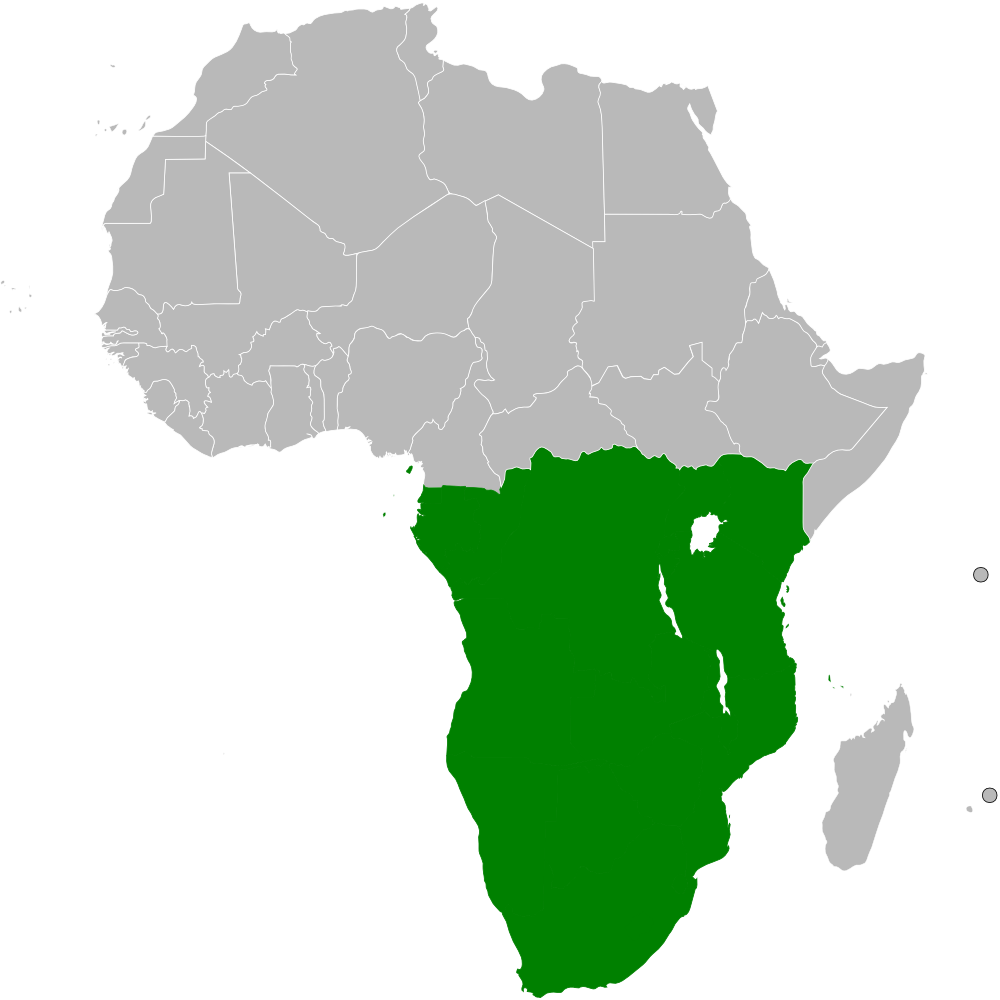 Politically, a Bantu superstate would be the most visible representative of the African continent to the international community. It would also reduce the visibility of internal ethnic rivalries and any specific exploitable natural resource (such as oil, minerals, etc.).
Finally, it would be the best way for an African state to ably exit all of the many post-colonial federations such as the Commonwealth and La Francophonie, while using the government and diplomatic apparatus to highlight and export a more uniform amalgam of Bantu culture and language to the world, especially to the African diaspora in the Americas.
Let’s call it the Bantu Republic, or Azania.
Bad Azz Mofo: The Invisible World of Black Comic Creators
Steamfunk, Sword-and-Soul and Afrocentric Fantasy
While reading about Black characters and authors within the speculative fiction genres, I came across two terms: “Afrofuturism” and “sword-and-soul”.
I was more familiar with the first term, at least in reading about how African-descended writers incorporated vivid and challenging mishmashes of aesthetics and cultural experiences into their science-fiction writings, including Samuel Delany and the late Octavia Butler. But the latter term – “sword-and-soul” – was something less familiar to me, but it appealed to me a bit more.
“Sword-and-soul?” As in, “sword-and-sorcery”, but with Black people in it, set in Africa?
Then I searched into it, found several articles which helped to explain what is meant by sword-and-soul: “fantasy fiction which involves African/African-descended people and their mythologies in the same way that ‘sword-and-soul’ revolves around people of European descent and their mythology.”
This intrigues me. Finally, a term for the type of fantasy fiction I was looking for, even though the genre has only been revived and expanded from just one writer – Charles Saunders – to an entire publishing label – MVmedia – thanks to an Atlanta-based professional chemist and part-time writer, Milton Davis, who has taken strategic advantage of the e-book era to publish Afrocentric SpecFic.
Finally, we have “sword-and-soul” as another fiction genre to geek out over!
Steamfunk and the Question of Continuity
While we’re on the subject of Black SpecFic, I looked at the subgenre of “steamfunk”.
Again, it’s similarly set in the “steam” era of the 19th and early 20th centuries, just like the pseudo-Victorian “steampunk”.
But that’s it, though. Unlike the striking visual difference between Sword-and-soul and Sword-and-sorcery, the art used in current works of Steamfunk largely harkens to Steampunk’s Victorian-era European aesthetics. Why?
Instead, shouldn’t there be a continuity between steamfunk and African-themed sword-and-soul?
I cite Nickelodeon’s Avatar franchise for its setting in a pan-Asian fictional universe. The first series, Avatar: The Last Airbender, takes place during an earlier period that’s wedged somewhere within ancient/medieval (“sword-and-sorcery”) Asia with a bit of steampunk mixed in at certain points. The second series, The Legend of Korra, takes place 100 years after the Avatar, in a world that is between steampunk and dieselpunk, but still within a very pan-Asian setting and with harkenings to the “past” of sword-and-sorcery.
I think the way that Nickelodeon’s Avatar franchise handles this historic continuity from the medieval to the steam era within a thoroughly pan-Asian fictional universe is a model that can be followed for an “Afrocentric” fictional universe. Avatar, which I guess could be described as “sword-and-chi”, has a sense of alt-history chronology and technological succession that those who write Afrocentric SpecFic really need.
Simply placing Black characters in pseudo-Victorian-era garb, or medieval armor, is not enough. Let’s start with the aesthetic of Sword-and-Soul and work our way forward.
Sword-and-Soul in Fantasy Art
Finally, when talking about aesthetics, I feel that Fantasy Fiction Artworks, especially works which are commercialized, are seriously lacking in the inclusion of People of Color (PoC). The artistic depiction of sword-and-sorcery themes, at least here in the U.S., are typically steeped in medieval European culture and aesthetics. But I think there is precedent in works like Avatar for the medieval aesthetic to be shaken up and made more diverse.
The issue raised by the Racebending.com initiative against the “whitewashing” of lead characters in Nickelodeon’s Avatar franchise brings to mind just how non-diverse that modern fantasy fiction tends to be, or at least the commercial challenge faced by artists and writers of fantasy fiction which is affirmatively diverse in skin color. Avatar is perhaps the most groundbreaking Western-authored fantasy fiction franchise in terms of PoC inclusion, as the story universe of the franchise is set in a highly-inclusive pan-Asia-Pacific setting, pulling together anagramic ethnicities, languages, kingdoms, topologies, geographies, climates, skin pigments, clothing, cuisine and so on from the entire continent and almost all ends of the ocean.
With its ongoing realization of a newer pan-mythos from the entirety and vicinity of Asia, Avatar and other similar franchises have ship-tons-plenty of written history and mythology to draw from.
Unfortunately, as a PoC of African descent, I feel incredibly jealous for this pan-Asia-Pacific setting. I don’t feel that Africa, as a continent, lends as well to such an expansive pan-mythos as does Asia or Europe. Africa doesn’t have the the sort of geographic or climatological expanse that is endemic to the Asian continent, nor does it have the heritage of written language which is endemic to both Asian and European peoples, nor do its peoples – including our ancestors – have the best experience or history of relaying their own mythological, spiritual or artistic canons on their own terms, nor do Africans have the history of mass settlement outside of the continent like Europeans (the slave trade still constitutes the primary historic source of the African diaspora in the Americas).
Hence, for developing a fertile space for fantasy art and fiction, African-descended artists and writers who are conscious about PoC inclusion have more of a reason to improvise and derive. I guess that’s where Sword-and-soul kicks in.
On the Internet
These galleries provide good sources for PoC-affirmative fantasy fiction, and I’ll add more links in the future:
And MVmedia, Milton Davis’ publishing label, is the premiere house for Sword-and-soul fiction. Please check it out.
My Fantasy African-American Children’s TV Block Lineup
To date, I have not heard of anyn African-American-oriented television network (BET, Bounce, Aspire, TV One, or Song of the South) having a children’s television block.
I find it rather sad that there is a dearth of African-American lead characters in children’s, teen’s or YA television, or at lest not enough to fill a morning or afternoon block on these television channels, particularly because of a lack of presence for characters to which young African-Americans can relate, or be inspired, or find character narratives which they can follow with avid interest.
But really, if television channels which talk of catering to an African-American audience are not building a gallery of titles aimed toward children within this mandate, then what room does any person have to bemoan the state of self-esteem among African-American youth, or of education, or of culture?
So I’m posting this list to raise awareness of television series which should be considered for inclusion in any of these channels’ hypothetical, nonexistent children’s/teen’s blocks:
- Static Shock
- Gullah Gullah Island
- The Famous Jett Jackson
- That’s So Raven
- Corey in the House
- A.N.T. Farm
- Fat Albert and the Cosby Kids
- The Proud Family
- Little Bill
- True Jackson VP
- Men in Black: The Series
- Gargoyles
- Mister T
- The Super Globetrotters
- The Jackson 5 Cartoon
- Class of 3000
- Reading Rainbow
And heck, I’ll even throw in an import from South Africa: URBO: The Adventures of Pax Afrika, as well as an obscure, realistic-without-being-offensive web series titled Blokhedz.
I purposefully exclude the following:
- live-action “family” sitcoms which only focus on the goings-on of a family (there’s plenty of those nowadays).
- animated sitcoms which are aimed toward an adult audience, content-wise (i.e., The Boondocks and The P.J.’s).
- animated action series which are aimed toward an adult audience, content-wise (i.e., Afro Samurai and the short-lived Black Panther)
After those are excluded, one has too look through much of the post-1970 history of animated and live-action children’s television just to find such shows as listed above. Maybe those who take the depiction of African-American lead characters seriously might use the above viewing list as a starting point.
The Unprogrammable: The border between “Simulation fiction” and “simulation fantasy”
Since first watching the Digimon: Digital Monsters series in 1999, I’ve been fascinated by the appealing science fiction and science fantasy behind the series.
But with growth in the application of virtual/augmented reality since that time, the number of works of fiction which dramatize virtual/augmented reality has greatly expanded.
One thing I’ve noticed is how a growing number of anime series are set in the drama of players logging into and playing inside MMORPGs. Most often, these series are intended as vehicles for the accompanying MMO franchise, while others are more interested in dramatizing the impact of the MMO – and the means by which the MMO is accessed – impacts the players’ offline lives and relationships.
But it is in this setting that one can find an interesting two-fold phenomenon:
- even though a debatable majority of MMORPGs like those depicted in these anime series are “fantasy”-oriented, the series themselves rarely lend themselves to what would quantify as “fantasy” plotlines; and
- it technically would not take much for such an anime series to cross the threshold to a “fantasy” plotline, only needing some event or manifestation which does not arise from, but interferes with, the MMO setting.
As far as genres are concerned, the specific niche occupied by works like Sword Art Online, Log Horizon, the .HACK series, Accel World and others which have straddled the fence between fantasy/sword-and-sorcery and science-fiction genres should be allowed to occupy their own specific genre of fiction. These works involve the trappings of sword-and-sorcery fantasy, except that they take place on a real-world-located server or network of servers which allow for programmed (and programmable) “acts of magic” or defiance of the laws of physics to take place.
At the same time, the configuration-centric and usually gameified mechanisms of the virtual world may serve as the means of propulsion and motion for the plot, the presence in-world of artificial intelligence with self-operative autonomy and the means of accessing magic adds a degree of unpredictability and complexity which pushes this niche away from too much of an overriding real-world basis.
It is this combination of a virtual world hosting a sword-and sorcery setting with autonomous AI which makes the border between “simulation fiction” and “simulation fantasy” such a seemingly-random, but critical border.
Breaking it down
With the above, I’m saying that we should understand and appreciate this border within our fictive depictions of virtual reality.
Through works of simulation fiction, we understand that MMORPGs demonstrate the capacity of our ability to program fictional universes of our own making into a virtual existence, to have control over how a virtual universe operates and affects the players, and – in the instance of our losing control over the functions of this universe through bad code or security flaws – how we try to correct errors in the universe through the coding of solutions or the “patching of the hull” of the MMORPG universe.
But through works of simulation fantasy, we could entertain the thought that MMORPGs could have moments in which an agent or event can manifest inside the MMORPG environment without originating from an outside player or being coded as an NPC, agents which are not programmed nor programmable by human fingers but which will affect the human players in mysterious, indelible ways.
And we could entertain the fact that a work from the former genre transforms into the latter as soon as that non-programmed agent, that uncontrollable force, enters the picture.
It could be an alien, or a highly-evolved and suddenly self-aware AI, or even a ghost of a dead player?
What else would potentially constitute the “unprogrammable” in a programmed environment?
