Category Archives: Uncategorized

Social Networking Without Purpose

At the very least, I can respect that LinkedIn is assigned a purpose for the social networking which it facilitates: doing business.

Everything within and about it is constructed for the purpose of companies and talents to communicate with each other. All brand pages are mandated to be just that: pages for companies. Group forums must exist for the purpose of networking among professionals and businesses. Profiles are designed as resumes. Very transparently corporate and capitalist.

What purpose do Facebook, Twitter, BlueSky, etc all serve?

They have none. These sites of the Big Tech variety are all expensive tech demos, playing at a pastiche of “community”. And look where that has taken their owners and users. Look where it has taken whole countries.

I no longer believe that a social networking site should exist without a purpose or target audience.

And now far-right types are winning the propaganda war and bending these purposeless social networking sites to the purpose of reverting every liberalizing political development of the last century.

Progressive, solidarity-oriented political types are on the backfoot because they found each other through these purposeless sites and did not expect/were not prepared for the possibility that their relationships or priorities would be threatened when oppositional powers gained the access to give these sites a contrary purpose.

Now these purposeless sites have given up on moderation, or have even reversed themselves entirely to satisfy the reactionary, authoritarian politics which have gained ascendancy since the 2010s.

Those who are disturbed by these developments are encouraging each other to dump Twitter for BlueSky, or even to give up on social networking altogether in favor of meatspace meetings.

Even after all of this, I’m not too keen on the idea of giving up on social networking entirely. But I am very keen on giving up on this social networking which has no theme, no purpose, no general focus.

I also want to give up on microblogging as a social networking exercise. The nearly two decades of attempts to create a distributed, decentralized, FOSS answer to Twitter or Facebook have not addressed the behavioral question at the heart of social microblogging: when does a microblog post or its authoring account cross the line from free expression into anti-social behavior, and how can it be successfully, sustainably moderated?

In April, it will have been 20 years since “microblog” or “tumblelog” were first identified as a format of blogging. The moderation of social microblogging has increasingly degraded with the number of features added to microblogging sites.

Lemmy is, at least in theory, a better application of the ActivityPub protocol than Mastodon/Misskey/etc. At the very least, Lemmy has some hierarchy to its moderation, in which the owners of the website can at least pretend to delegate discretion and moderation to topics of their own interest, while the microblogging apps like Mastodon struggle to scale moderation to every user.

Microblogging, on the other hand, should be returned to the generality of the blog, divorced from the industrialization of frictionless posting to a shared, common interface. Facebook and Twitter both integrating a common interface for posting and viewing posts, incapacitating the ability to design one’s own profile, was a massive progenitor of the downward social media spiral, one that, to an extent, Tumblr managed to avoid with its customizable blog profiles.

So:

  • Progressive-minded people should learn to love the blog again, in its own right.
  • progressives should also learn how to discuss in shared forums again, especially in distributed link aggregators like Lemmy
  • Blogging and discussion hosts should have a purpose and theme for their existence;
  • Wikipedia remains undefeated and unshittified.
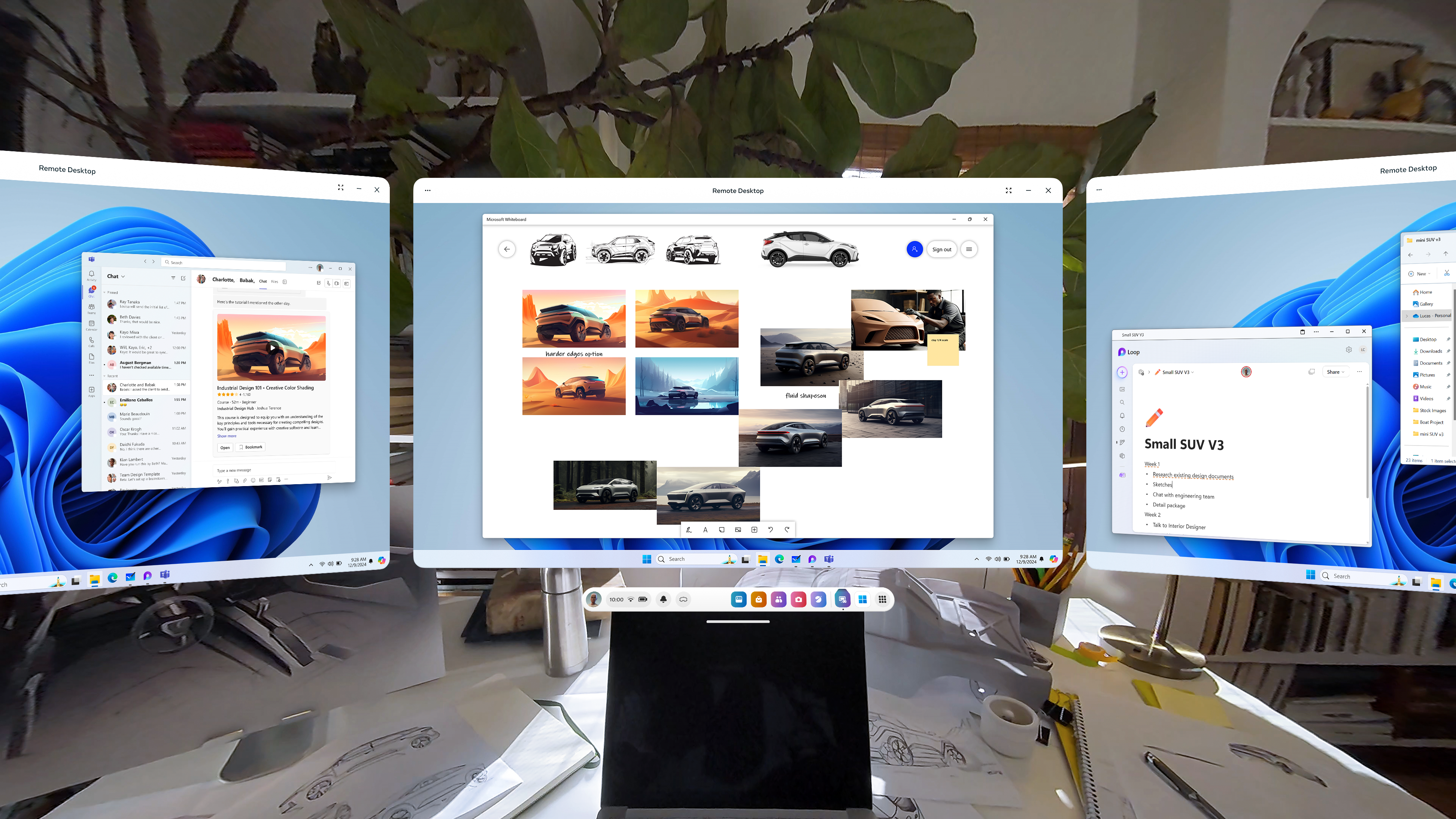
VR + AR Tabs December 2024

Catching up on what has happened in VR/AR since the summer:

  • v68
    • Meta Quest mobile app renamed as Meta Horizon app
    • Light mode added to Horizon mobile app
    • ability to start or join audio calls between the mobile app and Meta Quest headsets
    • Integration of Meta AI with Vision on Quest 3 and Meta AI audio-only on Quest 2 (experimental); replaces older on-device voice assistant (set for August 2024 release)
    • reduced performance latency on Quest 3
    • support for Content Adaptive Brightness Control in Quest 3 (experimental)
    • account management and communication updates in Safety Center
    • updates for the virtual keyboard
    • new Layout app for aligning and measuring real-world objects in physical space
    • new Download and All tabs in Library
    • management of cloud backups
    • ability to pair controller to headset while in-headset
    • audio alert for low battery
    • ability control the audio level balance between microphone and game audio when recording, live streaming, or casting
    • increased screenshot resolution in Quest 3 from 1440×1440 to 2160×2160
  • v69
    • “Hey Meta” wake word for Meta AI
    • v67 New Window Layout moved to default
    • spatial audio from windows
    • ability to completely remove unwanted apps and worlds, including leftover apps already uninstalled
    • quick pairing of Bluetooth peripherals when they are in pairing mode and near the headset
    • ability to keep the universal menu and up to three windows open during immersive experiences
    • Content-adaptive backlight control
    • automatic placing of user into a stationary boundary when user visits Horizon Home
    • Head tracked cursor interaction improvements for staying hidden when not wanted
    • ability to view the last 7 days of sensitive permission access by installed apps
    • Unified control of privacy across Meta Quest and Horizon Worlds
    • Control visibility and status from the social tab
    • support for tracked styluses
    • Oceanarium environment for Horizon Home
    • v69 required to support Horizon Worlds, Horizon Workrooms, co-presence and other Meta Horizon social experiences
  • v71 (v70 skipped by Meta)
    • redesign of Dark and Light Themes
    • redesign of control bar location
    • redesign of Settings menu
    • Travel Mode extended to trains
    • Link feature enabled by default
    • Remote Desktop in Quick Settings
    • ability to use desktop remotely through the Meta Quest Link app on PC
    • in-headset pairing of third-party styluses
    • in-headset controller pairing
    • view app permissions while in use
    • higher-quality casting from headset to PC
    • new Calendar app, with Google and Outlook Calendars integration, support for subscribed Meta Horizon Worlds events or Workrooms meetings
    • ability to share and play back spatial video within Horizon Chat in-headset and mobile
    • Volume Mixer, with separate Call Volume and App & Media Volume
    • support for content utilizing 3 degrees of freedom (DoF) head tracking through Dolby Atmos and Dolby Digital Surround
    • Audio to Expression: machine perception and AI capability deriving facial motion and lip sync signals from microphone input, providing upper face movements including upper cheeks, eyelids, and eyebrows for avatars
    • improvements for Passthrough and Space Setup
  • v72 [link]
    • live captions
    • system-wide virtual selfie cam
    • app folder for PC VR apps
    • launch 2D apps in the room: dragging and dropping the icon into your space
    • refreshed boot screen branding (officially “Meta Horizon OS”)
    • passthrough keyboard cutout with soft gradient when touching physical keyboard
    • dedicated Photo Gallery app
    • smart storage
    • one more slot for pinned apps

Meta Orion

  • Demo of Meta Orion AR glasses at Meta Connect and to tech journalists/vloggers
  • I’m especially interested in the neural wristbands. Definitely the biggest step forward by far.
  • Unfortunate that this will remain testware for the foreseeable future

Xreal One and One Pro

  • Launched early December
  • Basically the XReal Air 2 and Air 2 Pro with an embedded co-processor to enable a 3dof spatial UI
  • Still needs to be connected to a phone
  • Still a pair of movie glasses to be used in stationary settings
  • Still no news on the XReal Air 2 Ultra since it was released to developers in the spring

Other items

  • Release of Meta Quest 3S, replacing 128GB Quest 3
  • Discontinuation of Quest 2 and Quest Pro
  • Merger of separate apps for official Quest casting, PC VR, and remote desktop into Meta Quest Link

Takeaway

These last few updates, including what is currently seen in the v72 PTC, have really capped off a significant improvement in what the Quest 3 can do since its initial release in September 2023. Mixed reality on the device has become less of a gimmick. I’m surprised that I can’t find a anniversary review of the Quest 3 comparing the updates between September 2023 and December 2024. Biggest updates:

  • Passthrough
    • V60: passthrough while loading app (if enabled)
    • V64: resolution and image quality
    • V65: passthrough environment for some system menus and prompts, including lockscreen and power-off menu
    • V66: improvements to passthrough, including reductions in warping
    • V67: ability to take any window fullscreen, thus replacing other windows and replacing the dock with simplified control bar with buttons for toggling curving, passthrough background, and brightness of background
    • V71: improvements for Passthrough and Space Setup
    • V72: generalized passthrough cutout access for physical keyboards
  • Boundary and space setup
    • V59: suggested boundary and assisted space setup (for Quest 3)
    • V60: cloud computing capabilities to store boundaries, requiring opt-in to share point cloud data
    • V62: support for up to 15 total saved spaces in Space Setup
    • V64: automatic detection and labeling of objects within mesh during Space Setup (undocumented, experimental, optional)
    • V65: Local multiplayer and boundary recall with Meta Virtual Positioning System
    • V66: Space Setup automatic identification and marking of furniture (windows, doors, tables, couches, storage, screens, and beds, with additional furniture types supported over time) (documented, optional)
    • V69: automatic placing of user into a stationary boundary when user visits Horizon Home
    • V71: improvements for Passthrough and Space Setup
    • V72: automatic stationary boundary when booting into VR home
  • Avatars and hands
    • V59: legs for avatars in Horizon Home
    • V64: simultaneous tracking of hands and Touch Pro/Touch Plus controllers in the same space (undocumented, experimental, optional)
    • V65: fewer interruptions from hand tracking when using a physical keyboard or mouse with headset
    • V68: ability to pair controller to headset while in-headset
    • V71:
      • Audio to Expression: machine perception and AI capability deriving facial motion and lip sync signals from microphone input, providing upper face movements including upper cheeks, eyelids, and eyebrows for avatars. Replaces OVRLipsync SDK.
      • in-headset pairing of third-party styluses
      • in-headset controller pairing
    • V72: hand-tracking updates: stabilization and visual fixes for cursor; responsiveness and stability of drag-and-drop interactions

On racedep and immigration

The wedge argument that the ADOS/FBA/AfAm nativist movements hinges upon is that African Americans who were enslaved on American plantations are uniquely disadvantaged compared to even other Americans (Afrodescendant or otherwise) who immigrated voluntarily.

Unfortunately, the ADOS/FBA/AfAm nativist movements parlay this wedge into helplessness and futility toward the WASP American power structure, as well as a wide-ranging angst and contempt against almost everyone else in the world.

For liberals and progressives, what is the utility of this wedge which separates descendants of the antebellum enslaved in the United States from descendants of those enslaved elsewhere?

How do those who do not share in the mythology of the voluntary immigration experience – particularly of the depiction of immigration as a formative, affirmative rite of passage and ethnogenesis – deal with this wedge in a healthier way than ADOS’ nativism? Or, alternatively, being a Black expat?

I fear that progressives and liberals do not yet have an answer to this wedge, no way to resolve the contradiction of a big tent bringing together descendants of slaves, immigrants, aborigines and settlers.

Enough of the big tent broke ranks to vote against that solidarity and sacrifice some immigrants’ dreams, livelihoods and potentially lives in the name of security and certainty.

We need a better arrangement to bridge this wedge, a liberalism which can respect and celebrate immigrant experiences while respecting that it’s not a formative experience for some ethnicities and may be less pleasant to experience in reverse from the most powerful country on earth.

We need a liberalism which can promote immigration as a benefit for those who did not experience immigration, even for those who are descendants of forced migration and enslavement like myself.

Racedep (race depolarization) happened this election, to the benefit of anti-immigrant, anti-urban conservatives like Donald Trump. Promoting an alternative integrative social contract will be a major task of the post-Obama Democratic coalition.

On Florida

Matt Isbell, a stellar Florida-based political data analyst, posted this on Twitter for the doubters:

Fancasting About the NAACP Image Award for Outstanding Animated Motion Picture

At the very least, the following should be nominated or shortlisted this year:

  • Spider-Man: Across the Spider-Verse
  • Wish
  • Craig Before the Creek
  • Teenage Mutant Ninja Turtles: Mutant Mayhem

Last year, in addition to Wendell & Wild (the winning entry), the following should have been nominated:

  • Entergalactic
  • The Sea Beast
  • Lightyear
  • Strange World

Why I Want to Start a Non-Profit for Direct Democracy

One of my long-term goals is to start a 501(c)3 nonpartisan organization to educate the public in support of direct democracy (if no one else does it first).

I understand that the Ballot Initiative Strategy Center (BISC) does an amazing job in supporting the use of the ballot initiative from a progressive standpoint. However, their Defend Direct Democracy campaign page, IMO, doesn’t exactly address how their organization defends the use of direct democracy from legislative and bureaucratic attacks. And they don’t seem to have a resource for model legislation or how to advocate for adding direct democracy to more state laws, including state constitutions.

If there is one thing that more states need – especially states with part-time legislatures, especially Southern states, especially states which lack nonpartisan redistricting – it is direct democracy. But no one is trying to push these states to adopt direct democracy into their state laws, and BISC seems to only play defense for the right to the ballot initiative.

I wouldn’t want this hypothetical organization to duplicate any of BISC’s work, only to do the following:

  • educate the public on the nonpartisan necessity for the ballot initiative system
  • build a political and social culture for ballot initiative systems in states which lack such systems
  • train election administrators on how to implement ballot initiative systems in their election regimes
  • train and support advocates on expert talking points supporting the ballot initiative system

It is sad that the ballot initiative system only was adopted in some states through the Progressive era of the 1890s-1910s and then largely fell off afterward (save for brief victories in Florida and Mississippi). But just like how once-nearly-abandoned election systems like ranked-choice voting have made a comeback through the likes of FairVote advocating to the public, I want to duplicate the success of the ranked-choice voting movement for the ballot initiative system.

So here’s me sending this idea “out to the universe”: a 501(c)3 nonpartisan organization supporting the right to the ballot initiative system in more states.

Ohio’s Direct Democracy Survives and Thrives

Ohio defeated a proposed amendment meant to make ballot initiatives impossible, despite the state government using every possible trick to help it pass, including placing the question on the ballot for August.

Apparently, the turnout exceeded most primary votes in the last several election cycles since 2016. The result also largely broke down by population density, with Democratic-heavy counties joined by voting No. The result largely bucked the trend of past presidential and statewide elections, with substantial crossover voting from Republicans who opposed the ballot question.

Winners:

  • Both November 7 ballot initiatives:
    • Right to Make Reproductive Decisions Including Abortion Initiative, on the ballot November 7 (passed)
    • Marijuana Legalization Initiative, on the ballot November 7 (passed)
  • At least 3 potential ballot initiatives working for the 2024 ballot:
    • Citizens Redistricting Commission Amendment
    • Minimum Wage Increase Initiative (for $15)
    • Constitutional and Legal Rights Relating to Public Safety, Including Prohibiting Qualified Immunity Initiative
  • former Ohio Supreme Court Chief Justice Maureen O’Connor, who is leading the effort for the Citizens Redistricting Commission Amendment and was infamously snubbed by the Ohio Republican-supermajority legislature

Losers:

  • Ohio Secretary of State Frank LaRose (R)
  • Governor Mike DeWine (R)
  • Attorney General David Yost (R)
  • The Ohio Republican Legislative Supermajority
  • Ohio Chamber of Commerce
  • Anti-choice reactionaries

Thoughts on Meta Quest 3

VR devices like the Meta Quest 3 are out of my priority zone right now, but I remain fascinated in the advances made with augmented/mixed reality over the last decade.

It took so much technology and so many price reductions, but now we’re so much closer to the Dennou Coil future. Some are now taking their Quest 3 headset outside and out of their homes, even to public places, risking being called “glassholes”, at least to test the limits of current mixed reality headsets.

(At the very least, Meta backed off of making heavy references to work/enterprise when launching the Quest 3, so this is likely to be more successful a device than the ill-fated Quest Pro.)

The Apple Vision Pro, when it comes out, will likely exceed the Quest 3 in polish and some technology features (I.e., the 12 cameras inside the Vision Pro). The one I look forward to the most is the “Spatial Video” format, or 3D semi-volumetric video which you can zoom in to see different angles and plays in a sort of foggy box at the edges. I’m seeing demos alleging comparative spatial video in Meta Quest 3, but it doesn’t exactly seem as apparent to me.

I’m still wondering exactly who, or which demographic, will likely afford a laptop-on-the-face like the Vision Pro, compared to the game-console-on-the-face that is the Quest 3. I guess we’ll find out.

Third Time’s the Charm for Citizen Redistricting Initiatives in Ohio

What will be the difference between 2005, 2012 and 2024 for citizen redistricting in Ohio?

Let’s look at the 2012 proposal.

The Voters First Ohio campaign went to court against the Ohio Ballot Board over the language of the measure. The Ohio Supreme Court ruled for the campaign, but when the Ballot Board met again, the ballot language was doubled in length. 

The opponents of the 2012 measure, including both big business lobbies and the boards of at least two major newspapers, decried the alleged “lack of [electoral] accountability” of a citizen redistricting commission, as well as the mandated funding for the commission’s work. 

Both newspapers instead extolled the idea of requiring a bipartisan supermajority from a politician-majority commission for passage of a map, and the proposal went down in defeat.

This was said before Ohio, in two legislatively-referred amendments in 2015 and 2018, replaced the Ohio Apportionment Board with the Ohio Redistricting Commission, which did no better in 2021-2023 at drawing fairer maps despite requiring bipartisan supermajority approval. Wonder if they changed their tune?

The CNP initiative seems to keep most of the 2012 proposal. Differences:

  • The CNP proposal would involve a bipartisan panel of only retired judges to screen potential candidates for the commission. The 2012 plan would have involved sitting appellate court judges in the selection of commissioners.
  • CNP’s plan bans prison gerrymandering. 

The use of retired judges effectively sidesteps one of the sticking points of the 2012 plan, which drew the opposition of both the Ohio Judicial Conference and the Ohio State Bar Association for this reason. This amendment, certainly, needs as many supporters, or as few opponents, as possible.

There is no telling whether the big business lobbies have changed their tune. The Ohio Farm Bureau Association and Ohio Chamber of Commerce, both of which publicly opposed Issue 2 in 2012, both backed August 2023 Issue 1, which would have seriously hobbled direct democracy in the state. The failure of that amendment may not say too much about the fate of CNP’s initiative, but it does show the deep entrenchment of the political elite in Ohio that such a blatantly anti-democratic proposal as August 2023 Ohio Issue 1 would see the light of day.

But the repeated failures of citizen redistricting proposals at the ballot box, or at least the failures of their campaigns, need to be considered as teaching moments for those who assume that it will win this round in 2024. In addition, the chicanery of oppositional officeholders like the Secretary of State, who changed the ballot summary language of November 2023 Ohio Issue 1 to reflect Christian right-wing beliefs about abortion, should not be ignored (even if his actions failed to stop the measure from victory at the polls). Victory is not certain, and what those past campaigns endured should help this campaign improvise, adapt and overcome in 2024.

Let’s also see if the CNP proposal makes it to the ballot at all. After being approved by the Attorney General (who accepted it after previously rejecting it twice) and Ohio Ballot Board, the campaign recently voluntarily reset the clock after discovering a typo, then rewrote the petition and sent it back to the Attorney General, who approved it a second time. It now awaits the Ohio Ballot Board’s decision before it is finally set to begin collecting signatures.

Saporta Report: “A decision on the races that time forgot may be near”

Saporta Report cites attorney Bryan Sells regarding when we can hope for an impending decision in Rose v Raffensperger.

It would make sense for a decision in Rose v Raffensperger to come before Thanksgiving, which quickly precedes the start of the special legislative session on November 29. As stated in Saporta Report, this decision will be cited for decades. It will have an impact on voting rights, redistricting and other types of litigation, not only in the 11th Circuit but elsewhere. 

But I go back to the VRA litigation saga from 2011-2016 against at-large FPTP elections in jurisdictions like Fayette County, GA, or to the 100+ court cases since 1982 in Georgia alone which replaced at-large districts with single-winner district elections for city councils, school boards, county commissions and legislative districts. 

I would be very surprised if the 11th Circuit sided with Georgia on the PSC’s at-large election method. But the clock is ticking on the 11th Circuit to make a decision: 

  • the special session on congressional and legislative districts starts on 29 November;
  • then a regular session to start in January 2024 for 40 days, which is a chance to change statute law regarding PSC elections;
  • then a general election to be held in November in which at least another PSC seat (District 5, held by Republican Tricia Pridemore) will be on the ballot (and maybe the two held by Echols and Johnson?), as well as a chance for voters to change Article IV Section 1 of the state constitution regarding the PSC.

On the flip side, the 11th Circuit could rule the case unjusticiable and remove itself from the case. Or they could rule for the plaintiffs but then the state could simply move the PSC to an appointed body instead (like most states). Who knows.

The next few weeks will be interesting to watch.