I disagree with this.

  1. Not even Bernie Sanders would qualify as a left-wing Trump, no matter how many comparisons were drawn between them or how many folks had wet dreams of a Trump-Sanders debate.
  2. a left-wing Trump would have to be sexist AF and adept at racist dogwhistles (*hinthint* “BLASTED ZIONAZI BANKERS” *hinthint* “Asians tuk er jerbs”). That would gut the Dems in the Black third of the South, so why even try?
  3. The closest I could imagine to a left-wing Trump is George Galloway, and he’s a British MP who got kicked out of Labour.

African-Americans Who’ve Ran for Governor

To date, I’ve been able to find 8 major-party nominees of African descent for governor of a U.S. state, over the spread of 6 states:

  • Douglas Wilder (Virginia Democratic nominee 1989, elected 1990-1994)
  • Deval Patrick (Massachusetts Democratic nominee 2006, elected 2007-2015)
  • Johnny DuPree (Mississippi Democratic nominee 2011, first AA nominee since Reconstruction)
  • Robert Gray (Mississippi Democratic nominee 2015)
  • Cleo Fields (Louisiana Democratic candidate 1995, Louisiana has no primary system)
  • Bill Jefferson (Louisiana Democratic candidate 1999)
  • Theo Mitchell (South Carolina Democratic candidate 1990)
  • Anthony Brown (Maryland Democratic nominee 2014)

Compare this to:

  • 36 elected governors of Irish descent
  • 21 elected governors of Ashkenazi Jewish decent

Not bad for two other ethnicities who were once considered non-white by White America.

But it’s emblematic of how adrift Democrats are at the moment in the South, and just how much we have failed in representing and accommodating one of the most and longest-politically-disadvantaged ethnic groups in this country.

Building on the #WEBDuBois quote Edric just posted:

Reading DuBois’ critique of both parties in 1956, one has to understand what the parties represented in that period. The Democrats were still a very racist political party which appealed to the White working class. The Republicans, by comparison, were mostly indistinguishable from the Democrats except in their Lincolnian heritage and their more concrete adherence to free-market ideals. Republicans in the South were struggling to arise as an appreciable political force, becoming plastered in its declining years as the “Negro Party”.

Fast-forward to today. The Republicans are dominant in the South and are a very racist, white-identity-obsessed party. The Democrats in the South are struggling to arise as an appreciable political force, and are now becoming consigned to “Negro Party”, permanent-minority status. Outside of the South, the parties are more apart than ever before, except on many of the matters which DuBois touches on in this letter. Some things have never changed, and some things have changed party affiliation.

8 years ago today, #BarackObama was elected president of the United States.

I remember that he had the wind at his back during that campaign. His campaign, his presidency and his brand has changed the trajectory of the Democratic Party in the post-LBJ era.

I think Hillary Clinton will lead under this reality as she tries to leave her own mark. I don’t think we’ll go back to the 1990’s. I don’t think it will be possible. Our expectations are greater than back then, and Obama has made good on too many of them for us to revert back to that period.

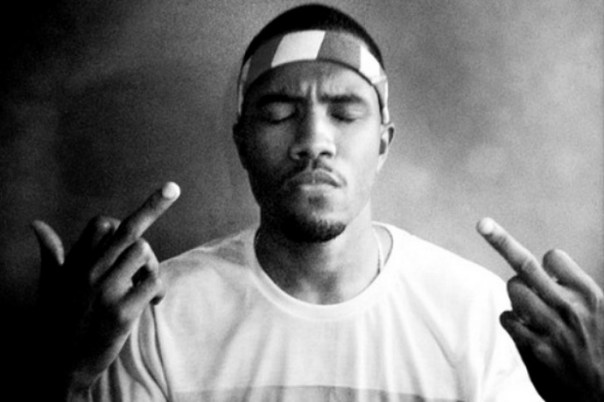
Frank Ocean’s highly anticipated Blonde is only the most recent offering in a remarkable string of theologically complex R&B and rap music. In a year that saw Kendrick Lamar’s Untitled Unmastered, Chance the Rapper’s Coloring Book and Beyoncé’s Lemonade, Blonde (initially titled Boys Don’t Cry) only further emphasizes how gospel themes are being increasingly used as a mode of resistance.

Since its release at the end of summer, the album’s message has continued to spread far and wide, making its latest round in the news cycle this week when Kanye West threatened to mount a boycott against the Grammys if Blonde wasn’t nominated.

Ocean has in the past expressed his belief in a redemptive God (“We All Try”) alongside his disbelief in the value of organized religion (“Bad Religion”). In this sophomore work, he further evolves his spiritual identity in the context of racial justice and queer masculinity. The tone is plaintive but also resilient, fitting into an ethos seen from other black artists this year.

Source: Racial Justice and Queer Masculinity: The Gospel of Frank Ocean | Religion Dispatches

The Congressional Black Caucus and the 1994 Crime Bill

You know what I’m missing about the #1994CrimeBill?

An actual rebuttal to all the 23 Congressional Black Caucus members who voted for it and all the African-American non/ex-politicians who defend it to this day.

I have read so many defenses and criticisms of the bill from White folks during 2015-2016, but they all center the Clinton family in their explications. Even Michelle Alexander’s rage piece against the crime bill in “The Nation” magazine during the primary centered the Clintons.

What about the African-Americans themselves? Where was our political agency at that time? What benefits did many of us, the Kweisi Mfume-Sanford Bishop school of 23, see in supporting the bill, versus the John Lewis-Jesse Jackson school of 11 who voted No? Why do many African-Americans today still support the bill and its harsher terms of law in the context of its time, and is there a proper rebuttal to *their* supportive arguments?

In the end, this became an election year attack line, and not a moment for reconciling the past with the present. I think those who demand the lessening of mass incarceration missed a grand opportunity for change because the conversation about the 1994 Crime Bill went nowhere this year.

When Republicans Stopped Wanting Our Vote

From a comment I posted to John Jackson’s thread last October 15, copypasted and edited here from my other profile because it bears repeating in public:

“If the GOP were the more effective alternative for African-American voters to the racist Southern Democrats in the post-WWII South, why did people like Fannie Lou Hamer attempt to integrate the Mississippi Democrats (who were atop an effective one-party state since Reconstruction) and not the recently-reestablished Mississippi GOP (re-born 1956)? Why did her MFDP become the focus of attention in the 1964 Democratic Convention when they sought a seat at the Mississippi delegation table, when the free-market GOP championing Barry Goldwater was available that year?

In relation to what [some guy] said earlier, where were all this “free stuff” that Democrats were handing out for the 90+ years that Democrats had one-party rule throughout the South, and were Southern White people being given this free stuff that Black people were clearly prohibited from accessing? Southern White people, with high rates of regional illiteracy and racial privilege, “pulled the lever” for Democratic governors for over 4 generations, and never pulled that lever for a GOP governor, so what changed?

That’s what I’m curious about. What changed in the South that Democrats went from being “my (racist) grandpapy’s party” to being the party of “free stuff”, from a racist kleptocratic party in the South to the “socialist party” in opposition for the next century? Was it FDR’s New Deal? Truman’s integration of the military? Johnson’s ban on bigoted poll taxes, or his promotion of the Great Society? I don’t think that it is the viability or non-viability of the GOP’s free-market policy or its anathema to “free stuff” that is the issue. Otherwise, many would have been more attracted to the GOP as a party on a Booker T. Washington/Marcus Garvey/Malcolm X “do for self” black-nationalist pro-business basis.

But that didn’t happen, and so you didn’t have traditional Black Republicans get into federal office after Senator Edward Brooke of Massachusetts, who was the last gasp of the type of Black GOPer who was promoted aggressively by the Radical Republicans to Southern statewide office in Reconstruction. Now it’s all “bootstrap”, “anti-big-gov” and militarist types like J.C. Watts, Mia Love, Allen West and Tim Scott since the civil-rights movement era. What happened, and why can’t the GOP relate to the Black Nationalist “do for self” trend in the same way that the Democrats have been able to relate (somewhat) to the Black social-democratic tendency?”
With the partisan-tinged anti-union sentiment in Wisconsin, I wonder if a lot of the opposition to unions has to do, ultimately, with anti-black racism.

Sure, the primary victims of this tend to be white union members in both public and private sectors, but the rage against unions from people who previously benefited from unions has a visceral, irrational tone to it. The “union thug” caricature gained greater currency during Obama’s presidency and the Tea Party reaction against both him and his initial Democratic congressional majority.

The right-to-work and other anti-union laws being drafted over the last 8 years, however, have an extremely-racist history, and a lot of it took place in the South.

I reject the premise for that video of the rainbow person hugging the confederate person.

If I were that rainbow person (and I am), I’d have to tell the confederate person that the “Lost Cause” is a damn lie of rich white Southerners to the poor white Southerners.

I would ask them why they would brandish the legacy of that lie.

I would ask them why their ancestors allowed themselves to be played like a damn fiddle.

Then we’d probably fight in the street.

In state government, there is an inherent bigotry against cities, even the biggest ones.

States, which are rurally-biased, can take away the incorporation of a city at any time unless prevented by a state constitution. States are the middle-men between the city and the federal government.

The biggest cities in our country should have the opportunity to secede from state governments and govern themselves separately under federal law.