Tag Archives: Joe Biden

Why the American system of candidate nomination has led us to fascism (again)

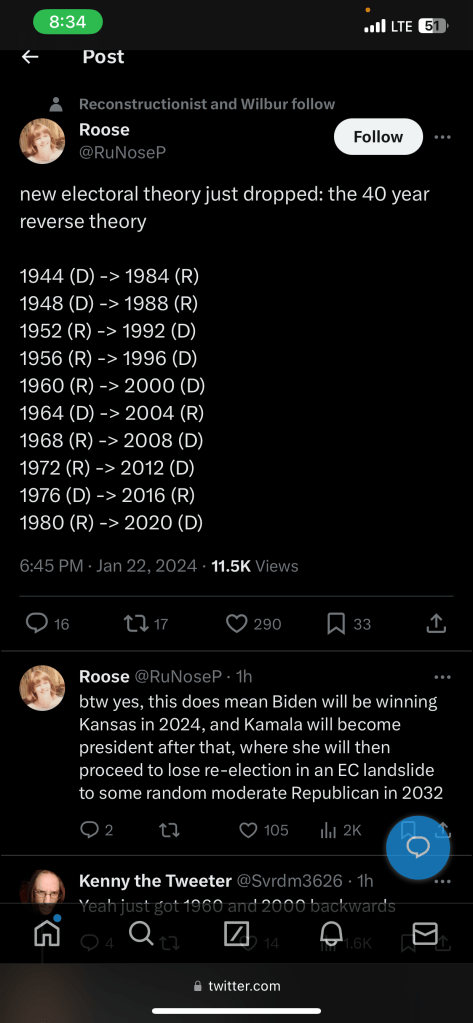
Cover of “The Paranoid Style in American Politics and Other Essays” by Richard Hofstadter
With regards to Richard Hofstadter

I very much favor how the Labour Parties in the UK and Australia nominate candidates for public office compared to the way that American parties nominate theirs, even though they have a parliamentary system compared to our presidential.

The primary and the caucus, which has been in increasing use by both major parties in the United States since the early 20th century but especially after the 1960s, are both paranoid, time-consuming, irresponsible, expensive garbage in comparison.

The primaries and caucuses have placed us in such a position that we are bowing down to:

  1. the millionaire and billionaire donors and barons who fund primary candidates’ campaigns and think tanks;
  2. the Republican, anti-democratic state governments who control the primaries;
  3. pollsters and TV talking heads who have a vested interest in the dramatic rot and instability of the republic for their ratings and ego.

Things should not be this over-engineered. We should not feel this helpless and listless. Democracy should not involve sacrificing any political party’s freedom of association for the sake of financial expediency and outsourcing of responsibility to people with conflicting and divergent interests.

We should not use primaries and caucuses, both of which necessitate the demand for more money and advertising unleashed by the Citizens United decision.

But this century-long snowballing disaster has come to dominate our political thinking, at the expense of democracy in the republic.

Getting Biden to withdraw will not begin to fix the fundamental rot caused by the primary as an extension of the general election.

Reforming our elections toward various flavors of nonpartisan blanket primary will not solve this rot, either. In fact, it may further it, I’m sorry to say.

We are not a multiparty system because the primary and caucus, combined, is treated as an extension of the first-past-the-post general election, as a public utility to be regulated by state governments, even if they are ran by rival parties.

And now, fascism and feudalism govern so many states – and maybe soon the White House again – because our two-party system does not allow for building a cordon sanitaire, a clean rope, against anti-democratic forces.

Europe’s parliamentary systems understand this. Latin America’s presidential but proportional systems (except for Argentina, I guess) are made starkly aware of this, even as those presidential systems lead to rival parties in control of either branch of government and coming to frequent blows against each other. Their citizens often know which parties to block from power.

They also, mostly, understand to let parties be parties, and to not outsource the responsibility of nominating candidates or authoring legislation for legislative or presidential office to the state or to think tanks.

But to Americans, such thinking is foreign. Parties have long been weakened and demonized as an institution at all levels of government by the paranoid majority for generations.

We have become ideologically polarized, but have not allowed ourselves to split parties, represent those who support us, and not appeal to anti-democratic constituencies.

Why didn’t we? Why haven’t we?

And are we too late?

How much longer do we this rot fester before we start treating parties as parties, respecting their role in society, and let them flourish on their own power?

Hopefully this election will lead to that reckoning, one which we thoroughly deserve.

Or, alternatively, we will experience further, misguided destruction of the republic.

Democrats Need Focus

Not interested in the present White House contest

I’m not interested in the present bullshit.

Remain focused on the state legislatures, governors and attorneys general. They are the true sources of power in this country. The Supreme Court is 6-3, and Congress is incredibly hamstrung, thanks to the votes and laws of multiple state governments over decades. The balloons which they trial often make it into law or increase in popularity with like-minded counterparts across the country, and then sometimes flow upward into federal policy.

You may fear SCOTUS and what more they may allow, or what Trump will bring if he is elected again, but so many of you live under decades-long dark-red state rule with no option but to wait for demographics to shift in your direction just a little bit more each year, or each decade.

And what has that brought you? Learned helplessness, stuck in the suburbs of some red state, stuck being disappointed by the latest flow of bullshit from your state legislature.

And you pontificate on switching out the incumbent president for another nominee from whatever state while the sand continues to shift under your (and their) very feet.

Learn your history. Get some perspective. Relocate strategically. Plan accordingly.

Why liberals and socialists are reacting with hair on fire

I don’t think it’s a “circle jerk”, as a friend described it, at least not a total circle jerk. I have several thoughts about it.

They’re turning inward and insular because they’re being starkly reminded of the fragility of their appearance-dependent relationship with the nationalized centrist-Esque media and their donors, and they have no seeming refuge atm beyond, what, MeidasTouch? Lincoln Project? YouTubers?

Too many liberals want to be loved by nationalized media, and to keep their current relationship with that same media. Just as they’ve been with the judicial and executive branches of government, they may want to turn against nationalized media for now because things are going bad, but they always come back and never build out their own comparable counterpart to the conservative parallel economy. And their donors, small dollar and large all, are flighty as hell.

And the nationalization of the media apparently happened during the same period as the growth of the local news(paper) desert and the growth of Republican capture of state legislative majorities.

And the center-left are also lacking yet again for a strong bench of unifying personalities from outside the nationalized media to countervail the prevailing narrative, or to even fill a portion of the power vacuum which will be left if Biden withdraws or (worse) 25th-Amendments his remaining (first) term.

We may not have a Macron at the helm, but we also definitely don’t have a (less-problematic) Melenchon to offer an alternative, polarizing populist vision or personality. In leadership, We have a bunch of institutionalists and up-and-comers with the personality or relatability of a wet paper bag outside of their constituencies, none of whom are helping to build the parallel polis to protect their interests and narratives.

So we now see a circle jerk for those who only have (or seek) some distance from the nationalized centrist media and its blowback, not a full-blown parallel polis to buffer them ideologically from centrist blowback in a multitude of ways like what Trump has at his disposal.

Not even pro-Bernie people, as resentful as they may continue to be about 2016 or 2020 DNC, or people further left have built out much of their own parallel polis, unfortunately.

Free advice to Biden’s campaign

In France this week, Macron’s own prime minister, Gabriel Attal, got him to stop talking publicly about the election for the rest of this last week, because Macron, in his 40s, kept firing his mouth off at the political left (especially rival Jean-Luc Melenchon) at a time when that is absolutely not needed.

Macron may have looked at the numbers and decided that it would be better for the RN to grab a majority, appoint a far-right prime minister and try their hand at governing in such a way that the French public would be turned off afterwards.

Attal, OTOH, is actually fighting against this apathy, this resignation to an RN majority, and is not fighting those to his left. He’s actually committing to this “Republican front” strategy, and actually hates the far right more than he disagrees with the far-left. He knows ball.

This “Republican front” may have helped reduce the likelihood of a majority for the far-right National Rally in the runoff tomorrow, as per polls from yesterday. (UPDATE: It did, and Attal announced his resignation effective Monday. UPDATE: Macron rejected his resignation, wants him to stay until after the Olympics.).

If this is what’s needed to keep Biden in the election and keep Dems viable, then do it. Have him talk with a voice assistant at all public events like Jennifer Wexton. Have his surrogates campaign for him instead where necessary.

His actual voice is a worthy sacrifice if he’s that serious about running.

But if you’re going to side with anyone:

  • it must be Harris
  • you must support Harris completely, with no reservations.

We don’t need primaries

Hot take: French and British political parties do not use publicly-funded, state-ran primaries to nominate their parliamentary candidates, nor do they perceive their nomination contests to be public, mass affairs or extensions of the general election season which should be open to all party members or even non-party members.

Maybe we in the U.S. should reconsider using primaries (closed or open) to nominate our candidates or inviting participation from independents. Primaries add unnecessary expenses and time to campaigns and are incredibly inflexible to quality control concerns.

We really don’t need primaries, let alone open primaries.

Legalize proxy voting

Hot take: Legalize proxy same-day in-person voting.

It may violate the secret ballot, but if you want high turnout without relying upon early voting, drop boxes or the postal service, you’d allow voters to waive their right to a secret ballot and formally, temporarily give their power of attorney to another registered voter.

If you’re the type who wants to know the results on the night of and would rather that people show up on the day of, then proxy voting is the way to go.

France shows that it can work.

Good news from the states so far this year

  • Delaware’s legislature passed a repeal of their *statutory* death penalty, which awaits signature. 
  • Delaware Supreme Court legalized no excuse permanent absentee voting and early voting, overruling a lower court.
  • California will have a total ban on slavery on the ballot in November.
  • Wisconsin’s Supreme Court voted on party lines to legalize ballot drop boxes for upcoming elections. 
  • Ohio’s Citizens Not Politicians dropped off 730k signatures from the majority of Ohio counties for their amendment to institute a nonpartisan redistricting commission, which now awaits vetting by the Review Board.
  • Arkansas voters dropped off 100k signatures for an abortion legalization amendment, which now awaits vetting by the Review Board
  • Nevada will have an abortion amendment on the ballot in November
  • Michigan and Minnesota passed bans on gay/trans panic defense
  • California, Colorado will vote on marriage equality amendments, while Hawaii will vote on repealing language allowing the legislature to restrict marriage to opposite sex couples.
  • Maryland and New York will vote on inclusive equal rights amendments. 
  • Colorado, Florida, Maryland, New York, Nevada and South Dakota will vote on abortion legalization amendments. 
  • Nevada and Oregon will vote on adopting ranked choice voting in blanket primaries. Campaigns in Washington D.C. and Idaho have submitted ballot signatures for pro-RCV measures, and a campaign in Colorado have until August to submit 125k signatures. 
  • Florida and South Dakota will vote on cannabis legalization amendments.  
  • Minnesota passed a State Voting Rights Act and banned prison gerrymandering.
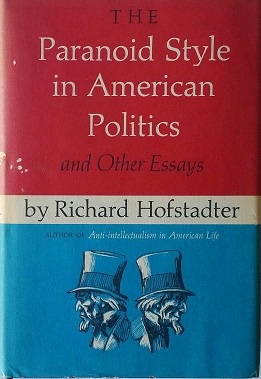
New Electoral Theory Just Dropped

“new electoral theory just dropped: the 40 year reverse theory…. 1944 (D) -> 1984 (R), 1948 (D) -> 1988 (R), 1952 (R) -> 1992 (D), 1956 (R) -> 1996 (D), 1960 (R) -> 2000 (D), 1964 (D) -> 2004 (R), 1968 (R) -> 2008 (D), 1972 (R) -> 2012 (D), 1976 (D) -> 2016 (R), 1980 (R) -> 2020 (D)”

“btw yes, this does mean Biden will be winning Kansas in 2024, and Kamala will become president after that, where she will then proceed to lose re-election in an EC landslide to some random moderate Republican in 2032”

Posted 6:45pm, Jan 22, 2024 by Twitter user @RuNoseP

As noted by someone, this gets 1960 and 2008 backward in terms of party. Also, it’s missing “1940 (D) -> 1980 (R)”, although it likely wouldn’t work for 1936 (D) -> 1976 (D).

but still. This is very interesting to think about. This could mean that Dems have eight more years in the White House.

But a bigger question: does that mean that Democrats are headed to winning full control of Congress in a 2034 Democratic Revolution? And does that mean that Democrats will win back the majority of state legislative seats by the 2040s?

The Department of the Interior as a Department of Environment and Climate Protection

Reading this article from Vox about why the incoming Biden administration should establish a Department of Climate, the only times it goes into specifics about what this proposed department should look like is when it mentions current gaps in environmental justice, as well as how the Department of Homeland Security was cribbed from agencies in various departments.

If anything, the Department of the Interior, which has been so gutted of agencies over the last century that it has been called “the Department of Everything Else” and currently only manages federal lands and Native American affairs, would be a good candidate for serving as a Department of Environment and Climate.

All it needs is:

  1. a reshuffling of the NOAA from the Department of Commerce (for surveying the environment)
  2. the US Forest Service and Natural Resources Conservation Service from the USDA (to conserve forests and natural resources)
  3. Office of Energy Efficiency and Renewable Energy from the Department of Energy (to support renewable energy, sustainable transportation and energy efficiency)
  4. the National Institute of Environmental Health Sciences from HHS (for research into the effects of the environment on human disease)
  5. a (re-)merger of the EPA (for environmental assessment, research, education and regulation)
  6. Some permanent White House Initiatives on Environmental Justice for each ethnic minority community (African Americans, Native Americans and Alaskan Natives, AAPI Americans and Hispanic and Latino Americans)

If all of this (plus some) could be done, the DOI could become a powerful, holistic spearhead of federal climate and environmental policy.

Also: The Patent and Trademark Office should be moved to the DOJ, and the Census Bureau should be moved to HHS.

Winning the Senate is More Important than Anything

I have voted for Joe Biden and Kamala Harris, and for Democrats down the ballot.

But when I did so, my enthusiasm was not focused on the top of the ticket. I’m learning to not fall in love with the top of the ticket, or to hold high expectations for what the president will do upon taking office.

Instead, I have high expectation from a Democratic majority Senate and House, and for President Biden to cooperate with this majority.

Nancy Pelosi, as Speaker, has set up some extremely high expectations in this 116th Congress for what the congressional agenda will be under the next Democratic trifecta. All of those bills that were passed by the Democratic House and blocked by the Republican Senate need to be passed again with a Democratic trifecta. And the Senate, under Schumer or whoever, absolutely needs to ditch the filibuster to make all of this happen.

Then I need this trifecta to try passing at least one (1) progressive constitutional amendment. There’s one that’s been waiting for over 40 years to become the 28th.

All I want from our 46th president is to sign all of those bills, take the credit and step out of the way. Don’t obstruct, don’t try to get in the way of the House.

That’s the only way I can get some sleep. The joke may be that we’re voting for “Sleepy Joe” so we can get some sleep, but I’m not resting (much) until the backlog of bills on McConnell’s desk is cleared into law in the 117th. I’m not resting until substantial federal COVID relief is passed. Not until a new VRA is passed, not until DC statehood is passed, not until the For the People Act, Equality Act, George Floyd Act, HR 40, Paycheck Fairness Act, SAFE Banking Act, Climate Action Now Act, and every other act passed by the 116th House gets sent to Joe Biden’s desk in the 117th. I look forward to the MORE Act, the Ending Qualified Immunity Act, and other bills which didn’t get consideration by this Congress moving forward in the next.

That’s what I’m voting for, no matter what happens at/with the increasingly-deligitimized SCOTUS, no matter the rage of right-wing governors, attorneys-general and secretaries of state.

I’m glad that Biden will be going into office without the high expectations which were accorded to Obama from his election, and without the high drama which dogged Clinton throughout her campaign. He will be boring, and maybe opaque, and that’s good. Hopefully, he won’t have too many Executive Orders to issue.

The main focus must be paid to the Democratic Congress, and to whether they will fulfill their promises to the people.

The regional discrepancy in early vote turnout for 2020, and other observations

Looking at the Elect Project’s map of early voting turnout up to this point, I spent a week wondering why the turnout in the Midwest and Pennsylvania (especially Pennsylvania) was so low compared to most of the “Sun Belt” states.

Apparently, I learned that this is the first year in which most of the Midwest, Pennsylvania and New York was introduced to both early voting and no-excuse absentee voting, but no-excuse absentee was introduced as the only means of early voting in several Midwestern states. Gerrymandered Republican state legislatures had incredible misgivings about no-excuse absentee throughout this election cycle.

That partly explains why pre-Election Day turnout in the Midwest, New York and Pennsylvania is lower than Georgia, Florida, North Carolina (All three of which use both absentee and and either paper ballots or machines for in-person for 3 weeks), Texas (which largely used paper or machines for 3 weeks of early in-person voting while shunning expansion of absentee voting to those with no excuse), and most states west of the Mississippi.

(At least Michigan prepared a bit better with the passage of Proposal 3 in the Blue Wave of 2018, which legalized no-excuse absentee voting among other reforms via ballot initiative as a constitutional amendment, which has meant that Republicans have found other means of nipping at absentee voting in Michigan such as cutting counting time to Election Day).

The Midwest needed no-excuse absentee in the first place. Michigan was more prepared for COVID forcing a greater reliance on absentee voting, but not the other Midwestern states. The early voting turnout in the Midwest was leaps and bounds ahead of their 2016 early voting turnout, which is to be praised. BUT this sudden and exclusive switch to no-excuse absentee voting was a mistake, IMO, at least when looking at states which did both in-person paper/machine voting and absentee voting and almost eclipsed their 2016 totals (like Georgia and Florida). This amounted to a trial-by-fire for election administrations who were more accustomed to voters turning out on Election Day in person. Absentee voting (and especially early voting) absolutely should be kept and expanded in the Midwest, but maybe they should be kept as an option for at least a few more elections before going total absentee like Colorado and four other states. Or maybe this method of reserving early voting for absentee ballots will improve in future cycles.

Thanks to this early turnout for absentee ballots in the Midwest, GOTV for Dems is going to be a heavier lift in the Midwest/PA/NY for Election Day (but a lot easier for Dems compared to 2016), while GOTV for Dems in the Sun Belt has the easier(?) but more complicated necessity to be more precise with who to pull to the polls, especially Black and Brown voters in Florida. The worries over Black and Brown turnout are easy fodder for the usual “Dems in disarray” headlines, even as Biden has led an otherwise stellar campaign.

And the growing consensus among the prognosticators and election mappers I read on Twitter is that North Carolina’s early count of absentee ballots (currently 97% counted) will likely point to the Electoral College winner on what is erroneously called “Election Night”.

Thoughts on Biden/Harris

The only one that fit the profile of a typical VP candidate is Harris. She’s relatively fresh to DC politics but has had some DC experience, and has little to no background that could excite the GOP beyond “something something Willie Brown”.

It was never going to be Warren, for one, thanks to the Native American issue (and I say this as someone who supported Warren for President). Rice was problematic because of the “Benghazi” fiction, and because foreign policy experience is an allergen to xenophobic conservatives. Abrams has no federal experience and sat out of two potential runs for Senate. Whitmer literally just got elected Governor. Bass has those Cuba and Scientology comments, making her a liability in Florida. Demings was even more of a cop and had a very exploitable background as a police chief, a potential lightning rod for the left and the anti-urban right.

The safest choice besides Harris was Duckworth. She’s even more boring, Midwestern and cuddlier to veterans. By the time that Duckworth was ruled out, I figured that Harris had it.

The Berniecrats may hate Harris, or hate the #KHive on Twitter (and the feeling is certainly mutual from the KHive). Harris was not the most progressive prosecutor in California. But Twitter is not real life, progressive prosecutors are still carving their way into the punitive prosecutorial establishment against political biases as we speak, and the Trump campaign will be tasked to come up with an attack line against Harris that could actually stick and not slide off like it’s been sliding off of Biden. The polls are still more favorable to a Biden win, at least for now, less than 90 days to the election.

And progressives who are situated to the left of this ticket still have room for being change agents, especially those who have won primaries this year.

So I’m not actually disappointed by this ticket. It’s not exciting, but this is not as much of an excitement election as it is an anti-incumbent election. I made peace with it a long time ago, and I’m thinking of the longer term. If this ticket wins along with a Senate majority (despite all the headwinds of voter suppression), we can stop the judicial bleeding at the federal level. But we need the Senate filibuster to be dropped so that the bleeding can reverse.

The die has been cast. We need to win it all.