Also: DeMarcus Beckham, Southern field organizer for Georgia Equality, and Brooke Martin, member of Southerners on New Ground – Columbus Crew.
Tag Archives: lgbt
Notes on the United Methodist General Conference 2019
After the Vote
The hashtags of #gc2019 and #umcgc are sad to read right now, even to my humanist eyes.
But this one post from Lance Pressley of Mississippi is a warning to anyone inviting dissenting Methodists to UCC, TEC, ELCA, etc.
“There’s a #UMC in every rural community and every poor neighborhood, ministering with the community. There’s rarely an Episcopal congregation nearby.[…] Do you know how many UCC congregations are in this state? A grand total of 2. And they’re both in the Capitol. Tell a kid in Shannon, MS that they should go to church 200 miles away. I appreciate your invitation now, but your denomination hasn’t seen fit to invest in my home state. It leads me to suspect you only care when you can use that care to show how tolerant you are.”
It reminds me of how even the UCC has had a presence in Columbus, GA three separate times in its history, most recently when Forgiving Heart United Church of Christ became a UCC member. The nearest UCC members are small churches in Pine Mountain and Woodbury.
There’s a glut of UCC churches in Metro Atlanta, but where’s the UCC in Macon? Augusta? Albany? Valdosta? Athens?
How much investment is being made in progressive mainline Christianity in non-Atlanta Georgia? or in rural Georgia for that matter?
If progressive mainline Christianity is already having a hard time funding itself and broadening itself to rural areas, progressive Methodists will face a bit of an uphill climb if they leave the UMC.
But forming a new Methodist church may be the only option left.
United Methodism as Colonial Christian Hubris
If anything, #umcgc/ #gc2019 showed one of the hubrises of Western Christianity: the descendants of those who were missionarized in Africa during Europe’s colonization and in Eurasia flexed their weight rather spitefully against a great deal of the European and North American descendants of the colonizers and missionaries who now seek a different course for the UMC on the question of gender and sex than what was preached for over a century to Africans and Eurasians by European and American colonizers.
The minority, somewhat-wealthy White American Methodist right – through such groups as the Wesleyan Covenant Association and the Institute for Religion & Democracy – joined the above bloc and helped lead the charge as a means of taking power away from more progressive clergy.
The American section of the UMC – in the birthplace of the UMC – is now in a weird position. American Conservative Methodists, largely concentrated in the South and Midwest, can claim a victory, and are rubbing salt in the wounds of the Progressive Methodists on social media with the usual “pleasantries” directed toward LGBT people.
The Progressive American Methodists, most reflected in the Western Jurisdiction, will marinate on this and come to decisions in the coming days.
This decision reduces pro-LGBT church caucuses like the Reconciling Ministries Network from a somewhat respected caucus like IntegrityUSA (in the Episcopal Church) to an actively-opposed caucus like DignityUSA (in the Roman Catholic Church) or Affirmation (in the LDS).
Another big issue is whether disaffiliation will be made a lot easier for churches, namely for those who want separation. But it is hard to tell who wants the split of the UMC more: the conservatives or the progressives.
A lot of the progressives are pledging in religious language to stay (but it is far from unanimous, as numerous Twitter posts renounced membership within the minutes of the result), while the conservatives are hoping to drive the UMC harder to evangelicalism by driving out the progressives and also hoping that they demographically dwindle on the vine in a new, less-wealthy denomination for the sake of conservative vindication.
But given the PR crisis that has ensued from this – pitting young against old, rural against urban, nation against nation – I don’t think the conservatives have much else to gloat about than a seizure of power, money, property, and brand from progressive dissenters who they’ve wanted to railroad out of the denomination for decades.
Both sides are dressing their emotions in the religious language of the denomination. One side made a big power play against dissenters, and won. And many are gloating of their victory over “heretics”, “satanists” and “cultural relativists”, or, in less pointed language, professing “love” for LGBT people while maintaining their religious disdain for same-sex relations.
But the most hardcore progressive dissenting members and clergy are “grabbing the horns of the altar”, and refuse to walk out of their own accord at this moment. They’re also not taking, or are actively discouraging, invites to other mainline denominations for various reasons.
The politics of this decision reflect not only the effects of the historic colonialism of the UMC, but also an ecclesiastical system which reflects the crisis of American politics and economics. It may also affect the politics of the United States.
How would the schism of the UMC, the third largest denomination of Christianity in the United States, play out in the United States regionally, ethnically, in gender terms? How would it affect or manifest in American politics and partisan identity?
If the UMC becomes an evangelical denomination and drives as many of its progressive members out as possible, how close will this place the denomination into the realm of the Republican Party and its policies in states like Georgia?
This is important even for those who are not Methodists, or even Christians, or even theists. Whatever results from this crackdown will affect the rest of us.
The Digging-in of Heels
How can the progressive American Methodists dig in their heels when the UMC is becoming less American?
They clearly failed to convince the African and Eurasian delegates of the urgency of the One Church Plan. They failed to appeal to the hearts and minds of the African and Eurasian delegates, whose growing numbers come from countries whose Christian denominations are way too frequently antagonistic against LGBT people and who support state and corporalviolence against LGBT people. They are literally living the same ideology taught to them and their parents by Euro-American Methodists missionaries and colonizers, and their chickens came home to roost in St. Louis.
How did the progressive American Methodists think this was going to go down? Who were they seeking to convince? How do they expect to convince the African and Eurasian Methodists now?
I don’t think there will be convincing at this point.

Queer Possibility and Black Love in Wakanda
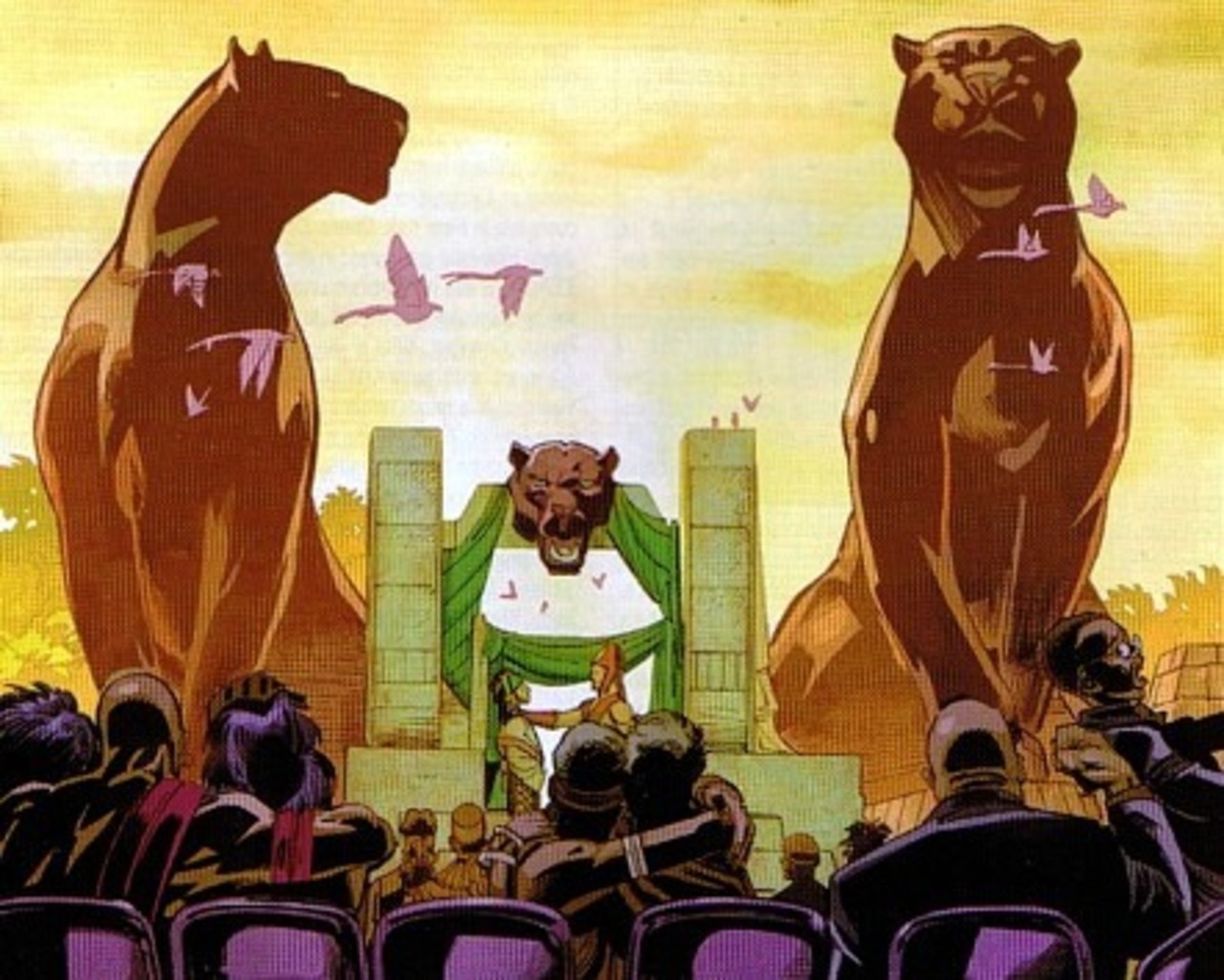 I guess I do want to see Black Panther when it comes out. The social media hype has been thick for at least two years now, and from the early reviews by those who attended the premiere in LA, it’s supposed to “change the superhero genre forever.”
But one thing I thought about today is the possibility of queer representation in the fictional country of Wakanda. If Wakanda is a country which was never colonized by another country, and also a country in which the majority religions are the Heliopolitan cults brought there from ancient Egypt (assuming that neither Christianity nor Islam have made a dent), then maybe – just maybe – it is a country where sexuality, sexual orientation and gender identity are held much more maturely discussed by citizens and government compared to their surrounding ex-colonized neighbors.
What would life be like for a same-gender-loving and/or gender-nonconforming Wakandan? Would they not have to live in fear of their parents or the royal government drumming up violent mobs or secret police to drag them out of their homes, beat them senseless and torture them to death? Would they not live under the hostility of those who proclaim that the sexual and gender minorities are “committing the sin of Lut/Sodom and Gomorrah” and “deliberately infecting people with AIDS?” Would they not live under such lies, or lies like “they’re pedophiles” or “they’re practicing an un-African lifestyle” or “they’re threats to our civilization”?
How would the Hieropolitan cults view sexual and gender minorities? How would the royal government view them or treat them? How would the Wakandan language and literature (writing system?) describe them? And would Wakandan culture describe SOGI minorities in different linguistic frames than how even LGBT-friendly Westerners frame them?
Dare I imagine: same-sex marriage in Wakanda? Lesbian warriors in the Dora Milaje?
Wakanda is a symbol of imagined, alternate-history “uncolonized Africas”, ones in which science and technology advanced without the dominant intervention of European or Asian actors. I want to imagine that, in such a fictional African country, that LGBT Wakandans not only exist, but go through their own struggles and live their own stories in a more mature, less sexually-draconian regime than most real-life African countries. If not in the movie, if not in the comics, then maybe in my thoughts – “headcanon”, if you will.
Perhaps Wakanda would still have a great deal of patriarchy going on, even with the semi-egalitarian politics within the film. But, in the face of a non-Abrahamic patriarchy, perhaps same-gender love and trans identity could still be entertained and accommodated without hysterics or fear. I know that this more “liberal” approach to sexuality would be “letting down” the boisterous gender-essentialist “kings-and-queens” black nationalism that, no doubt, finds desperate refuge in the Wakanda idea.
I say all of this as a gay black man and a sci-fi/fantasy fan. But I also write this as a fan of black love, in which we feel comfortable enough in our skin and color to embrace each other and manifest our variety of love for each other and our authentic selves.
I want to believe that Wakandans, in such a different environment, can be a bit more understanding toward people who don’t fit heterosexual, cisgender molds.
EDIT: io9 on Marvel’s missed opportunity for queer representation in superhero film.
VIDEO: When President Obama Phoned Same-sex Marriage Plaintiffs Live on TV
2013, when California Proposition 8 and Section 3 of DOMA were both struck down:
2015, when Obergefell v Hodges struck down all remaining bans on same-sex marriage:
Congrats to:
- Khalid Kamau for his runoff win to the new South Fulton City Council,
- Christine Slevin Treibsch for 1st place in the State Senate 32 race,
- Macon-Bibb’s LGBT community and allies for getting an employment NDO past first reading in the Commission
- Jon Ossoff for 1st place in the 6th Congressional district race.
Wins and leads for progress in GA.
When Will it Be Safe for Black LGBT Folk to Travel to Africa or the Caribbean?
Sometime back I remember a Twitter post asking “why is it that only countries with White people are passing same-sex marriage into law?” That question was from a gay racist.
That question has bothered me ever since.
If one were to think of homo sapiens along skin color lines, most of the progress we’ve seen on LGBT rights have taken place in countries which are predominately White and Christian, with the two exceptions of South Africa (predominately Black and Christian) and Israel (predominately White and Jewish).
It is rather difficult to live as an openly-LGBT person in most of Africa or in the Caribbean. Sodomy laws abound in these parts, as do highly-patriarchal Abrahamic religions and superstitious beliefs about sex and STDs.
Someday, I’d like to go to a Barbados which doesn’t have sodomy laws and welcomes LGBT African-American tourists to their annual Season of Emancipation. Someday I’d like to go as an openly-gay man to Trinidad and Tobago for Carnival. Someday I’d like to go to the Bahamas without fear for Junkanoo.
Someday, if I am married, I’d like to visit Elmina Castle with my husband and look out of the “door of no return” without fear of violence from folks nearby, but with tears in our eyes. I’d like for us to experience the sights and sounds of Lagos together without homophobic mob violence lurking around us. I’d like for us to go to Kuchu Pride in Kampala in a time when none of the attendees need to wear rainbow masks.
Id like to visit a Mr. Gay Africa contest in Windhoek or a drag show in Harare. I’d go to Soweto Pride in a time when Black lesbians feel much more safe and are not being targeted for corrective rape and murder by cishet men.
This vision of a more queer-welcoming African civilization is something I hope will become a reality in my lifetime.
Nnedi Okorafor’s Lagoon Buries the Queer Folk
So, Nnedi Okorafor’s “Lagoon” was a good read. Extraterrestrials coming onto the beaches of Lagos, blending in with fantasy creatures and superpowers of West African legend, human characters carving their own pathways in a changing Nigeria.
The one sticking point I have with the novel is the tragic fate of LGBT and gender-nonconforming characters in the novel. If you’ve read it, you know who and what I’m talking about.
I don’t know if anyone has brought it up yet with Ms Okorafor. But basically, ALL of the Nigerian LGBT characters met tragic fates or disappeared for some inexplicable reason at some point in the novel. The cross-dresser Jacobs, the LGBT activists Rome and Seven of the Black Nexus, every gender-nonconforming character.
Yes, Jacobs was unfortunately tied up with trigger-happy 419-scamming types like Moziz, but his entire experience in the novel feels like he played no further role than a dream deferred, a tragic sideshow who would needlessly die at the hands of his homophobic colleague Moziz in order to justify Moziz’s brutal death by extraterrestrial intervention. And the Black Nexus LGBT organization disappears as quickly as it appears.
If there was anything more that I wished from this novel in finishing it, I wish that queer African folks could survive and play a larger role in the unfolding drama.
I think Ms Okorafor made an unfortunate choice in burying her queer folk in the rubble of homophobia rather than letting them see the new day in Nigeria.
Between Milo Yiannopoulos and Kim Burrell
Between Milo Yiannopoulos and Kim Burrell, similarities:
* They have something attractive about them (Milo is a twink who styles himself as the epitome of White gayness, Kim has an amazing jazzy voice for gospel music which makes her a sought-after “friend” for singers of the urban milieu);
* They cash in on others’ social advances (Milo likes Black penis in bed “so he can’t be racist”, Kim cashed a check from openly-bisexual singer Frank Ocean to guest on his album);
* They are otherwise reactionary personalities (Milo is openly disdainful against Black people protesting police brutality, Kim is apparently disdainful against gay and bisexual people);
* They preach to their respective choirs (Milo to reactionary nationalists, Kim to social conservatives in the Black church).
Neither individuals share my headspace much. They’re not even shames or disappointments.
And yes, Tariq Nasheed, Milo has been protested greatly for his unoriginal anti-Black and anti-Trans screeds. Pay attention.
Frank Ocean’s highly anticipated Blonde is only the most recent offering in a remarkable string of theologically complex R&B and rap music. In a year that saw Kendrick Lamar’s Untitled Unmastered, Chance the Rapper’s Coloring Book and Beyoncé’s Lemonade, Blonde (initially titled Boys Don’t Cry) only further emphasizes how gospel themes are being increasingly used as a mode of resistance.
Since its release at the end of summer, the album’s message has continued to spread far and wide, making its latest round in the news cycle this week when Kanye West threatened to mount a boycott against the Grammys if Blonde wasn’t nominated.
Ocean has in the past expressed his belief in a redemptive God (“We All Try”) alongside his disbelief in the value of organized religion (“Bad Religion”). In this sophomore work, he further evolves his spiritual identity in the context of racial justice and queer masculinity. The tone is plaintive but also resilient, fitting into an ethos seen from other black artists this year.
Source: Racial Justice and Queer Masculinity: The Gospel of Frank Ocean | Religion Dispatches
