Tag Archives: politics

California and Other Blue States Should Declare a Congressional Redistricting Emergency

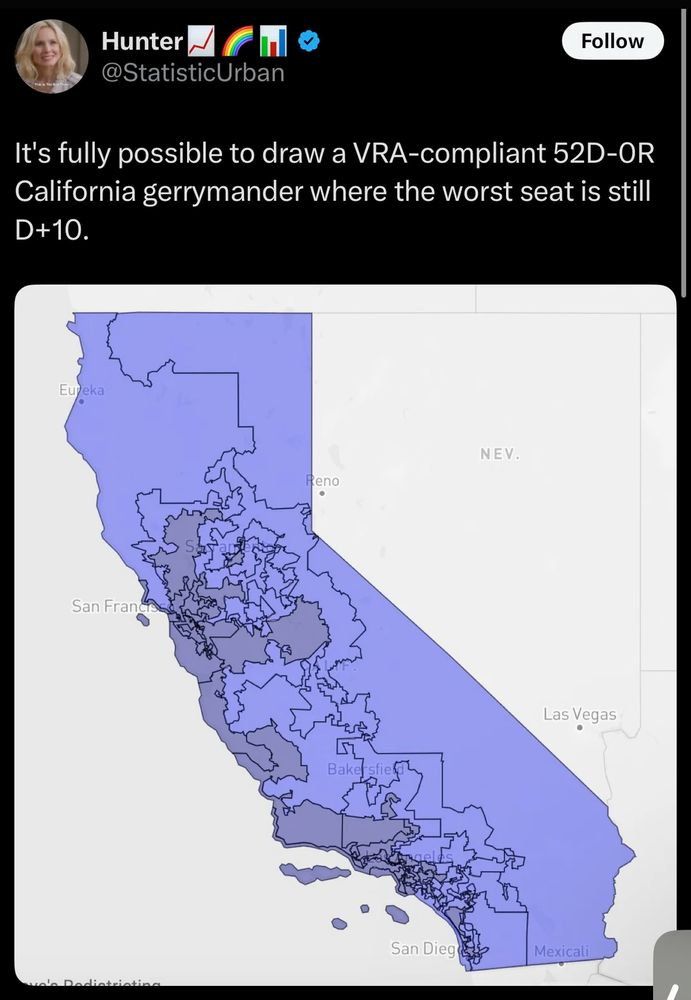
From Hunter @StatisticUrban: “It’s fully possible to draw a VRA-compliant 52D-0R California gerrymander where the worst seat is still D+10.”

In 2008, California voters established the California Citizens’ Redistricting Commission to redraw state legislative districts, and in 2010, extended its powers to redraw congressional districts.

Within portions of the California Democratic Party in 2025, the latter power to redraw congressional districts is widely perceived as an act of unilateral disarmament when it comes to the empowered Republican legislative majorities in Florida, Texas and North Carolina. And now that both Trump’s White House and the Texas Republican Party want to eliminate as many as five more Democratic-held metropolitan seats in Congress, the idea of Newsom calling a special legislative session to refer an amendment to the voters to restore partisan gerrymandering powers to the legislature is being trafficked to news outlets.

In my opinion, California should keep their citizens’ redistricting commission, but should amend their constitution to provide for a “congressional redistricting emergency” period for legislative redistricting of congressional districts until the majority of congressional districts nationwide (217 out of 435 seats), or more broadly, every state assigned three or more congressional districts through reapportionment after each census, are covered by state constitutions which provide for citizens’ redistricting commissions.

Based in part off of the 2016 Interstate Compact for Fair Representation Act (SB 0322), which was proposed by then-Illinois State Senator (now Illinois Attorney General) Kwame Raoul, and passed the State Senate before dying in committee in the State House, here’s how I would amend the California State Constitution Article XXI Section 1 to carve out this exception:

“(b) In the year following the year in which the national census is taken under the direction of Congress at the beginning of each decade and in which at least one state with three or more congressional districts at the time of redistricting has not enacted the terms of Article XXI in substantially the same form in their own state constitution as applies to the constitutional districts of their state, the Legislature shall retain the right to amend a map of congressional boundary lines as proposed by the Citizens’ Redistricting Commission and to approve said amendments by majority vote of both houses and approval by the Governor. The Legislature shall retain the right to amend said boundary lines in an intervening year if any state enacts a similarly-timed adjustment of congressional boundary lines which fails to espouse the terms of Article XXI. Such compliance with this subsection shall be determined by the Secretary of State, who shall declare a state of congressional redistricting emergency to terminate upon determination of such compliance.”

This way:

  • only a small portion of Article XXI would be amended to carve out the time-dependent congressional exception, since we’re wanting more states to adopt Article XXI in substantially the same form for their state government.
  • Furthermore, it would encourage more Democratic-led states to keep their congressional gerrymandering powder dry for when it is needed for when interstate and anti-presidential conflicts arise.
  • it would allow the Legislature to respond to mid-decade redistricting by another state if necessary.
  • Finally, it would empower the Secretary of State to determine if any state has failed to adopt the terms of Article XXI in their state constitution to trigger legislative intervention.

This power should not be held by the legislature in perpetuity. This should be an emergency power that is used to stabilize Congress in a time of interstate conflict. It would be a departure from unilateral disarmament, instead treating interstate relations as a theater in which to seek diplomacy, mutual defense and good government.

But I can see such a move irking those who have pushed for decades in the trenches to unilaterally enact citizen redistricting by ballot initiative or legislation. I also acknowledge that Republican-led states like Arizona and Montana would be within their right to adopt similar exceptions to nonpartisan redistricting for congressional gerrymandering. Yes, this could become a “race to the bottom” as put by State Assemblymember Alex Lee.

In the Anglophone hell that is our first-past-the-post, single-winner elections for legislative branches nationwide, unilateral disarmament is no virtue, and keeping your gerrymandering powder dry to force concessions from other states is no vice.

I encourage readers to read this Penn State Law Review paper by Zachary J Krislov as well as this University of Chicago Law Review paper by Samuel P. LeRoy for great breakdowns on these “interstate compact” trigger laws on redistricting, the histories of such proposals and their potential efficacy.

Arreguin’s SB 9 and its possibilities

SB 9, authored by freshman state senator Jesse Arreguin, was the first major pro-housing bill passed by the California State Senate this session. It now goes to the Assembly.

[BILL ALERT] SB 9 (2025), which clarifies and strengthens HCD's enforcement authority over local ADU ordinances, has passed the Senate floor by a vote of 27-4! Congrats to author @jessearreguin.bsky.social on this win. Learn more about this bill: cayimby.org/legislation/…

California YIMBY (@cayimby.bsky.social) 2025-05-28T18:11:14.308Z

SB 9 was originally written to “remove the requirement of property occupancy and amend parking standards” for ADUs, but was amended in committee to simply allow the California Department of Housing and Community Development (HCD) to 1) void any noncompliant local ADU ordinance 2) substitute with state ADU law until local govt passes remedial fixes.

Also noting that, under AB 72 (2017), the HCD is allowed to decertify a local government’s noncompliant housing element (after locals’ nonresponse to repeated notices), which results in “builder’s remedy” kicking in until a complaint housing element is approved. This is the most direct enforcement action possible for HCD under current law.

SB 9 (Arreguin) would give some more teeth to HCD’s reactive enforcement powers beyond simply informing the AG of violations to trigger litigation. Theoretically, it would also function as another “builder’s remedy” for developers seeking to build more housing in the interim. (Would have been nice to keep the original text as well, but whatevs.)

Thinking that if SB 9 (Arreguin) becomes law for ADU ordinances, this could also become a template for future bills allowing HCD to temporarily void other implementing ordinances (as allowed by the HOME Act, SB 10, SB 6, AB 2011, etc.) and trigger builder’s remedy.

I’m getting the sense that Arreguin’s bill received better treatment in the Senate than Scott Wiener’s SB 79 (or Buffy Wicks’ AB 609, which just passed the Assembly this week) will likely receive because legislators are more receptive in this term to codifying stronger enforcement of existing state law rather than expanding allowed types of housing, exempting them from certain barriers, or investing more money into “affordable” housing.

Given that HCD will likely be placed by Newsom’s budget under a new California Housing and Homelessness Agency (CHHA), Arreguin’s SB 9 (if passed) will strengthen the state’s hand (and that of housing developers) against intransigent counties and cities in the years to come.

On the DPG’s Transition in 2025

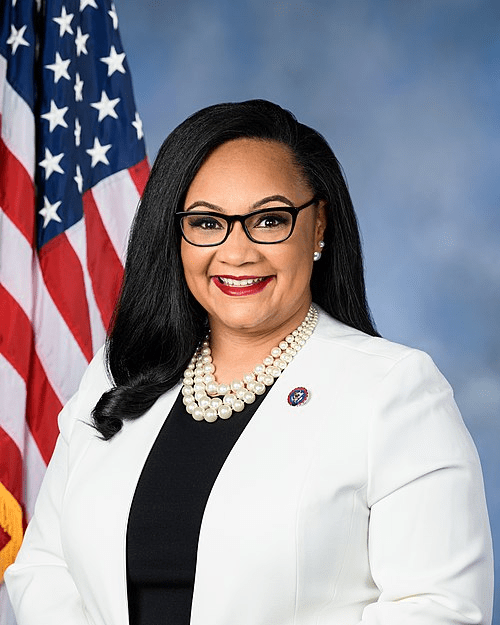
This past Saturday (March 29) in Lexington, Georgia, the Democratic Party of Georgia’s State Committee voted to amend the bylaws to make the next DPG Chair a full-time, full-paid position, one which does not hold any concurrent elected/appointed public office. This language was advocated by Chair and Congresswoman Nikema Williams.

On the morning of March 31, Williams emailed all State Committee delegates announcing her resignation as Chair of the DPG, making 1st Vice Chair and former State Representative Matthew Wilson the new DPG Chair until the next election for Chair in Q1 2027. Williams, who wishes to remain as U.S. representative for GA-5, cited the new bylaws as the reason.

Wilson, who has served as 1st Vice Chair since 2023, is also the first openly-gay person to serve as DPG chair, and was the second openly-gay person elected to the state legislature. He resigned to run for Insurance Commissioner in 2022 but was defeated in the primary by Janice Laws Robinson.

The next elected chair will also ostensibly be the first full-time Chair since former state representative Jane Kidd, who once represented the area of Oglethorpe County and helped secure Oglethorpe High School as the venue for the meeting. Kidd, who served as Chair from 2007 to 2011 and previously served in the State House from 2005 to 2007, herself was given a bouquet of roses onstage from Williams and DNC members Wendy Davis and Maria Banjo following the announcement of the result for her service to the party.

On Nikema Williams’ tenure

It must be noted that Williams, who previously served as 1st Vice Chair (2011-2019) under Mike Berlon and then DuBose Porter and briefly served as interim Chair following Berlon’s resignation in 2013, was the first Black woman and second African American to serve as Chair of the Party after former state representative Calvin Smyre, who was appointed to the position by then-governor Roy Barnes from 2001 to 2004. Williams herself is a former state senator who ran for John Lewis’ former seat in Atlanta (GA-5) following his death from cancer in 2020.

Williams can attest to a tenure as Chair complete with electoral ups and downs:

  • In the 2020 cycle alone, Williams led the party to flip the state for Joe Biden, win two U.S. Senate seats by runoff with candidates Jon Ossoff and Raphael Warnock, and increase the party’s share of congressional seats to its highest in a generation with the election of Carolyn Bordeaux in GA-7. In addition, the party continuously increased its net share of seats in the State House throughout her term, and secured Warnock a full Senate term in 2022. Finally, she presided over several revisions to the DPG bylaws and platform and oversaw expansion of both the voter protection program as well as vote-by-mail outreach.
  • She also presided over bitter electoral losses in 2020, when Daniel Blackman lost a close runoff for Public Service Commissioner; 2022, in which Democrats won none of the statewide executive row offices (and lost worse in terms of percentage compared to 2018); and 2024, when Kamala Harris lost Georgia for President to Donald Trump. In addition, in the 2020 and court-ordered 2023 redistricting cycles, the Kemp Republican trifecta took several casualties in both houses of the legislature, forced Carolyn Bordeaux out of GA-7, and took casualties in some county commissions as well.

What’s in Store for the Next Chair

Depending on who becomes the next Chair, whoever succeeds Wilson will be tasked with leading the party through upcoming special elections for Public Service Commission this spring, municipal elections in the fall, as well as a bid for all state row offices and the re-election bid of Jon Ossoff in 2026. Ossoff, who is the only Democrat up for re-election in a state flipped by Trump, will be a top linchpin candidate for Democrats to retain in 2026, as there are few other target states which Democrats have a reasonable chance at flipping.

While Williams managed to lead the party through some necessary changes and had incredible success in 2020, I believe that the party began to decline in electoral fortune after she took office in Congress.

In comparison, the next Chair will be a full-time Chair whose job it will be to serve as top cheerleader and organizer every day of the week, akin to Ben Wikler in Wisconsin or Anderson Clayton in North Carolina. It was also adopted last June by Texas Democrats at their state party convention, which was followed after the presidential election by the resignation of longtime chair Gilberto Hinojosa (for unrelated reasons), and will be first applied to whoever will be the next TDP Chair in time for the 2026 budget.

Special Elections and More

On April 4, adding to the excitement, State Sen. Jason Esteves also announced his resignation as Treasurer of the DPG.

On the same day, Wilson announced the call for a special in-person State Committee meeting set for May 3 at the Teamsters Local 728 (aka DPG headquarters) in Atlanta. Among the items up for a vote:

  • special elections for Chair and Treasurer (deadline to file: April 23)
  • endorsement of Daniel Blackman in four-way primary for PSC District 3 special election (requires 2/3s)
  • amendment to bylaws regarding gender of sitting Vice Chair if next specially-elected Chair is of the same gender (requires 2/3s)

What this means so far:

  • It is likely that Esteves will run for Governor, which would make him the first Latino nominee for governor if nominated.
  • Wilson wants to stay on as First Vice Chair so he won’t run for Chair, and this proposed amendment would resolve that issue
  • Blackman, who has ran twice before for PSC (both against incumbent Lauren “Bubba” McDonald), needs all the help he can get.

Chair candidates so far

Three candidates have announced so far for Chair, as of April 7:

  • Charlie Bailey, former Fulton County District Attorney who was the nominee for Attorney General in 2018 and Lieutenant Governor in 2022.
  • Nabilah Islam Parkes, Georgia State Senator (SD-7), first Muslim woman elected to State Senate
  • James “Jay” Jones, Member of the Chatham County Board of Commissioners, Chatham County Democratic Committee Chair, DPG Congressional District Chair for GA-01
  • Wendy Davis, DPG member to the Democratic National Committee (2012-present), Democratic nominee for GA-14 (2022), former city commissioner in Rome, Georgia (2014-2021)
  • Jamie Allen, Senior Policy Advisor for the State House Democratic Caucus (2025-present), former Contracted Capacity Building Specialist for Kaiser Family Foundation (2015-2022), former HIV Prevention Coordinator for the Georgia Department of Public Health (2021-2024)

Bailey launched his campaign with an email touting notable names for endorsements, including former Governor Roy Barnes and Atlanta mayors Andre Dickens and Shirley Franklin.

Islam Parkes launched her campaign with her electoral background, both for others and her own time as State Senator, and her platform:

“Turn Georgia into a fundraising powerhouse to support every level of the ticket

Invest in full-time organizers across the state

Launch new training programs to build the next generation of Young Democrats

Give rural Democrats the resources and tools they need to win

Build out cutting-edge digital, data and influencer programs

Run a party that’s transparent, accountable and focused on winning.”

Jones’ platform states “five commitments”:

  • A Party That Reflects the People We Serve
  • A Party That Sees Us, Serves Us, and Stands With Us
  • Rural Georgia Deserves More Than a Mention
  • Year-Round Organizing Is Non-Negotiable
  • Unity Doesn’t Mean Uniformity

Wendy Davis:

Jamie Allen:

  • Year-round, statewide voter engagement—especially in rural communities, communities of color, and among young voters
  • Real investment in county committees, with tools and training to help them thrive
  • A long-term, sustainable fundraising strategy to fuel grassroots organizing
  • Intentional leadership development to grow the next wave of Democratic talent
  • A commitment to unity, transparency, and accountability across all levels of the party

What I’m looking for

As a State Committee delegate, here’s what I’m hoping for in a State Party Chair:

  • Treats all nonpartisan elections – statewide and municipal, including judgeships – as partisan elections worthy of recruiting and endorsing candidates;
  • Supports streamlining our affiliates policy to allow for mass, paid membership for all Democrats, regardless of gender or age, as well as an indigenous source of fundraising;
  • Supports treating affiliates as a third leg of a three-legged stool of the party base, alongside the county committees and the elected Democratic public officials;
  • Supports Establishing a Code of Conduct for the party, its affiliates and its elected public officials;
  • Supports a requirement that 1) caucuses and councils consist solely of State Committee members and 2) have at least two regional vice chairs;
  • Supports establishing a party-owned news outlet (digital, print, video and audio) with a part-time editor-in-chief to reach voters across the state with progressive messaging and counter anti-progressive narratives;
  • Supports a reconsideration of the role of the quadrennial State Party Convention, whether to make it an annual convention or to remove the mandate for the state convention from the party rules entirely;
  • supports establishing a Labor Council and an Indigenous Caucus;
  • supports merger of the platform and resolutions committees into a single standing committee;
  • supports coordination of efforts for county committees to acquire brick-and-mortar county headquarters.

In short, I’m looking for a party chair who can make the party a thermostatic, attention-holding force for progressive liberalism within and beyond the electoral space across the state.

Can these candidates bring any of this before the gubernatorial election? Let’s find out.

Civic Sedevacantism: A United States Government-in-Exile

Reading Josh Marshall’s recent post positing a theory of “civic sede vacantism“, which posits that American liberals/progressives need to narratively and linguistically treat the current regime – both in the executive and the judicial branches – is operating so much outside of the constitution that it cannot be expected to curtail or regulate its own abuse of power, and that it is up to libprogs to use state power to curtail federal power and restore constitutional government.

I find the idea interesting in how it comes around to effectively calling for progressive federalism in deed, but doing so from the position of reacting to a “fallen” political order which ought to be rejected in its legitimacy, curtailed from its uses of power, and corrected into a better relationship with its power.

You can find this sort of legitimism/sedevacantism in a number of cases:

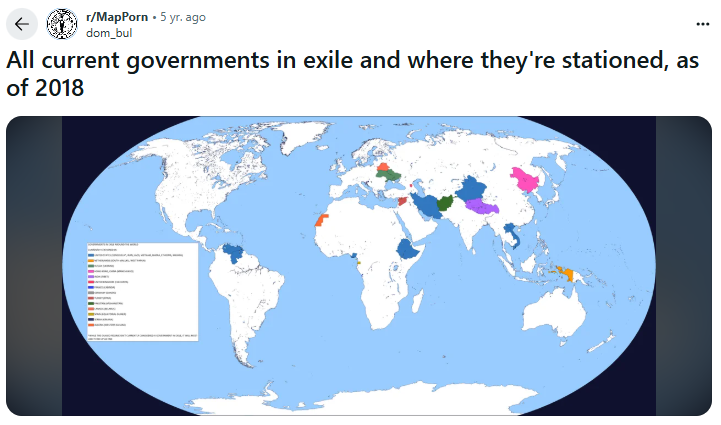
  • Anyone who has ever maintained a government-in-exile after fleeing a country (i.e., the Second Spanish Republic government in exile from 1939 to 1977) or have maintained claims to a former monarchy;
  • Catholic sedevacantism, in which some Catholics reject the legitimacy of any pope since Pius XII due to the holding of the Second Vatican Council, and may instead elect antipopes with rival claims to the Roman papacy;
  • Irish republican legitimism, which posits that the pre-partition all-island Irish Republic declared in 1919 is still in existence and rejects both the 1921 Anglo-Irish Treaty and the existence of the modern Republic of Ireland;
  • Sovereign citizens who believe that the Fourteenth Amendment to the United States Constitution converted “sovereign citizens” into “federal citizens” by their agreement to a contract to accept benefits from the federal government, and that the United States stopped being a legitimate country afterward, instead becoming a “corporation” (the SovCit who originated this, of course, was a white supremacist);
  • Sovereign citizens in Europe (Russia, where some believe that the USSR continues; the Reichsburger movement in Austria and Germany; some in the Czech Republic who believe that the dissolution of Czechoslovakia was illegal, etc)

This can easily go down the road of conspiracy theory mongering, but I can respect the cognitive dedication to an alternate, rival status quo.

But if we’re departing from the status quo narrative, why start with Trump 2? Why even start with George W. Bush’s 2000 “election”?

Equal Rights Amendment

In fact, let’s date it to the moment when Congress erroneously inserted a ratification deadline to the Equal Rights Amendment.

Was it Congress’s authority to impose a statutory deadline on ratification? It’s debatable. Who’s idea was it to add a deadline? These questions have been brought up repeatedly in court.

One can argue that Congress abrogated its legitimacy as a branch of government by interfering with the ratification of a constitutional amendment after its legitimate proposal.

POTUS (Nixon and Carter) and SCOTUS also signed off on this deadline, so they get the chop too.

It’s also how this imposition of an illegitimate deadline, not only for the ERA (1979, then 1982) but also for the DC Voting Rights Amendment (1985), resulted in no further amendments being proposed by Congress after 1978 to this day.

This was supremely violative of the amendment process. It arbitrarily suppressed the relationship of the states with the constitution. It was the moment when the broader Second Reconstruction era ended as a constitutional movement and began to slowly recede, especially after William Rehnquist became Chief Justice in 1986 and John Roberts in 2005.

This abdication of legislative responsibility led to SCOTUS intervening for the right to abortion in Roe v. Wade (1973-2022) and subsequent progressive readings of 14th Amendment jurisprudence, all of which are now vulnerable to retirement. All of that should have been Congress’s responsibility to propose, and for the states to ratify at their pleasure.

So if the White House is constitutionally vacant, so is Congress and SCOTUS, all since 1972.

Civic, constitutional sedevacantism (legitimism?) should apply to all three branches and their actions since 1972, regardless of party or impact. I think that’s a good rupture point.

But what would this mean in practice?

A Progressive, Provisional Congress-in-exile

I’d argue that a sedevacantist position would take the following stances:

  • The Equal Rights Amendment was fully ratified by Virginia on January 15, 2020, and is therefore of legal effect nationwide.
  • The entire federal government since 1972, including all federal government elections and terms of Congress, all nine presidents (from Ford to Trump), all SCOTUS terms, and every statute, executive proclamation and federal judicial ruling, is illegitimate.
  • Yes, even the good laws and decisions, like Roe v Wade, Lawrence v Texas, Obergefell v Hodges, Bostock v. Clayton.
  • The D.C. Voting Rights Amendment, proposed by an illegitimate Congress, was also improperly abrogated by a seven-year deadline.
  • The pragmatic approach would be to engage with the illegitimate federal government, but with a political imagination as to blotting out the legitimacy of every action taken by the federal government against the Second Reconstruction agenda.
  • The more idealistic-but-isolative approach would be to establish a United States government-in-exile:
    • complete with all three branches of government
    • electing a Provisional president and provisional Congress
    • appointing a provisional Supreme Court
    • loyal to the Constitution as amended by January 15, 2020
    • recognizing the D.C. Voting Rights Amendment as still open to ratification by the states, and the statutory deadline of 1985 as invalid
    • open to proposing further amendments by two-thirds of the Provisional Congress
    • selectively supportive of certain statutes passed since 1972
    • diverging from the illegitimate federal government in foreign policy.

And how far could we go with the government-in-exile concept?

(Sidenote: What about state governments? I’d argue that the end of the First Reconstruction era in the South happened through illegitimate means at the state level, such as the forced resignation of Rufus Bullock, the liberal Republican governor of Georgia from 1868 to 1871, when he fled the state under threat from the Klan, which was followed by the significant, forced decline of equality under the law in Georgia. Or how Reconstruction was ended through bloodshed by the Klan. But that is for another post.)

Statutes under a government-in-exile would include most of what was unsuccessfully brought to the 111th and 117th Congresses (the two most recent Democratic trifectas):

  • For the People Act
  • Equality Act
  • American Dream and Promise Act
  • Paycheck Fairness Act
  • Washington D.C. Admission Act
  • Federal Death Penalty Abolition Act
  • Sabika Sheikh Firearm Licensing and Registration Act
  • Raise the Wage Act
  • Family and Medical Insurance Leave (FAMILY) Act
  • Trumka Protecting the Right to Organize Act
  • FAIR Act
  • U.S. Citizenship Act (including the NO-BAN Act)
  • Workplace Violence Prevention for Health Care and Social Service Workers Act
  • George Floyd Justice in Policing Act
  • Puerto Rico Admission Act
  • Farm Workforce Modernization Act
  • Eliminating a Quantifiably Unjust Application of the Law (EQUAL) Act
  • Assault Weapons Ban Act
  • Ensuring Lasting Smiles Act
  • SAFE Banking Act
  • CROWN Act
  • Recovering America’s Wildlife Act
  • Marijuana Opportunity Reinvestment and Expungement (MORE) Act
  • Augmenting Compatibility and Competition by Enabling Service Switching (ACCESS) Act
  • Local Journalism Sustainability Act
  • Averting Loss of Life and Injury by Expediting SIVs (ALLIES) Act
  • American Innovation and Choice Online (AICO) Act
  • Women’s Health Protection Act
  • Democracy Is Strengthened by Casting Light on Spending in Elections (DISCLOSE) Act
  • Fair Representation Act

But then I’d argue that even the most recent Democratic trifecta was playing it safe with the legislation it introduced. A Congress-in-exile would introduce bills to reform the federal government itself by statute, such as:

Finally, this Congress-in-exile can vote to approve by two-thirds for multiple, much-delayed proposals to amend the Constitution, sending them to the active state legislatures.

Conclusion

This is ultimately about changing the narrative about the federal government, away from a do-nothing entity encumbered by an ineffective Constitution, to one in which Congress fills in the gaps.

If it takes having to establish an alternative to this illegitimate status quo regime from abroad, so be it. If this is what it takes to repair the relationship between the United States and the world, so be it.

The deep wound inflicted by a wayward Congress against the Constitution since 1972 through a ratification deadline clause has to be resolved, even if by a Congress in exile.

Uncap the Senate and the House

I like that the Australian Senate fixes the issue of equal suffrage in a federal system by 1) electing 12 senators per state, using 2) multi-winner ranked-choice voting.

At the very least, the U.S. could resolve the relationship between rural-urban polarization and equal suffrage of states by raising the number of senators elected per state to at least 6 (giving us multi-winner senate elections every two years in every state), giving us a 300-member senate in which two members are elected every two years to six year terms from every state, and electing all senators using multi-winner RCV.

I initially thought that simply raising the number of senators per state to three would be sufficient, but the issues of (1) 6-year terms and (2) single-winner elections means that states holding elections every two years (rather than states currently taking one even-numbered year off, as per the Senate classes arrangement) would carry out more of the same polarization.

But raising the number above three per state would mandate at least one multi-winner election for each state within a six-year interval.

So not only should we uncap the House to at least 693 members using the cube root rule, but we should uncap the Senate to 300 members.

Delegates to the Senate?

And while adding senators to the Senate would require amending the constitution, I do have an idea that (voting) delegates could also be elected to the Senate by mere statute, without violating the equal suffrage mandate.

This could mean that, in at least two Senate elections per state (out of three total every six years), a senator and a delegate could be elected jointly using multi-winner RCV, while the third Senate election following would jointly elect two delegates, all for six year terms.

In summary, every state would have the following every two years using RCV:

  • Class 1: Senator and delegate
  • Class 2: Senator and delegate
  • Class 3: Delegate and delegate

Finally

Finally, what if the House is expanded to four-year terms, like in most other democracies? Then it would make it unfeasible to hold Senate elections in three classes divided by year, since there would be Senate elections which are held in non-House years. I would instead consider two classes of elections instead of three, extending Senate terms to eight years and splitting the federal elections in half into quadrennial cycles.

Granted, this would require amending the constitution, but still…

Progressive Federalism: Bifurcate All the Things

The 10-5 en banc decision by the U.S. 5th Circuit Court of Appeals, which blocks laws in Mississippi and Texas allowing for ballots to be counted if they are postmarked by Election Day, will likely be appealed by SCOTUS, which may very well allow for the ruling to stand nationwide for federal elections. This, alongside congressional action supporting the SAVE Act which would double-block noncitizens from voting in all federal elections, shows where things are headed under Trump-Musk.

Under the shadow of this regime, perhaps the most expensive part of progressive federalism will be the bifurcation between state and federal functions, even if for progressive ends.

But in terms of vital elections, postal mail and the census, blue states will need to separate as much of their operations from those of the federal government in order to legally and functionally protect themselves and their citizens from federal overreach, reject federal funding, and maintain their sovereignty.

Bifurcation is a major, inevitable part of progressive federalism, no matter how high the price tag. It will allow blue states to innovate in favor of their residents, even in times such as these.

Bifurcated voter rolls and state elections

Separate voter rolls for state-local and federal elections would protect blue state elections from federal overreach:

  • In addition, it would protect permanent residents who wish to vote in select local elections.
  • Protect LGBTQ voters
  • Allow for holding (preferably consolidated) state and local elections on a separate date from the federal election

Like Obamacare, this is a Heritage Foundation idea which can be repurposed for progressive ends. Arizona, since 2014, has been the pioneer in pursuing this idea, as voters who are unable to provide hard documentary evidence of citizenship are only able to register as “federal-only” voters under Arizona law until they are able to provide such evidence.

The progressive response would be to switch it somewhat: “federal-only” ballot (general or special) for those who can provide such evidence of citizenship, “state-only” ballot (on another date) for those who can’t.

To reiterate, this will also help blue states who want to hold general elections on a date separate from the federal election, possibly in an odd year. I would like to see state, local and lower elections held together on Sundays or Saturdays.

And any worry that this would overburden election works should be eased by making the state legislature (1) unicameral (2) termed to four years and (possibly 3) staggered.

Separate state census

The United State Census Bureau cannot be the only survey agency in town anymore. As it is coming close to adding a citizenship question and has repeatedly failed to institute requested reforms such as identifying incarcerated prisoners to help end prison gerrymandering, it is perhaps time to bring back state censuses. This would also be beneficial for LGBTQ residents who have not been correctly identified in past censuses.

Separate state postal service

  • An example of “local post
  • Complete with separate postage stamps, letter boxes and mail trucks
  • Protection from the Comstock Act and other federal censorships (i.e., on obscenity)
  • Postal banking (which was previously a feature of the USPS from 1911 to 1966)
  • Vital for carrying state-level mail ballots
  • Potential state census assistance

State communications commission

The FCC has been beset by conservative opposition for decades when it comes to regulatory capacity, especially when it comes to issues such as net neutrality. Now that conservatives have control over the FCC, blue states (like California) have the opportunity to stake out more regulatory power over communications within their borders, even within constitutional boundaries. The time for state communications commissions is upon us.

Interstate election security compacts

The Electronic Registration Information Center (ERIC) is a good example of a nonprofit foundation acting as a de facto interstate compact commission in its assistance to state governments, namely in maintaining voter rolls.

Now Arizona Secretary of State Adrian Fontes is making such a move regarding protection of elections from foreign interference:

After the Cybersecurity and Infrastructure Security Agency (CISA) cut funding to its election security programs, Arizona Secretary of State Adrian Fontes (D) is taking matters into his own hands and forming an alternative program to fill CISA’s void for state and local election offices.

According to a memo obtained by Democracy Docket, Fontes’ office wants to form a new organization called VOTE-ISAC, “an independent organization committed to safeguarding elections and restoring international confidence in the integrity of our democratic processes.” The idea for the program is to fill the void left by CISA’s crucial Elections Infrastructure Information Sharing and Analysis Center (EI-ISAC). 

A spokesperson for Fontes’ office told Democracy Docket that he started work on this plan well before CISA cut its EI-ISAC program and has already been in touch with different states and stakeholders to get on board with the proposal. 

We need more of this, in the absence of federal support. In addition:

  • Interstate replacements for the FEC regarding campaign finance
  • Interstate Replacement for the EAC for election standards,
  • Interstate redistricting clearinghouse which eases disputes between states regarding redistricting at all levels.

Protect voters’ rights to free and fair elections

And of course, it is a good time to pass legislation like:

  • State Voting Rights Act
  • Independent Redistricting amendment
  • Universal vote-by-mail
  • Right to free and fair elections amendment
  • Multi-winner proportional representation for state and local elections
  • Campaign financing regulations for ballot initiatives

State DARPA and defense intelligence

The firings of professionals, including TGNC individuals, from military and civilian service in the federal government have opened a door for expanding state defense force capabilities.

A research and development (R&D) office under a state defense force can help to hire some of these trained professionals back into the realm of military science, research, development and innovation without federal interference. 

This proposal would establish a minimal operation which, if allowed, can expand further based upon the wishes of the legislature and the needs of the SDF command structure. 

In addition, it would allow for the hiring of those who wish to continue pursuing trained, intelligence-related work, particularly in the field of geospatial intelligence. 

Finally, it would fit into the larger purpose of redirecting all feasible resources in the larger state military department (which usually runs both the National and State Guards under a state adjutant general) to within and under the state defense force specifically, as the state can no longer expect the Department of Defense of the United States to abide by shared values. 

And more

interstate equivalents to CDC, Department of Education, HHS, NPS, HUD, etc.

Berniecrats and Party Discipline

I somehow ended up reading a blog post from a “New Right” “intellectual” blog about the difference between Patronage vs. Constituent Parties, and why the Republican Party is more prone and capable to punish those supporters who do not sufficiently support the party (or specifically the party leader). I will purposefully not link to it, but I found the argument interesting.

In the American political system, the only party structure best suited to sufficiently punish campaign workers and consultants who are blamed for losing an election by casting them into the outer darkness of unemployment is one which swears loyalty to the party leader, not one which embraces its constituent groups and allows for their challenging of party leadership.

The Democrats, in their decades-long post-New Deal incarnation as a coalition of constituencies, do not get to punish or exile their lesser-performing or confrontational apparatchiks, no matter how tiresome they may be. The Republicans, as a vanguard of the old stock Americans and those who seek alliance with such, do.

The desire of Berniecrats to punish Manchin, Sinema and their enablers in the last Dem trifecta reflected a preference for a party structure which doesn’t exist, and is not allowed to exist, in the Democratic coalition.

Not even the DSA, with its own coalition of constituencies which sought to capture the left of the Democratic coalition, could pull off a party machine which punishes those who fail the platform and campaign.

For the left-of-center to discipline or punish its own would require a significant abandonment of diversity, coalition-building and consensus, in favor of patronage, hierarchy and corporate leadership, in which open dissent or failure results in loss of access to party leadership.

tl;dr: Pick your poison. Internal democracy does not make for a strong party machine.

On racedep and immigration

The wedge argument that the ADOS/FBA/AfAm nativist movements hinges upon is that African Americans who were enslaved on American plantations are uniquely disadvantaged compared to even other Americans (Afrodescendant or otherwise) who immigrated voluntarily.

Unfortunately, the ADOS/FBA/AfAm nativist movements parlay this wedge into helplessness and futility toward the WASP American power structure, as well as a wide-ranging angst and contempt against almost everyone else in the world.

For liberals and progressives, what is the utility of this wedge which separates descendants of the antebellum enslaved in the United States from descendants of those enslaved elsewhere?

How do those who do not share in the mythology of the voluntary immigration experience – particularly of the depiction of immigration as a formative, affirmative rite of passage and ethnogenesis – deal with this wedge in a healthier way than ADOS’ nativism? Or, alternatively, being a Black expat?

I fear that progressives and liberals do not yet have an answer to this wedge, no way to resolve the contradiction of a big tent bringing together descendants of slaves, immigrants, aborigines and settlers.

Enough of the big tent broke ranks to vote against that solidarity and sacrifice some immigrants’ dreams, livelihoods and potentially lives in the name of security and certainty.

We need a better arrangement to bridge this wedge, a liberalism which can respect and celebrate immigrant experiences while respecting that it’s not a formative experience for some ethnicities and may be less pleasant to experience in reverse from the most powerful country on earth.

We need a liberalism which can promote immigration as a benefit for those who did not experience immigration, even for those who are descendants of forced migration and enslavement like myself.

Racedep (race depolarization) happened this election, to the benefit of anti-immigrant, anti-urban conservatives like Donald Trump. Promoting an alternative integrative social contract will be a major task of the post-Obama Democratic coalition.

On Harris/Walz and Housing

Early feelings after Harris picked Walz

This feels awkward for me to see this play out today. I’ve been following Minnesota politics since at least 2019, when I first started reading about the Minneapolis 2040 plan, which made Minneapolis the poster child of the YIMBY movement.

The news of how the Minneapolis 2040 plan allowed for the suppression of rent increases across the city accompanied the increasing success of movements in Oregon and California to increase housing density.

My interest in Minnesota has grown from that to the George Floyd protests and riots, to the DFL winning the slim trifecta in 2022, to the numerous legislative victories secured over the last two sessions, to the screaming matches accompanying the end of this last session, to Walz now being selected for this campaign as running mate.

But the DFL trifecta, if it holds in November’s state house elections, will have to debate spreading housing abundance at the state level next legislative session. Because, if anything, the decades-long impact of the previous restrictive housing regime – the single-family zoning, parking mandates and legacies of redlining, all enacted at the municipal and county level across Minnesota – led in part to the 2020 riots. But the city governments outside of Minneapolis will not give up that power over zoning easily.

For Harris-Walz, the campaign’s rhetoric in favor of progressive policy on housing will easily run up against strong economic and political forces, but will also lack political gravitas if the campaign does not embrace housing abundance and density-friendly zoning reform federally.

After the Raleigh Speech

The YIMBYs are celebrating VP Harris as the YIMBY candidate after her first policy speech in Raleigh.

Regarding the speech, I wonder how much of her statements on housing reform are a continuation or strengthening of the Biden-Harris “Housing Supply Action Plan” from 2022.

Housing Supply Action Plan

As of August 13, 2024:

  • the Federal Housing Finance Agency had approved policies and pilots to reduce closing costs for homeowners, including a pilot to waive the requirement for lender’s title insurance on certain refinances
  • the Consumer Financial Protection Bureau would pursue rulemaking and guidance to address anticompetitive closing costs imposed by lenders on homebuyers and homeowners.[2]
  • the Department of Housing and Urban Development (HUD):
    • announced a Pathways to Removing Obstacles to Housing (PRO Housing) program to provide $85 million in $10 million grants to jurisdictions which have acute housing shortages and are working to address barriers to housing production and preservation;[3]
    • updated its guidelines to increase the dollar amount threshold at which a multifamily loan for FHA-insured mortgages is considered a large loan and is subject to additional underwriting requirements from $75 million to $120 million;[4]
    • allowed larger loans to participate in the agency’s Low Income Housing Tax Credit (LIHTC) Pilot Program;
    • allowed public housing authorities (PHAs) to more easily use housing vouchers and mixed-finance transactions to create or preserve housing;[5]
    • published new guidance for public housing authorities and multifamily housing owners participating in the Rental Assistance Demonstration;
    • launched a Legacy Challenge to encourage communities which directly receive Community Development Block Grants from HUD to leverage low-cost, low-interest loans for housing investments
    • announced funding for research into commercial-to-residential conversions for a potential guide for state and local governments.[2]
  • the Department of Transportation:
    • announced its Reconnecting Communities and Neighborhoods program to provide up to $3.16 billion for planning and capital construction projects that prioritize disadvantaged communities and improve access to daily destinations, including a $450 million Regional Partnership Challenge to incentivize regional partnerships;
    • released new guidance to streamline and clarify requirements for closing DOT loans for residential development near transit, including commercial-to-residential conversions;[6]
  • the Economic Development Administration (EDA) updated its “Investment Priorities” that guide the agency’s grantmaking to include an emphasis on efficient land use and density;
  • the Environmental Protection Agency (EPA) announced its $27 billion Greenhouse Gas Reduction Fund (GGRF) to mobilize capital for retrofits of existing homes and buildings, construction of zero emissions buildings, and commercial to residential conversions, among others.
  • the Advisory Council on Historic Preservation proposed a method which would exempt several maintenance activities from review under Section 106 of the National Historic Preservation Act for historic preservation of millions of federally-funded, licensed or owned housing units nationwide.[7][8]

We won’t find out more until after this week, but the current HSAP is the most thorough piece of government action in favor of housing density in U.S. history, even though the record amount of housing construction this year is still well below the millions-long backlog.

It may be billed as an “all of government plan”, and it may make heavy use of DOT and HUD, but it doesn’t go far enough in maximizing executive power to push cities to pass pro-density zoning reform.

Harris’ HSAP Part 2

To quote from Harris’ press release:

Vice President Harris knows that our nation’s housing affordability crisis is making it hard for tens of millions of Americans to make ends meet while putting the American Dream of homeownership out of reach for too many working families. That’s why she will launch an urgent and comprehensive four-year plan to lower housing costs for working families and end America’s housing shortage.

  1. Calling for the Construction of 3 Million New Housing Units To End the Housing Supply Shortage in the Next Four Years. There’s a serious housing shortage across America, and it’s driving prices up. Vice President Harris will work in partnership with industry to build the housing we need, both to rent and to buy, and to take down barriers that stand in the way of building new housing, including at the state and local levels. This will make rents and mortgages cheaper.
    • First-Ever Tax Incentive for Building Starter Homes. A Harris-Walz Administration will propose the first-ever tax incentive for homebuilders who build starter homes sold to first-time homebuyers—alleviating the shortage of houses on the market for aspiring homeowners. This would complement the Neighborhood Homes Tax Credit that encourages investment in homes that would otherwise be too costly or difficult to develop or rehabilitate.
    • A Historic Expansion of the Existing Tax Incentive for Businesses That Build Rental Housing that is Affordable.
    • A New Federal Fund To Spur Innovative Housing Construction. A Harris-Walz Administration will propose a new $40 billion innovation fund—doubling down on the $20 billion Biden-Harris Administration’s proposed innovation fund. Like that proposal, it would empower local governments to fund local solutions to build housing. It would also go further to support innovative methods of construction financing, and empower developers and homebuilders to design and build rental and housing solutions that are affordable—with one condition: they must show they will deliver results. This fund will support the expansion of innovative local efforts, like those in Wake County, North Carolina where they are using American Rescue Plan funds to build or preserve 2,400 affordable housing units including a 100-unit development coming online at Kings Ridge and a 176-unit affordable housing development at Tyron Station. Vice President Harris will also take action to make certain federal lands eligible to be repurposed for new housing developments that families can afford.
    • Cut Red Tape and Needless Bureaucracy. These plans will build on the Biden-Harris Administration’s efforts to cut red tape and enable more home building to bring down housing costs—which have advanced record levels of new home construction. Pushing this forward also means streamlining permitting processes and reviews, including for transit-oriented and conversion development, so builders can get homes on the market sooner and bring down costs.
  2. Lowering the Rent for Hardworking Americans by Taking on Corporate and Major Landlords. In addition to ongoing efforts by Vice President Harris and President Biden to expand rental assistance for hard-pressed Americans including for veterans, boost housing supply for those without homes, enforce fair housing laws, and make sure corporate landlords can’t use taxpayer dollars to unfairly rip off renters, today she is proposing plans to:
    • Stop Wall Street Investors from Buying Up and Marking Up Homes in Bulk. Community after community feels taken advantage of by Wall Street investors and distant landlords. Vice President Harris is calling on Congress to pass the Stop Predatory Investing Act, to curtail these practices by removing key tax benefits for major investors who acquire large numbers of single-family rental homes.
    • Stop Rent-Setting Data Firms From Price Fixing To Raise Rents by Double Digits. Corporate landlords are using private equity-backed price-setting tools to collude with each other and jack up rents dramatically in communities across the country. Vice President Harris is calling on Congress to pass the Preventing the Algorithmic Facilitation of Rental Housing Cartels Act, to crack down on these companies that contribute to surging rent prices.
  3. Providing Historic $25,000 Down-Payment Support for First-Time Homeowners. Many Americans work hard at their jobs, save, and pay their rent on time month after month. But they can’t save enough after paying their rent and other bills to save for a down payment—denying them a shot at owning a home and building wealth. As the Harris-Walz plan starts to expand the supply of entry-level homes, they will, during their first term, provide working families who have paid their rent on time for two years and are buying their first home up to $25,000 in down-payment assistance, with more generous support for first-generation homeowners. The Biden-Harris administration initially proposed providing $25,000 in downpayment assistance only for 400,000 first-generation home buyers—or homebuyers whose parents don’t own a home—and a $10,000 tax credit for first-time home buyers. Vice President Harris’s plan will simplify and significantly expand that plan by providing on average $25,000 for all eligible first-time home buyers, while ensuring full participation by first-generation home buyers. It will expand the reach of down-payment assistance, allowing over 4 million first time-buyers over 4 years to get significant down payment assistance.

My view on Harris’ housing plan

Initially, Harris’ initial announced plan to go after price-gouging scared the YIMBYs and enraged Trump supporters, with conservative economists outright denying the existence of price gouging as a major cause for inflation and sticker shock. But the broader plan announced in Raleigh, as described in the press release, turned the YIMBYs back in her favor. Blogger Noah Smith compared her plan on housing to an adaptation of Singapore’s model, in which the government owns 90% of the land, citizens purchase a 99-year lease on the property, and the government issues a helpful grant to first-time homebuyers (and a significantly-lesser grant to second-time homebuyers).

However, if Harris/Walz are elected but lack a trifecta (which is likely at this point), I think the part of her plan that would “make certain federal lands eligible to be repurposed for new housing developments that families can afford”, the most “Singapore-like” portion, is perhaps the most direct action that they could take, but it would need further expansion.

Room for Improvement

What about private or public entities which receive funding from, or have (sub)contracts with, the departments of Education, Defense, Veterans, Health and Human Services, and maybe Interior, not to mention other independent agencies? Could the White House hinge federal funding or (sub)contracts upon recipient institutions and companies reforming their zoning policies along the White House’s preferred model zoning code, as well as expeditious compliance and permitting processes?

Imagine what this could do for on- or off-campus housing for students, faculty or employees of colleges and universities which receive federal funding. Imagine what this could do for military and veteran families who live near military bases and VA hospitals. And imagine the indirect effects for those who don’t live as close to these entities.

Also, this brings to mind what avenues are available for federally-owned land which is within city limits, like properties owned by Veterans Affairs or HUD. But even the VA has suffered under years of mismanagement which allowed issues like what happened to the West Los Angeles VA Medical Center and Home, the only one of its kind in the United States, to fester.

At least for veterans, there should be some level of collaboration between VA and HUD on housing for veterans, since the VA is so myopically focused on healthcare rather than housing. The HUDVeterans Affairs Supportive Housing (HUD-VASH) program (VA.gov, HUD.gov), which combines HUD’s Housing Choice Voucher (HCV) rental assistance for homeless Veterans with case management and clinical services provided, doesn’t seem to be enough. Does the VA need a Veterans Housing Administration, or does HUD need an Office of Veterans’ Housing, to more actively support veterans’ housing needs?

Or maybe this issue of land should involve the Department of the Interior? HUD did sign an MoU with the DOI in August 2023 to allow local communities to acquire federally-owned land in the Las Vegas metro area to build affordable housing at $100 an acre. How much metro-area land is owned by DOI or its Bureau of Land Management (BLM)? Maybe a new BLM Assistant Director for Urban Land Development?

Harris has an opportunity to broaden her HSAP 2.0 into more departments, including Justice, Education, Defense, Veterans, Health and Human Services, and maybe Interior. Like Biden’s National Climate Task Force (including the Energy, Interior and Agriculture Secretaries, the Directors of EPA and CEQ, the National Climate Advisor, the National Clean Energy Advisor and the Special Envoy on Climate Change), Harris will need an Inner Housing Cabinet, consisting of the Secretaries of HUD, Transportation, Interior, VA and Justice, Directors of EPA and CEQ, the National Climate Advisor, and the National Clean Energy Advisor, among others.

So in summary, Harris will need to expand upon her and her predecessor’s HSAP thusly:

  • Create a National Housing Task Force aka “Housing Cabinet”
  • Appoint a National Housing Advisor to the White House
  • Draft a Climate-oriented Executive Order requiring all executive-branch agencies to develop policies which promote housing infill and density on federally-owned land
  • Draft a Climate-oriented Executive Order requiring all federal (sub)contractors and funding recipients to prioritize housing infill and density
  • Create veterans’ housing offices in both VA and HUD
  • Designate an Assistant Director for Urban Land Development in the BLM
  • Acquire land within metro areas or cities to lease to private developers of federally-compliant housing construction
  • Direct the Justice Department to side with YIMBYs in federal court cases challenging Euclid + other decisions and laws allowing for restrictive zoning, attack such laws on 5th + 14th Amendment grounds
  • Defend federal zoning directives from local NIMBYs
  • Promote a model zoning code and building code on federally-owned land.

Supply-Side Progressivism

As of this convention, the parties are in realignment on several issues. Perhaps the most consequential realignment will be on housing, construction and zoning. The Democrats’ new taste for (federally- or state-directed) deregulation of housing may not sit well with existing urban or suburban political leaders, but there doesn’t seem to be any other viable way to deal with not only the housing crisis, but also its centrality to the carbon footprint of the United States.

But the Democrats have a long way to go on supply-side progressivism in general, especially when it comes to both selective deregulation (or is it “alter-regulation”?) and funding for supply. And if housing is something where Democrats are experiencing a realignment in favor of deregulation, where else can Democrats also have such a deregulatory shift? Maybe the supply of doctors?