Tag Archives: redistricting

California and Other Blue States Should Declare a Congressional Redistricting Emergency

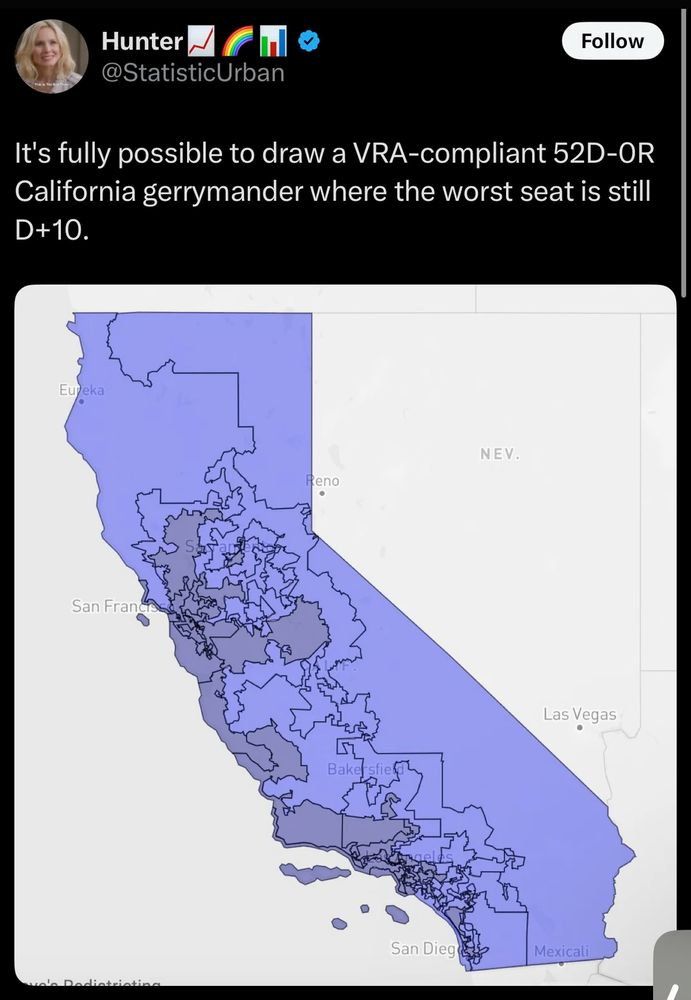
From Hunter @StatisticUrban: “It’s fully possible to draw a VRA-compliant 52D-0R California gerrymander where the worst seat is still D+10.”

In 2008, California voters established the California Citizens’ Redistricting Commission to redraw state legislative districts, and in 2010, extended its powers to redraw congressional districts.

Within portions of the California Democratic Party in 2025, the latter power to redraw congressional districts is widely perceived as an act of unilateral disarmament when it comes to the empowered Republican legislative majorities in Florida, Texas and North Carolina. And now that both Trump’s White House and the Texas Republican Party want to eliminate as many as five more Democratic-held metropolitan seats in Congress, the idea of Newsom calling a special legislative session to refer an amendment to the voters to restore partisan gerrymandering powers to the legislature is being trafficked to news outlets.

In my opinion, California should keep their citizens’ redistricting commission, but should amend their constitution to provide for a “congressional redistricting emergency” period for legislative redistricting of congressional districts until the majority of congressional districts nationwide (217 out of 435 seats), or more broadly, every state assigned three or more congressional districts through reapportionment after each census, are covered by state constitutions which provide for citizens’ redistricting commissions.

Based in part off of the 2016 Interstate Compact for Fair Representation Act (SB 0322), which was proposed by then-Illinois State Senator (now Illinois Attorney General) Kwame Raoul, and passed the State Senate before dying in committee in the State House, here’s how I would amend the California State Constitution Article XXI Section 1 to carve out this exception:

“(b) In the year following the year in which the national census is taken under the direction of Congress at the beginning of each decade and in which at least one state with three or more congressional districts at the time of redistricting has not enacted the terms of Article XXI in substantially the same form in their own state constitution as applies to the constitutional districts of their state, the Legislature shall retain the right to amend a map of congressional boundary lines as proposed by the Citizens’ Redistricting Commission and to approve said amendments by majority vote of both houses and approval by the Governor. The Legislature shall retain the right to amend said boundary lines in an intervening year if any state enacts a similarly-timed adjustment of congressional boundary lines which fails to espouse the terms of Article XXI. Such compliance with this subsection shall be determined by the Secretary of State, who shall declare a state of congressional redistricting emergency to terminate upon determination of such compliance.”

This way:

  • only a small portion of Article XXI would be amended to carve out the time-dependent congressional exception, since we’re wanting more states to adopt Article XXI in substantially the same form for their state government.
  • Furthermore, it would encourage more Democratic-led states to keep their congressional gerrymandering powder dry for when it is needed for when interstate and anti-presidential conflicts arise.
  • it would allow the Legislature to respond to mid-decade redistricting by another state if necessary.
  • Finally, it would empower the Secretary of State to determine if any state has failed to adopt the terms of Article XXI in their state constitution to trigger legislative intervention.

This power should not be held by the legislature in perpetuity. This should be an emergency power that is used to stabilize Congress in a time of interstate conflict. It would be a departure from unilateral disarmament, instead treating interstate relations as a theater in which to seek diplomacy, mutual defense and good government.

But I can see such a move irking those who have pushed for decades in the trenches to unilaterally enact citizen redistricting by ballot initiative or legislation. I also acknowledge that Republican-led states like Arizona and Montana would be within their right to adopt similar exceptions to nonpartisan redistricting for congressional gerrymandering. Yes, this could become a “race to the bottom” as put by State Assemblymember Alex Lee.

In the Anglophone hell that is our first-past-the-post, single-winner elections for legislative branches nationwide, unilateral disarmament is no virtue, and keeping your gerrymandering powder dry to force concessions from other states is no vice.

I encourage readers to read this Penn State Law Review paper by Zachary J Krislov as well as this University of Chicago Law Review paper by Samuel P. LeRoy for great breakdowns on these “interstate compact” trigger laws on redistricting, the histories of such proposals and their potential efficacy.
GA GOP Senate and House Maps Released, with Democratic Responses

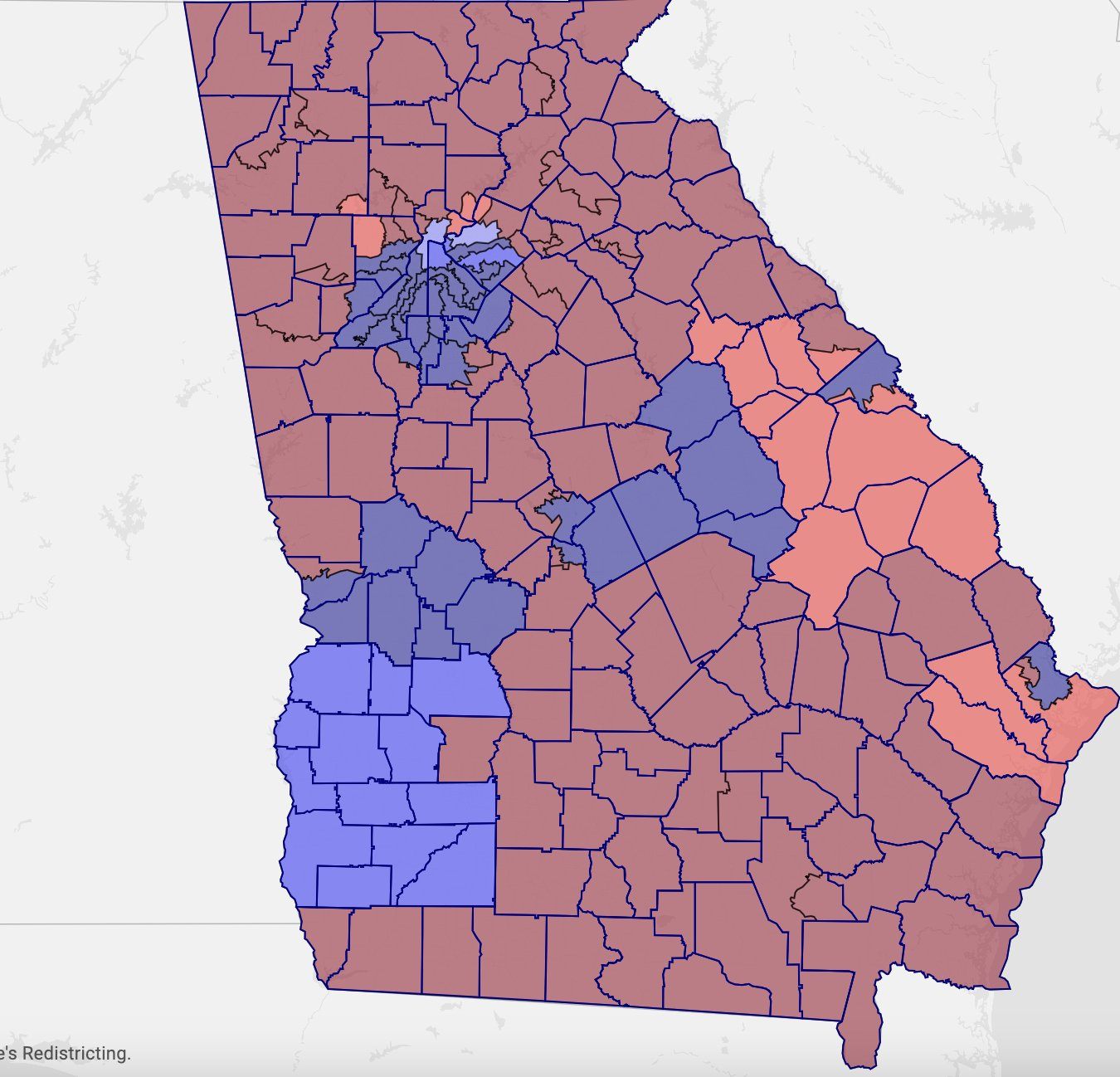
Over the course of November 26-30, the GOP and Democratic caucuses in the Georgia Legislature have released their legislative map proposals.

Senate

  • Senate has 56 total seats, majority is 29.
  • The GOP’s proposed Senate map keeps the party composition at 33R-23D by packing two majority-black districts and eliminating two majority-white Democratic districts.
  • The Democratic response would shift the party composition to 31R-25D by adding two majority-Black districts in the southern Atlanta suburbs.
  • The Democrats are challenging the GOP Senate map as not fulfilling the court order. Won’t be surprised if it goes back to court.
  • Looking at the glass half-full, the current Senate party composition is the closest its ever been since Republicans gained the Senate majority in 2003-2004 for the first time since Reconstruction. They held it at 30R-26D, then increased it to a historic 39R-17D by 2016 before Democrats began bouncing back from 2017 onward.
  • More analysis by Niles Francis.

House

  • House has 180 total seats, majority is 91.
  • The GOP’s proposed House map brings the party composition of the House in 2025 to 99R-81D, down from the current composition of 102R-78D.
  • The Democratic response would modestly bring the party composition to 96R-84D by creating four majority-Black and one plurality-Black districts while double-bunking or flipping some Republican seats in the process.
  • Not as much Democratic outcry about the GOP House map as there is against their Senate map. However, there is disagreement from expert testimony on whether the House map passes the VRA smell test.
  • The last time the GOP was under 100 members in the House was the 148th General Assembly in 2005-2006, when the GOP held the House for the first time since Reconstruction. It was 99R-80D-1 independent. From there, Republicans ascended to a high of 119R-60D-1 independent 2013-2016 before Democrats bounced back from 2017 onward.
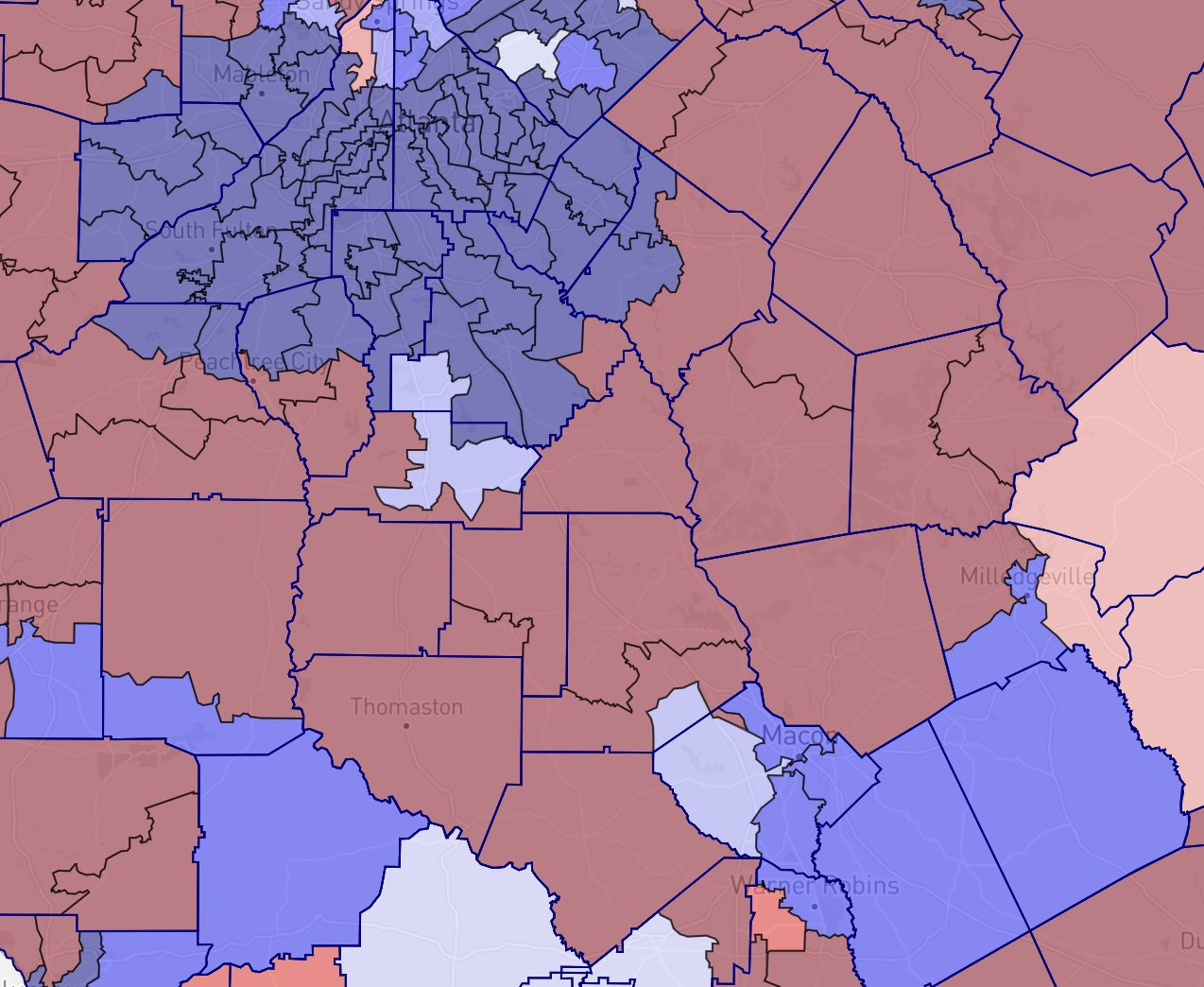
  • Under both House maps, Houston County finally gets Democratic House representation, with the map stretching HD143 (currently held by House leader James Beverly) to represent Warner Robins and northern Houston County while splitting central Macon into three blue districts stretching into surrounding counties.
    • Larry Walker was the last Democrat to represent a portion of Houston County in the House, way back in the 147th General Assembly (2003-2004).
  • Nothing in Greater Columbus was touched (obviously).
  • The map definitely strengthens the Black Belt’s African American representation a bit.
  • This map, and the Democratic response, reflects how the state’s popular vote has shifted to the left in the last several elections.
  • More analysis by Niles Francis.

Notes

  • Even on gerrymandering grounds, I wonder why the GOP wants to keep the current margins for Senate while conceding 3 seats in the House. I’d have expected at least one concession in the Senate for a 32R-24D map.
  • I wouldn’t be surprised if, in the congressional map phase, the GOP goes the route of packing more Black voters into Lucy McBath’s GA07 rather than redraw the west Atlanta suburbs between the 3rd, 6th, 11th, 13th and 14th districts. The Dems are hoping to keep the 7th intact.

Democrats are hoping for something like this (courtesy Stephen Wolf @PoliticsWolf):

Are Alabama’s Democrats Ready? Are the South’s Democrats Ready?

I think about the following:

  • Out of the former Confederate states in the period between 1870 and 1901, only South Carolina sent at least two or more members to the U.S. House.
  • Georgia, Alabama, Louisiana, Mississippi, Florida, North Carolina and Virginia all sent one member at a time.
  • Texas and Tennessee never sent any members in the (post-)Reconstruction era
  • and Arkansas has never sent any African Americans to Congress to the present day

Now, Alabama will likely send two Black members to the U.S. House for the first time. And Louisiana is within spitting distance of doing the same for the second time in their history; the first time such a thing happened was in 1993, when William Jefferson (D-LA02 and Cleo Fields (D-LA04) went to the 103rd Congress.

The big question which sticks out for me is whether the Alabama Democratic Party will be prepared for this moment.

They certainly weren’t when Doug Jones won the once-in-a-blue-moon Senate special election in December 2017. In fact, the Alabama Democratic Party, the statewide Black Democratic club ran by Joe Reed, actively fought Jones for influence over the party’s bylaws and structure. The fight continues to this day, years after Jones lost his Senate seat to some bigoted football coach. And it seems like the DNC will have to pry some control of the ADP from the Conference. The Conference also tried to intervene twice in the Allen v. Milligan case to advocate for a more Black-majority 2nd and 7th district (to no avail), which went against the strategy of the plaintiffs as well as Rep. Terri Sewell in favor of two opportunity districts.

Now, however, with Sewell likely to win again in the 7th, the question remains as to the impact of whoever wins the 2nd congressional district. It’s most likely that the winner may be Black, or that whoever wins will have the support of the Black voting-age population in the 2nd district. But will the winner have more of a role in the Alabama Democratic Party? Will the campaign to defend both the 7th and the new 2nd district arouse the party out its current shape?

The same can be asked about Louisiana’s Democratic Party. It is heading to another era in the statewide wilderness with the terming-out of Governor John Bel Edwards and the likely election of a Republican governor. The party has been beaten down badly in other political aspects due to a massive decline in white rural support. Besides retaining Foster Campbell on the PSC in 2026 (he had his closest election in 2020), the other favorable political aspects above the state legislature have been:

  • the election of Davante Lewis to the PSC in 2022
  • the possible creation of a second opportunity congressional district around Baton Rouge for 2024

This is why I look forward to the impact of Allen v. Milligan on Southern elections. All of these issues can be challenged in federal court:

  • the potential second opportunity district in Louisiana
  • the reform of Mississippi’s State Supreme Court districts
  • Alabama’s Public Service Commission election method
  • Georgia’s Public Service Commission election method and maps
  • Texas’s Supreme Court election method
  • Texas’ State Board of Education maps
  • Texas’s Railroad Commission election method
  • Louisiana’s Supreme Court election method

Third Time’s the Charm for Citizen Redistricting Initiatives in Ohio

What will be the difference between 2005, 2012 and 2024 for citizen redistricting in Ohio?

Let’s look at the 2012 proposal.

The Voters First Ohio campaign went to court against the Ohio Ballot Board over the language of the measure. The Ohio Supreme Court ruled for the campaign, but when the Ballot Board met again, the ballot language was doubled in length. 

The opponents of the 2012 measure, including both big business lobbies and the boards of at least two major newspapers, decried the alleged “lack of [electoral] accountability” of a citizen redistricting commission, as well as the mandated funding for the commission’s work. 

Both newspapers instead extolled the idea of requiring a bipartisan supermajority from a politician-majority commission for passage of a map, and the proposal went down in defeat.

This was said before Ohio, in two legislatively-referred amendments in 2015 and 2018, replaced the Ohio Apportionment Board with the Ohio Redistricting Commission, which did no better in 2021-2023 at drawing fairer maps despite requiring bipartisan supermajority approval. Wonder if they changed their tune?

The CNP initiative seems to keep most of the 2012 proposal. Differences:

  • The CNP proposal would involve a bipartisan panel of only retired judges to screen potential candidates for the commission. The 2012 plan would have involved sitting appellate court judges in the selection of commissioners.
  • CNP’s plan bans prison gerrymandering. 

The use of retired judges effectively sidesteps one of the sticking points of the 2012 plan, which drew the opposition of both the Ohio Judicial Conference and the Ohio State Bar Association for this reason. This amendment, certainly, needs as many supporters, or as few opponents, as possible.

There is no telling whether the big business lobbies have changed their tune. The Ohio Farm Bureau Association and Ohio Chamber of Commerce, both of which publicly opposed Issue 2 in 2012, both backed August 2023 Issue 1, which would have seriously hobbled direct democracy in the state. The failure of that amendment may not say too much about the fate of CNP’s initiative, but it does show the deep entrenchment of the political elite in Ohio that such a blatantly anti-democratic proposal as August 2023 Ohio Issue 1 would see the light of day.

But the repeated failures of citizen redistricting proposals at the ballot box, or at least the failures of their campaigns, need to be considered as teaching moments for those who assume that it will win this round in 2024. In addition, the chicanery of oppositional officeholders like the Secretary of State, who changed the ballot summary language of November 2023 Ohio Issue 1 to reflect Christian right-wing beliefs about abortion, should not be ignored (even if his actions failed to stop the measure from victory at the polls). Victory is not certain, and what those past campaigns endured should help this campaign improvise, adapt and overcome in 2024.

Let’s also see if the CNP proposal makes it to the ballot at all. After being approved by the Attorney General (who accepted it after previously rejecting it twice) and Ohio Ballot Board, the campaign recently voluntarily reset the clock after discovering a typo, then rewrote the petition and sent it back to the Attorney General, who approved it a second time. It now awaits the Ohio Ballot Board’s decision before it is finally set to begin collecting signatures.

Saporta Report: “A decision on the races that time forgot may be near”

Saporta Report cites attorney Bryan Sells regarding when we can hope for an impending decision in Rose v Raffensperger.

It would make sense for a decision in Rose v Raffensperger to come before Thanksgiving, which quickly precedes the start of the special legislative session on November 29. As stated in Saporta Report, this decision will be cited for decades. It will have an impact on voting rights, redistricting and other types of litigation, not only in the 11th Circuit but elsewhere. 

But I go back to the VRA litigation saga from 2011-2016 against at-large FPTP elections in jurisdictions like Fayette County, GA, or to the 100+ court cases since 1982 in Georgia alone which replaced at-large districts with single-winner district elections for city councils, school boards, county commissions and legislative districts. 

I would be very surprised if the 11th Circuit sided with Georgia on the PSC’s at-large election method. But the clock is ticking on the 11th Circuit to make a decision: 

  • the special session on congressional and legislative districts starts on 29 November;
  • then a regular session to start in January 2024 for 40 days, which is a chance to change statute law regarding PSC elections;
  • then a general election to be held in November in which at least another PSC seat (District 5, held by Republican Tricia Pridemore) will be on the ballot (and maybe the two held by Echols and Johnson?), as well as a chance for voters to change Article IV Section 1 of the state constitution regarding the PSC.

On the flip side, the 11th Circuit could rule the case unjusticiable and remove itself from the case. Or they could rule for the plaintiffs but then the state could simply move the PSC to an appointed body instead (like most states). Who knows.

The next few weeks will be interesting to watch.

Special Session Called for Redrawing Congressional and Legislative Maps

So federal district Judge Steve Jones ruled that Georgia’s current legislative and congressional maps – namely one seat for US House, two seats for state senate and five seats for house – violate Section 2 of the Voting Rights Act. The ruling is 516 pages long, and calls for the legislature to draw new maps by December 8 or else a special master will be appointed.

Also the ruling states these following demands:

  • Redrawn congressional majority-minority district must be in west of Atlanta, including parts of Cobb and Douglas counties
  • Two redrawn state senate majority-minority districts must be in south of Atlanta
  • two House seats south of Atlanta, one west of Atlanta, and two around Macon

And now Gov Kemp (aka Lurch), on the same day, has called a legislative session for redrawing both maps, set for November 29.

Much of the commentary focuses on how the Republican majority may simply do a sleight of hand and redraw Lucy McBath’s district to be majority-Black instead of redrawing a district west of Atlanta. If so, it’s back to court.

I’m also interested in the state house map ordered by the judge, which would likely create a majority-Black district in Warner Robins/northern Houston County for the first time. House Districts 142, 143, 145, 147 and 149, all ordered to be redrawn, cover Crawford, Wilkinson, Twiggs, Bleckley, central and southern Macon-Bibb, northern half of Peach, northern and central Houston and northern and central Dodge counties.

courtesy Stephen Fowler of GPB News

As someone who was raised in Warner Robins, I’ve wanted to see Warner Robins get an urban state house district for years. But then again, I’ve waited for someone to bring a VRA complaint over the fact that Houston County elects all members of its county commission at-large using FPTP.

Things are moving quickly in Ohio

On the third try, the bipartisan Citizens Not Politicians Ohio campaign got their proposed ballot language approved by Republican Attorney General David Yost. This happened just days after the state’s partisan redistricting commission approved gerrymandered maps, with Democratic members voting in favor in order to protect their remaining seats.

Next step for the campaign: approval by the Ohio Ballot Board, which also has a Republican majority. If approved by the board, the campaign will begin to collect nearly 500,000 signatures from 44 counties across the state to place the question on the November 2024 ballot. If approved by the voters, the commission will be appointed and tasked with redrawing congressional, legislative and other state maps for the 2026 elections.

In related news, the campaign also hired the former director of the Missouri nonpartisan redistricting campaign which was passed in 2018, then infamously repealed in 2020, by the voters (thanks to Republican fuckery).

Good to see!

Looking forward

Obviously, this bipartisan campaign is the best bet for Ohio Democrats to end the GOP supermajority in legislative and congressional maps. In the last round of redistricting, the Democrats unsuccessfully proposed congressional maps that would end up 8R-7D.

At the very least, this would also prevent one party from unilaterally ramming ballot questions onto the ballot without buy-in from the minority party in either legislative chamber.

Also, the 2015 and 2018 ballot measures which established more elaborate regulations of redistricting failed to curb the GOP’s legislative veto of any unfavorable maps. CNPO’s ballot measure would finally end this legislative veto, as well as:

  • Ensure an equal balance of Democrats, Republicans and non-affiliated citizens, all of whom are removed as much as possible from the political process as possible;
  • End prison gerrymandering;
  • Make the Ohio Supreme Court the final arbiter on constitutionality of maps adopted by the commission

I look forward to Ohio passing this amendment next year.

More on SCOTUS redistricting rulings

  • Alabama’s legislature will approve a new congressional map with a second VRA district by July 21. The plaintiffs’ remedial map, which goes for a least-change approach, might be adopted, but several submissions have been sent.
  • SCOTUS rejecting Louisiana’s appeal defending their congressional maps is only a partial victory for fairer maps. The case was sent back to the 5th Circuit to decide whether to continue hearing Louisiana’s appeal or to send it back to the Middle District of Louisiana which already ruled against the map. We shall see, but either Louisiana or the 5th Circuit can draw this one out.
  • The denial of cert to Ohio’s case defending their shit maps is not a victory for fair maps at all. Unless Ohio defeats Issue 1, most other attempts at redistricting reform in that state are f**ked.
  • Still nothing regarding Rose v. Raffensperger from the 11th Circuit, beyond both plaintiffs and the state sparring in dueling letters to the court asserting Milligan and Gingles‘ applicability to the case immediately following the Milligan decision.
  • I tried redrawing a map with a second majority-Black district for Louisiana’s PSC. I don’t think it worked.

Wow. Allen v. Milligan Surprises Everybody.

Full Opinion from SCOTUS (PDF).

I couldn’t imagine this decision happening under this court, but I guess “bullying works” (sometimes). Plus, it’s a sign that SCOTUS’ right-wing majority may be more monstrous in Moore v Harper (independent state legislature theory), SFAI v. Harvard/SFAI v. UNC (affirmative action in higher ed), and Haaland v. Brackeen (Indian Child Welfare Act constitutionality), all to be announced this month.

Reactions:

Notable: Given it’s Pride Month, The National Black Justice Coalition may be the only LGBT rights organization to issue a statement in response to Allen v. Milligan. I would have expected The National LGBT Task Force, who organized the Queer the Census project for both 2010 and 2020, to have issued a statement as well. Even with the anti-LGBT backlash going on right now, this decision does have implications for Black LGBT people in the South, increasing somewhat the chances that they can run for and win higher office. Davante Lewis’ 2022 win in the runoff for Louisiana’s PSC was a big, understated victory for Black LGBT people in this region.

Impact(s)

What is happening or is most likely to happen nationwide, based on Election Twitter’s ideas:

  • Alabama legislature will be forced to redraw their congressional map to add a second VRA district.
  • Louisiana is asking SCOTUS for oral argument in their appeal against the Ardoin case regarding Louisiana’s own congressional map. Highly likely that SCOTUS will dismiss the appeal and force Louisiana legislature to redraw for a second VRA district.
  • North Carolina legislature likely to not go as hard as they wanted to go on obliterating most remaining Dems in congressional and legislative maps.
  • Florida’s state and federal cases regarding the former FL13 will be slightly supported by this decision, but not too much, since those cases rest on other laws, such as the federal 14th Amendment as well as the state constitution’s analogues to Section 2 and (the former) Section 5 of the VRA (citing Andrew Pantazi of the Jacksonville Tributary).
  • Dems were worried about their chances for winning back the House next year after the North Carolina Supreme Court gave Republicans multiple wins. After this, there’s a potential net gain of at least 2.5 seats. Or, if we want to go crazy with wishcasting, as many as +10-12. Maybe enough to wash the gains to be made by Republicans in North Carolina.
  • Very unlikely to see any redistricting in Arkansas, Mississippi, Oklahoma, Ohio or Wisconsin resulting from Allen.
  • There is ongoing litigation in North Dakota by Native American nations on Section 2 grounds regarding legislative maps.

Credit to U.S. Rep. Terri Sewell (D), who actively campaigned for a plurality-minority second district in Alabama and against packing Black voters into a single district, as highlighted in this 2021 Atlantic article.

Now on to Georgia:

  • It’s debatable how the Republican legislature could redraw their congressional map to do the bare minimum of complying with the Allen decision. The best-case scenario is perhaps restoring Lucy McBath and Carolyn Bordeaux’s old districts, restoring the 2020 status quo of 8 GOP-6 Dem. The shortest-term worst case is simply re-packing Black Metro Atlanta voters into four districts, but that would leave lots of other left-trending territory surrounding these districts vulnerable in the longer term to Dem candidates. 
  • There is ongoing litigation (Georgia State Conference of the NAACP v. Georgia) challenging the 2022 congressional and legislative maps, filed by the NAACP state conference, GALEO, and Georgia Coalition for the Peoples Agenda. Also ongoing against these maps: Grant v. Raffensperger, Alpha Phi Alpha v. Raffensperger, Prendergrass v. RaffenspergerThere’s ongoing VRA Section 2 litigation in 30 cases across 10 states, and there are more to come.

Public Service Commissions

Let’s talk about the PSC, both in Georgia and other states:

  • PSC At-large voting: There has been radio silence from the 11th Circuit on the state’s appeal in Rose v. Raffensperger since oral arguments last December. Hopefully the Allen decision will make an impact. At least two of the plaintiffs to whom I’ve talked, Rev. James Woodall and Wanda Mosley, are confident that this decision will help them prevail against the state. Also, I wonder if Judge Nancy Abudu, a Biden appointee who was just confirmed to the 11th Circuit, will join in or recuse herself from whatever ruling that comes out on the appeal.
  • PSC Redistricting: There’s a petition that has been filed by plaintiffs in Rose v Raffensperger with Judge Grimberg in the Northern District of Georgia to redraw the PSC map which had been approved in 2022 during qualifying week (which placed Democratic PSC District 2 nominee Patty Durand at odds with Raffensperger).
  • Dems filed a bill (HB 841) to change the PSC election method this past session, but it died before getting heard in committee.
  • See my prior posts about the GA PSC and VRA: 1, 2.

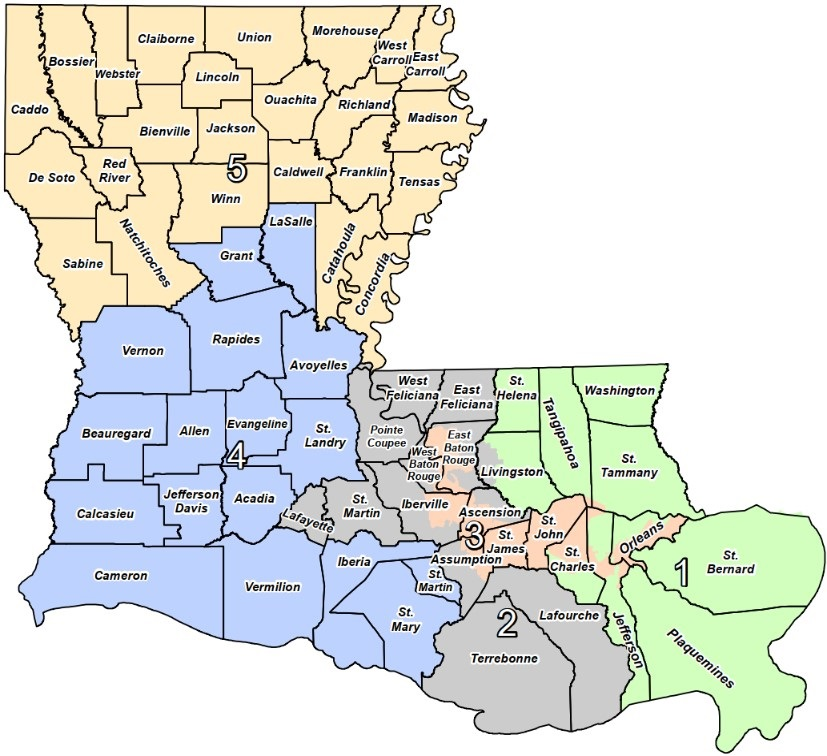
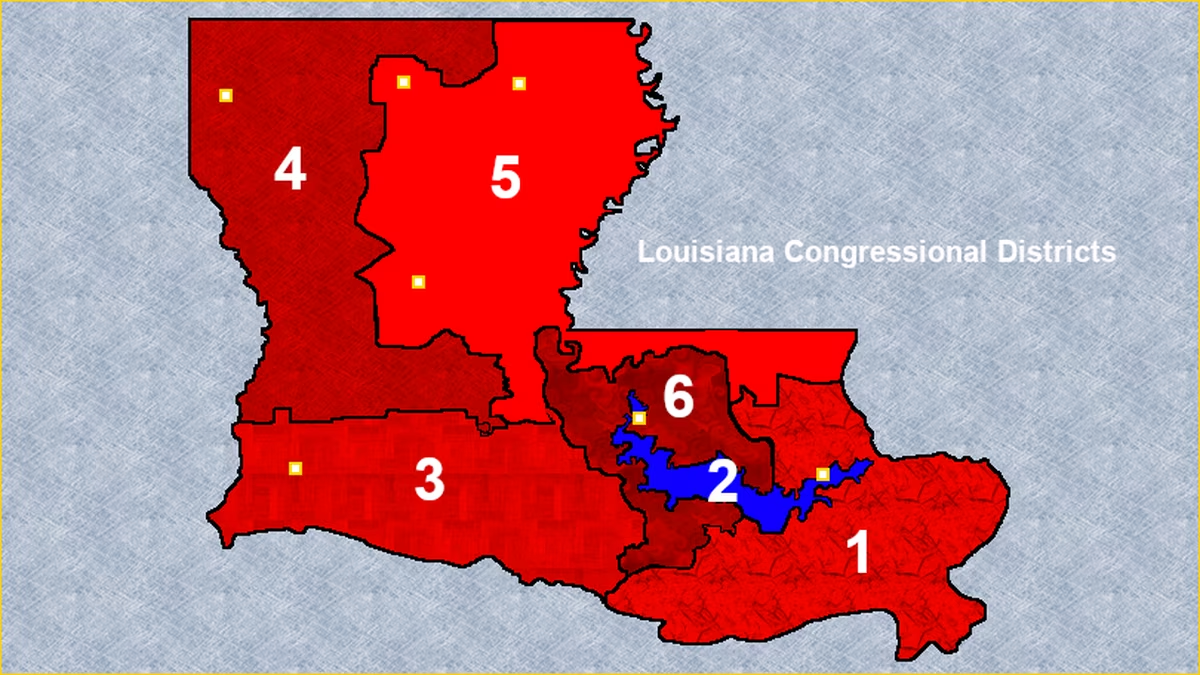
There’s also a question as to whether the Georgia PSC should be entirely drawn around entire counties. To compare, Louisiana’s PSC districts are mostly drawn around entire counties, except for Davante Lewis’ District 3, which, similarly to Troy Carter’s Congressional District 2, snakes through portions of Orleans Parish all the way into East Baton Rouge Parish. If, resulting from Allen, LA-CD2 may be redrawn in order to accommodate a second VRA opportunity district stretching from Baton Rouge up Louisiana’s border with Mississippi all the way to the northeast corner of the state (As proposed by FiveThirtyEight and in multiple proposals by both Democrats and Republicans last year), then what of Louisiana’s current LPSC map? Should Foster Campbell’s District 5 be redrawn into a second VRA-compliant LPSC district?

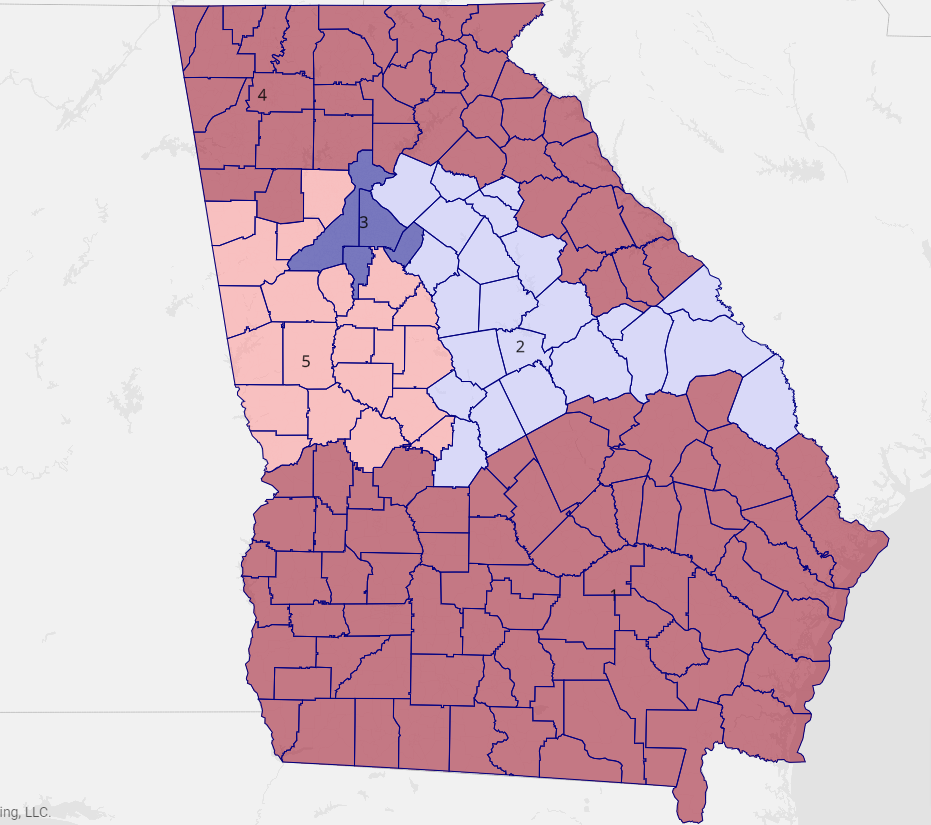
And if so, what of Georgia’s PSC map? Could Districts 3 and maybe 2 be redrawn to create VRA-compliant opportunity districts? District 3, centered around only Fulton, Clayton and DeKalb counties, could count as a racial packing of Black voters in a state where Black people account for 33% of the population. The legislative Democratic caucus submitted a map in which District 2 would obviously be an opportunity district with 33% Black VAP. And does District 3 really need to be contiguous with the core counties of Metro Atlanta? Lots of opportunities here.

And finally, should Alabama’s PSC, an at-large body of 3 members with no districts, be given this treatment as well? If the plaintiffs prevail in Rose and force changes in Georgia, there is an opportunity for Black Alabamians to sue under Section 2.

Recent Notable Voting Rights Act-related Actions in Federal Court

Two federal VRA cases of note:

  1. Georgia Public Service Commission election case, arguing that the at-large election method in the state constitution for the Public Service Commission violates the Voting Rights Act. Federal judge just ruled (1/24) against the state’s motion for a summary judgment, in favor of plaintiffs’ request for partial summary judgment. Georgia law holds that candidates for PSC run statewide but must live in their home districts.
  2. Alabama congressional map struck down (1/24) by federal court (surprisingly consisting of two Trump and 1 Reagan/Clinton appointees) due to packing Black-majority areas into one district, ruling that Alabama could create two Black-majority districts (ruling in PDF). Huge implications for in-process Louisiana congressional map as well (maybe even South Carolina?). Alabama AG announced an appeal to SCOTUS on the ruling.

VRA Implications for Alabama, etc

It is already well-documented that Republicans and their judicial sycophants like John Roberts despise the Voting Rights Act when it comes to its pre-Shelby federal intervention powers, i.e., U.S. DOJ preclearance of legislative and congressional maps. What is less well-known is how Republicans see the VRA’s insistence on majority-minority representation in redistricting as a tool for packing and cracking districts to minimize Democratic-preference representation and protect Republican incumbents.

I’m not prepared to say what implications could arise if SCOTUS reverses the Northern District of Alabama ruling.

VRA Implications for Georgia PSC

On the PSC issue, if the court rules for the plaintiffs (and the decision survives SCOTUS), Georgia would join Mississippi, Louisiana, Montana, Nebraska and New Mexico in holding elections for PSC from voters of individual districts rather than statewide. Alabama, Arizona, Illinois, North Dakota, Oklahoma and South Dakota all hold statewide elections, but seats do not represent districts. All other PSCs in other states are appointed, usually by the governor.

A victory for the plaintiff would likely recommend that Georgia changes either Article IV, Section I of the state constitution and/or O.C.G.A. 46-2-1(a) to clarify how PSC members are elected, either removing any mention of the five PSC districts or removing any mention of statewide election for PSC members. It would also mean the return of Democratic Party representation to the PSC for the first time since 2006, when David Burgess was defeated in his re-election bid. Notably, out of those PSCs which are currently elected by district, only Montana lacks any Democrats among their membership (since 2012).

What may become an issue is if the districts of the PSC, currently based around counties, are subsequently redrawn further for Republicans’ base benefit, even though the current map would likely go 4R-1D anyway (which would be an improvement).

Or is there a further opportunity to redraw this map for VRA compliance? But then would the basis exclusively around multiple counties rather than around equal population get in the way?

District 2 is easily the most competitive district on this map, having voted 51% Trump-46% Biden. The current District 2 is also a minority opportunity district which is 51% minority (30.25% Black, 11.94% Hispanic), anchored between Athens, Macon, Warner Robins and the eastern Metro Atlanta counties.

Richmond County being moved from District 4 to District 2 would make District 2 knife’s-edge, easily flippable for either party depending on the year.

District 5 is not as competitive, having voted 54% Trump-43% Biden, but moving Muscogee County from out of District 1 would make District 5 a little bit more competitive, shifting to 53% Trump-44% Biden.

State supreme courts

Somewhat related: I did research on state supreme courts and how they are elected. Only Illinois, Kentucky, Mississippi and Louisiana hold district elections for state supreme court justices; all others, including Georgia, are either elected statewide or appointed/nominated by the governor. Recent actions by Republicans regarding elections of state supreme courts: November ballot question in Montana to elect justices by district rather than statewide, and a new law in Ohio to hold partisan elections for justices.

The idea of having justices represent districts may conflict with the fact that state supreme courts usually take cases from, and deliver interpretations of the law which impact, all areas of their states. This is in contrast to legislatures and commission bodies like PSCs, which enact new policies.