Tag Archives: Southern US

Is it Mere “Blackness” or a Violent “Southernness”

So I was reading an article on Vox critiquing this book by Barry Latzer, “The Rise and Fall of Violent Crime in America”, which blames African-Americans’ import of “violent black culture” for the rise in urban crime following the end of the Great Migration in the 1960s.

Then the article mentions that Latzer ties “Black culture” to violent White Southern culture, also known as the “Southern culture of honor” studied by Richard Nesbitt and Dov Cohen. The article mentions that this hypothesis has been touted by Thomas Sowell.

Really? Thomas Sowell? The Black supply-side conservative academic who has compared President Obama to Hitler more than once?

Oy.

So apparently, Sowell wrote in the title essay of his 2005 book “Black Rednecks and White Liberals” that “black ghetto culture” is a relic of the highly dysfunctional white southern redneck culture which emanated from the “Cracker culture” of Northern England (among the livestock herders of the border between England and Scotland) and the Scots-Irish of Northern Ireland. Sowell attributes the following to this entire cultural lineage from England to Southern Black America:

“an aversion to work, proneness to violence, neglect of education, sexual promiscuity, improvidence, drunkenness, lack of entrepreneurship,… and a style of religious oratory marked by strident rhetoric, unbridled emotions, and flamboyant imagery.”

Sowell contrasts this cultural lineage against the cultural lineage which emanated from farmers and more urbane types in lower England to what became New England, which emphasized a “Protestant work ethic”, literacy, civic participation, entrepreneurship in a wider number of economic activity, and quieter religious observance. He extends this latter culture – positively – to African-American antebellum New Englanders and Afro-Caribbean migrants.

Sowell, Nesbitt and Cohen all attribute to both White Southern and Black Southern cultures a greater degree of possession-driven violence and aggressive mentalities, both of which negatively impacted Black Southern culture through violent racist, anti-Black regimes and led Southern African-Americans to import this violent culture to urban areas in the North in the 20th century.

But I didn’t know that Sowell is of this opinion that “Black American culture” or “ghetto culture” as we know it now is a relic of White Southern culture. I know that he tends to spar against liberal strawpeople to make his point and preach to the choir, but I would say that his indictment of Black American culture can just as well be an indictment of White Southern culture and its political manifestations against generations of African-Americans in the South.
When Republicans Stopped Wanting Our Vote

From a comment I posted to John Jackson’s thread last October 15, copypasted and edited here from my other profile because it bears repeating in public:

“If the GOP were the more effective alternative for African-American voters to the racist Southern Democrats in the post-WWII South, why did people like Fannie Lou Hamer attempt to integrate the Mississippi Democrats (who were atop an effective one-party state since Reconstruction) and not the recently-reestablished Mississippi GOP (re-born 1956)? Why did her MFDP become the focus of attention in the 1964 Democratic Convention when they sought a seat at the Mississippi delegation table, when the free-market GOP championing Barry Goldwater was available that year?

In relation to what [some guy] said earlier, where were all this “free stuff” that Democrats were handing out for the 90+ years that Democrats had one-party rule throughout the South, and were Southern White people being given this free stuff that Black people were clearly prohibited from accessing? Southern White people, with high rates of regional illiteracy and racial privilege, “pulled the lever” for Democratic governors for over 4 generations, and never pulled that lever for a GOP governor, so what changed?

That’s what I’m curious about. What changed in the South that Democrats went from being “my (racist) grandpapy’s party” to being the party of “free stuff”, from a racist kleptocratic party in the South to the “socialist party” in opposition for the next century? Was it FDR’s New Deal? Truman’s integration of the military? Johnson’s ban on bigoted poll taxes, or his promotion of the Great Society? I don’t think that it is the viability or non-viability of the GOP’s free-market policy or its anathema to “free stuff” that is the issue. Otherwise, many would have been more attracted to the GOP as a party on a Booker T. Washington/Marcus Garvey/Malcolm X “do for self” black-nationalist pro-business basis.

But that didn’t happen, and so you didn’t have traditional Black Republicans get into federal office after Senator Edward Brooke of Massachusetts, who was the last gasp of the type of Black GOPer who was promoted aggressively by the Radical Republicans to Southern statewide office in Reconstruction. Now it’s all “bootstrap”, “anti-big-gov” and militarist types like J.C. Watts, Mia Love, Allen West and Tim Scott since the civil-rights movement era. What happened, and why can’t the GOP relate to the Black Nationalist “do for self” trend in the same way that the Democrats have been able to relate (somewhat) to the Black social-democratic tendency?”

With the partisan-tinged anti-union sentiment in Wisconsin, I wonder if a lot of the opposition to unions has to do, ultimately, with anti-black racism.

Sure, the primary victims of this tend to be white union members in both public and private sectors, but the rage against unions from people who previously benefited from unions has a visceral, irrational tone to it. The “union thug” caricature gained greater currency during Obama’s presidency and the Tea Party reaction against both him and his initial Democratic congressional majority.

The right-to-work and other anti-union laws being drafted over the last 8 years, however, have an extremely-racist history, and a lot of it took place in the South.

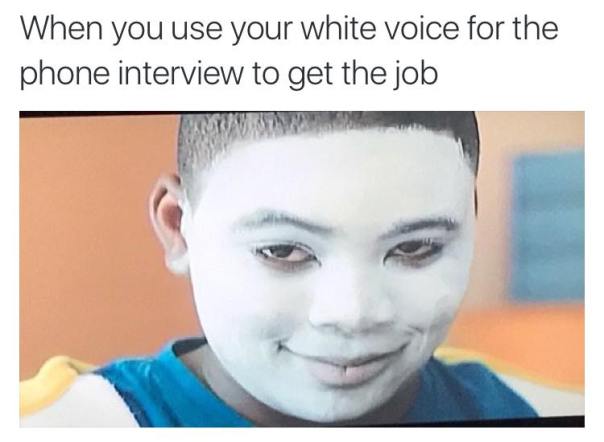
“white voice” vs. “talking black”

14494725_1141994885893375_277181611292078203_n.jpg

Well let’s analyze what is meant by “white voice” vs. “talking black”.

A lot of it has to do with formative regions and the prevailing cultures of a certain period. African-Americans got our accent of English from the White British settlers in the Lowcountry region. We’ve kept that accent and spread it to multiple urban areas outside the South starting with our migrations to the Midwest and the Great Migration. This is why a lot of our linguistic roots in American English are shared with the descendants of British settlers in the Carolinas and Georgia. This spread out further following the invention of the cotton gin, resulting in the forced migration of slaves to as far as Texas by the same descendants of the aforementioned British settlers.

But this spread of population, this region, has always been poor and both socio-economically and racially stratified, and we carried both the accent and the perception of Southern poverty with us to multiple cities. Hence, this Southern American English is more associated with us in more cities than it is with the White Southerners who mostly carry the same and similar linguistic tendencies to this day.

If you’re from the South, you can tell the difference between African-American and White Southern English; in fact, Southern English is the most widespread accent of English in the United States. But if you’re from outside the South, that difference is minimal compared to the difference between African-American and White Western/Minnesotan/New England English.

The Midwestern English that is most associated with Nebraska is the most state- and economically-privileged form of English in the United States. This Nebraska accent, known as “General American”, is what we think of when we speak of “White Voice”. It is also the accent in which television journalists are regularly trained.

I should know, since I can’t speak African-American English to save my life. This accent helps for phone calls.

#NoAccent #MilitaryBrat #NebraskaAccent

The Racism of Chicago in the White Conservative’s Mind

Something I’ve noticed: certain demographics from outside of Chicago love to describe Chicago’s African-American population and neighborhoods as a Third World country, like it is Hell on Earth.

Apparently, it’s not so “dark”, dysfunctional and evil of a place that most of the European-Americans in Chicago proper flee in droves from the city.

In fact, despite decades of petty gang-gun violence largely concentrated in the African-American population, it’s still the third largest city in the United States.

Maybe most of the African-American population is tucked away in a certain physical memory hole called the South Side, where murders happen and outsiders cynically tsk-tsk the surviving residents (or burnish their 2nd Amendment grievances with the bloody cloth of Black gun violence, or rage against the “niggers” and “race pimps” sullying the good name of yet another nice city) before moving on with their day?

Maybe deindustrialization happened, making life harder and encouraging many who had their highest skills in manual labor to turn to drugs, which entailed a turn to the violence which follows?

Maybe the culture of honor in the White South was adopted by us early in our belated freedom, and was brought by us to places like Chicago during the Great Migration when we should have left it in Jim Crow Land?

Nah, none of that could possibly be true! Chicago is just our sideshow, our American Mordor! Let’s always talk about Chicago’s Black people as if they are all crazy, evil and feral, and then pin that on President Obama like we’ve done since 2007.

Alabama and Political Apartheid

Another thing about Alabama: they suffer from a slightly-worse case of Southern Political Apartheid than Georgia does. Alabama, like the rest of the South (save, maybe, for Florida) has one of the most racially-stratified political systems in the country. When the Dems had ran the South like Alabama during Jim Crow, they built the South to become a one-party state. When the pro-apartheid base was lost, the GOP claimed that base with a vengeance.

The goal in the South is to take everything. Electorally, we’re a very greedy, jealous, spiteful region.