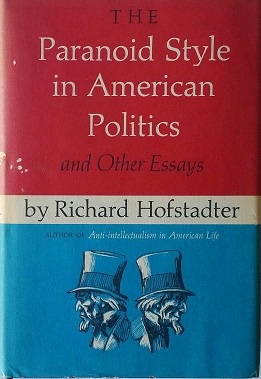
I very much favor how the Labour Parties in the UK and Australia nominate candidates for public office compared to the way that American parties nominate theirs, even though they have a parliamentary system compared to our presidential.
The primary and the caucus, which has been in increasing use by both major parties in the United States since the early 20th century but especially after the 1960s, are both paranoid, time-consuming, irresponsible, expensive garbage in comparison.
The primaries and caucuses have placed us in such a position that we are bowing down to:
- the millionaire and billionaire donors and barons who fund primary candidates’ campaigns and think tanks;
- the Republican, anti-democratic state governments who control the primaries;
- pollsters and TV talking heads who have a vested interest in the dramatic rot and instability of the republic for their ratings and ego.
Things should not be this over-engineered. We should not feel this helpless and listless. Democracy should not involve sacrificing any political party’s freedom of association for the sake of financial expediency and outsourcing of responsibility to people with conflicting and divergent interests.
We should not use primaries and caucuses, both of which necessitate the demand for more money and advertising unleashed by the Citizens United decision.
But this century-long snowballing disaster has come to dominate our political thinking, at the expense of democracy in the republic.
Getting Biden to withdraw will not begin to fix the fundamental rot caused by the primary as an extension of the general election.
Reforming our elections toward various flavors of nonpartisan blanket primary will not solve this rot, either. In fact, it may further it, I’m sorry to say.
We are not a multiparty system because the primary and caucus, combined, is treated as an extension of the first-past-the-post general election, as a public utility to be regulated by state governments, even if they are ran by rival parties.
And now, fascism and feudalism govern so many states – and maybe soon the White House again – because our two-party system does not allow for building a cordon sanitaire, a clean rope, against anti-democratic forces.
Europe’s parliamentary systems understand this. Latin America’s presidential but proportional systems (except for Argentina, I guess) are made starkly aware of this, even as those presidential systems lead to rival parties in control of either branch of government and coming to frequent blows against each other. Their citizens often know which parties to block from power.
They also, mostly, understand to let parties be parties, and to not outsource the responsibility of nominating candidates or authoring legislation for legislative or presidential office to the state or to think tanks.
But to Americans, such thinking is foreign. Parties have long been weakened and demonized as an institution at all levels of government by the paranoid majority for generations.
We have become ideologically polarized, but have not allowed ourselves to split parties, represent those who support us, and not appeal to anti-democratic constituencies.
Why didn’t we? Why haven’t we?
And are we too late?
How much longer do we this rot fester before we start treating parties as parties, respecting their role in society, and let them flourish on their own power?
Hopefully this election will lead to that reckoning, one which we thoroughly deserve.
Or, alternatively, we will experience further, misguided destruction of the republic.
