Tag Archives: voting rights

8th Circuit Decides to Gut Section 2 of the Voting Rights Act

The 8th Circuit just ruled that there is no private right of action under Section 2 of the Voting Rights Act. 2-1, Bush and Trump appointees in the majority, Bush appointee dissenting. Affects litigation in the following states: Arkansas, Iowa, Minnesota, Missouri, Nebraska, North Dakota and South Dakota. Almost the entire 8th Circuit is Republican appointed. Expect SCOTUS action.

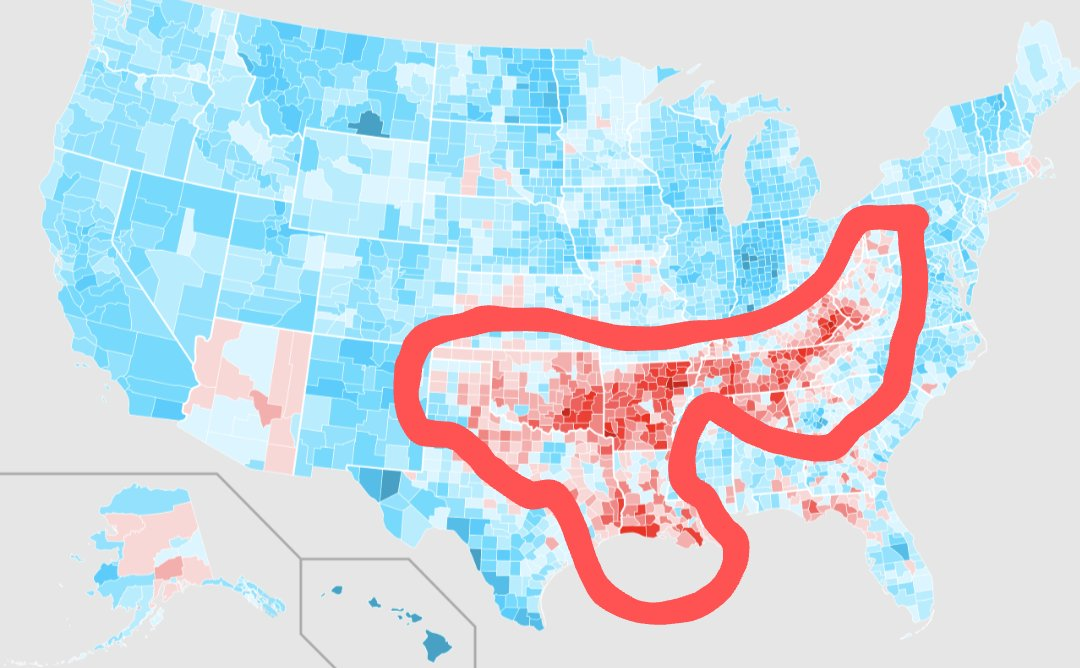
This was in response to the Arkansas NAACP suing the state over racially-biased legislative maps. Between this and both Georgia and Louisiana outright claiming on appeal that Section 2 is unconstitutional, the VRA is under direct Southern-Appalachian right-wing assault.

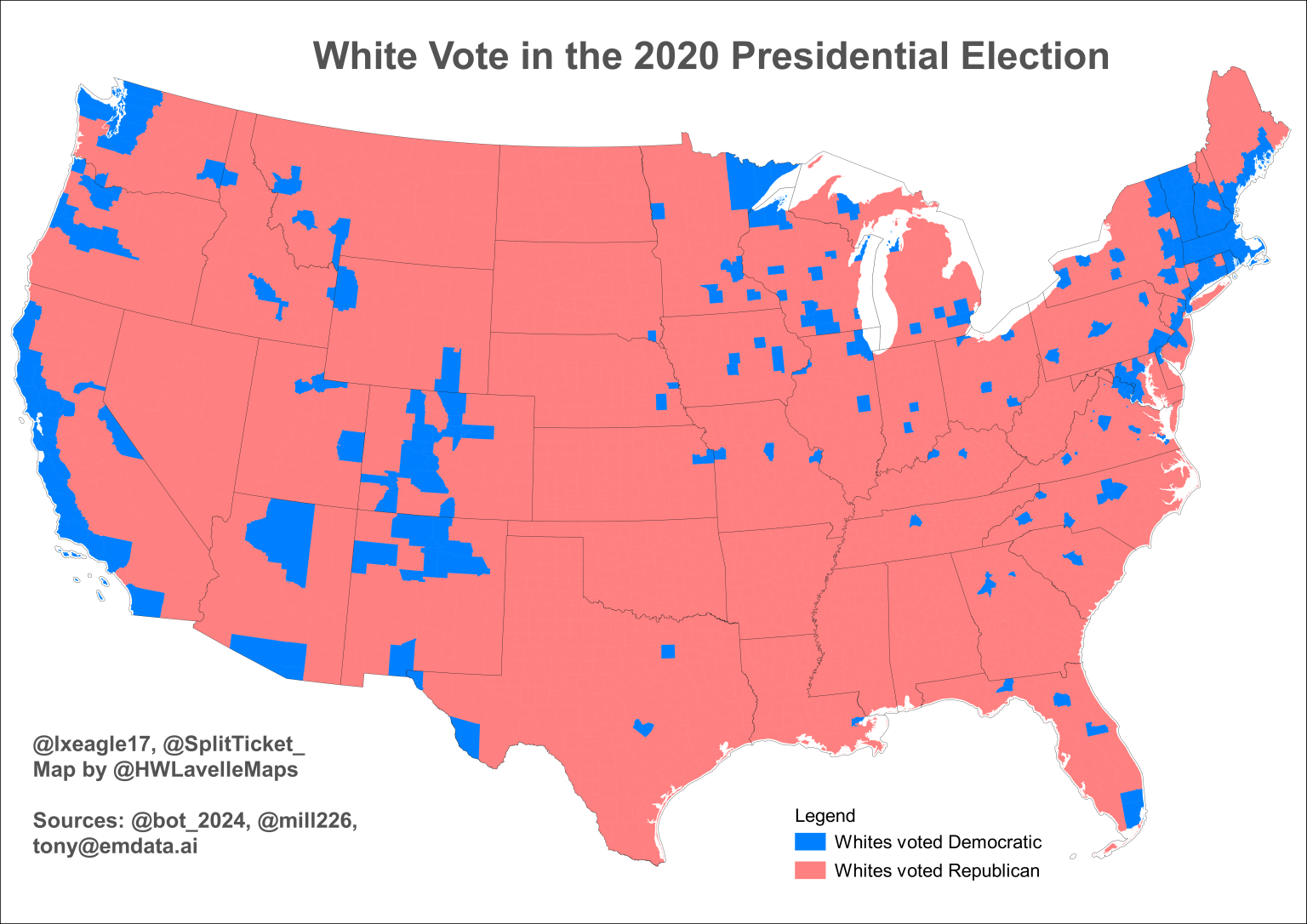
These full-frontal attacks on the Voting Rights Act, in the majority, come from white Southern Republican state legislatures and federal judges. The VRA did the bare minimum of forcing an imperfect compromise between white Southern rural voters and their Black neighbors, and we’re now paying for its loopholes which are now being exploited.

Pics related.

Estimated White Vote in the 2020 Presidential Election by County. Source: SplitTicket
Party swing in the 2004-2008 presidential elections by county, with the most Republican counties being singled out. Source: @vanillaopinions/Twitter
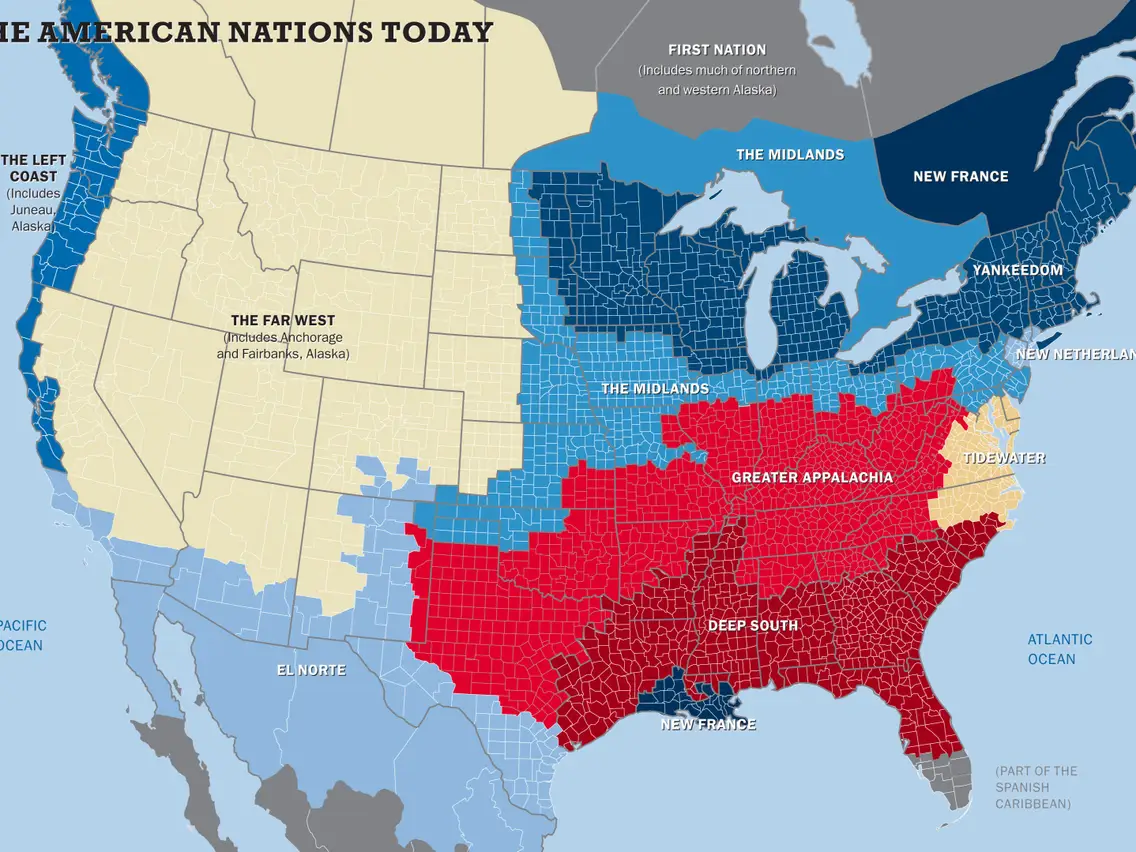
American Nations, as defined by Colin Woodard.

Proposals: Delegates to Congress from Native American Tribes and from Americans Abroad

I have two ideas for better representation in Congress:

A Delegate for Native American Tribes

For several years, the Cherokee Nation and the United Keetowah Band of Cherokee Indians have both pursued the goal of sending a delegate to the U.S. House. The Treaty of Hopewell (1785) and Treaty of New Echota (1835), signed between the Cherokee and the United States, promised a delegate for the Cherokee to Congress, but it was never acted upon until Cherokee Nation President Chuck Hoskins appointed activist Kimberly Teehee as a delegate in 2019. Despite this appointment, Teehee has not yet been seated in any session of Congress.

Similarly, the Choctaw Nation, who received a promise for a delegate in the Treaty of Dancing Rabbit Creek (1830), has never pursued sending a delegate, although the nation did send an ambassador to represent them before the general U.S. government throughout the 19th century. The Lenape Delaware Nation also signed a Treaty of Fort Pitt (1778) with the U.S. government, which encouraged them to form a state that would have representation in Congress, but never pursued either idea.

The issue here is that if the Cherokee (which are split between three tribes) and Choctaw deserve representation, that still leaves over 570 tribes which did not receive such a promise and do not have representation in Congress.

Their political concerns may be better represented by an at-large delegate who is popularly elected by enrolled voters from all the federally-recognized tribes in U.S. territory.

This idea, which may either provide for at-large or perhaps at least two districts on either side of the United States, more equitably support the representation of Native Americans in the federal level of government beyond the bounds of the Bureau of Indian Affairs.

The idea also passes the smell test of the 14th Amendment, as this would be limited only to enrollees of sovereign nations within the United States, including the 1 million who reside on reservations.

A Delegate for Americans Abroad

More countries in the 21st century, including France, Italy, Tunisia and more, have created electoral districts or reserved seats in their national parliaments to allow citizens who live abroad to vote for their own member/representative. This is often a recognition of the diasporas of citizens who keep their nationality and citizenship even as they live abroad for a long duration of time.

As of 2016, there were at least 4.8 million U.S. citizens who live abroad, including Armed Forces personnel, diplomats, businesspeople, expats, their families, and even accidental Americans who were born on U.S. soil to temporary workers or tourists but who have been raised for most of their lives in another country.

Suffrage for U.S. citizens has greatly increased since 1986, when the Uniformed and Overseas Citizens Absentee Voting Act (UOCAVA) was passed. But what overseas U.S. voters are allowed to vote on varies between their state of formal residence, with some only allowing them to vote in federal elections, or some states barring their overseas residents from voting in any election if they have never resided in their formal state of residence.

Furthermore, expecting all overseas Americans to know about the candidates who are running for office on home soil is a tall order.

At the very least, those Americans who reside abroad should have more competent federal representation in Congress from U.S.-citizen candidates who may also reside closer to or on the same continent as themselves and share similar concerns as other U.S. expats.

Similar to France, this arrangement could create more than one district, but that may get into the weeds of reapportionment and how to draw lines to ensure equal population in order to comply with law, at least unless this delegation is exempted from the equal population requirement.

Finally, creating an overseas constituency for one’s parliament is an example of projecting soft power to a country’s diaspora which goes beyond just mere diplomacy, business networking or cultural promotion:

  • It creates a “legislator-diplomat” who liaises and and advocates for policy between the home country and its citizens in other countries, albeit more in the legislative branch more than in the executive.
  • If a foreign ministry executes the policies developed in the legislative branch which impact overseas citizens, it stands to reason that overseas citizens ought to have a direct say in the legislative branch.
  • Even when the policies from the legislative branch don’t directly affect foreign policy, overseas citizens also have an interest in domestic policies of a country to which they may return at some point for as long as they keep their citizenship.
Wow. Allen v. Milligan Surprises Everybody.

Full Opinion from SCOTUS (PDF).

I couldn’t imagine this decision happening under this court, but I guess “bullying works” (sometimes). Plus, it’s a sign that SCOTUS’ right-wing majority may be more monstrous in Moore v Harper (independent state legislature theory), SFAI v. Harvard/SFAI v. UNC (affirmative action in higher ed), and Haaland v. Brackeen (Indian Child Welfare Act constitutionality), all to be announced this month.

Reactions:

Notable: Given it’s Pride Month, The National Black Justice Coalition may be the only LGBT rights organization to issue a statement in response to Allen v. Milligan. I would have expected The National LGBT Task Force, who organized the Queer the Census project for both 2010 and 2020, to have issued a statement as well. Even with the anti-LGBT backlash going on right now, this decision does have implications for Black LGBT people in the South, increasing somewhat the chances that they can run for and win higher office. Davante Lewis’ 2022 win in the runoff for Louisiana’s PSC was a big, understated victory for Black LGBT people in this region.

Impact(s)

What is happening or is most likely to happen nationwide, based on Election Twitter’s ideas:

  • Alabama legislature will be forced to redraw their congressional map to add a second VRA district.
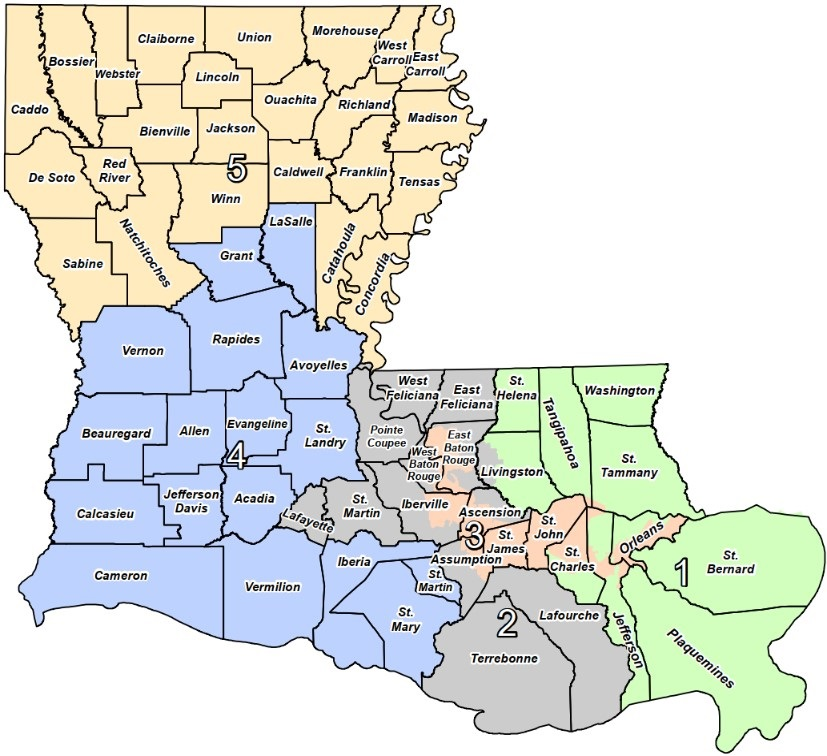
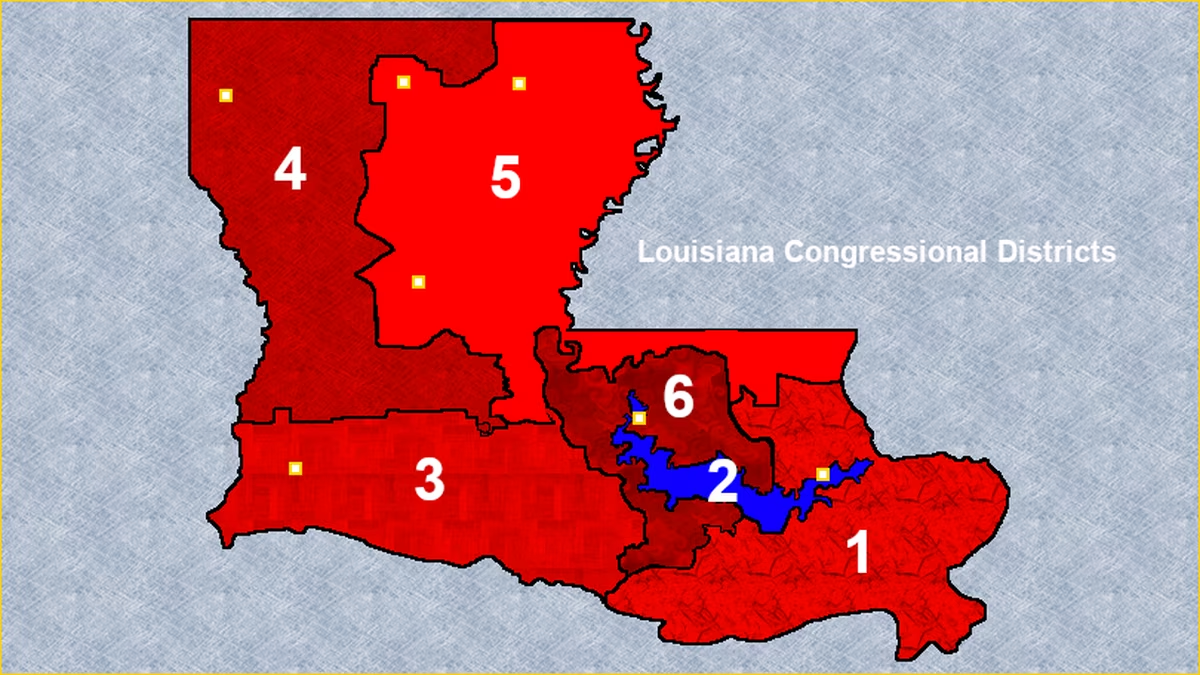
  • Louisiana is asking SCOTUS for oral argument in their appeal against the Ardoin case regarding Louisiana’s own congressional map. Highly likely that SCOTUS will dismiss the appeal and force Louisiana legislature to redraw for a second VRA district.
  • North Carolina legislature likely to not go as hard as they wanted to go on obliterating most remaining Dems in congressional and legislative maps.
  • Florida’s state and federal cases regarding the former FL13 will be slightly supported by this decision, but not too much, since those cases rest on other laws, such as the federal 14th Amendment as well as the state constitution’s analogues to Section 2 and (the former) Section 5 of the VRA (citing Andrew Pantazi of the Jacksonville Tributary).
  • Dems were worried about their chances for winning back the House next year after the North Carolina Supreme Court gave Republicans multiple wins. After this, there’s a potential net gain of at least 2.5 seats. Or, if we want to go crazy with wishcasting, as many as +10-12. Maybe enough to wash the gains to be made by Republicans in North Carolina.
  • Very unlikely to see any redistricting in Arkansas, Mississippi, Oklahoma, Ohio or Wisconsin resulting from Allen.
  • There is ongoing litigation in North Dakota by Native American nations on Section 2 grounds regarding legislative maps.

Credit to U.S. Rep. Terri Sewell (D), who actively campaigned for a plurality-minority second district in Alabama and against packing Black voters into a single district, as highlighted in this 2021 Atlantic article.

Now on to Georgia:

  • It’s debatable how the Republican legislature could redraw their congressional map to do the bare minimum of complying with the Allen decision. The best-case scenario is perhaps restoring Lucy McBath and Carolyn Bordeaux’s old districts, restoring the 2020 status quo of 8 GOP-6 Dem. The shortest-term worst case is simply re-packing Black Metro Atlanta voters into four districts, but that would leave lots of other left-trending territory surrounding these districts vulnerable in the longer term to Dem candidates. 
  • There is ongoing litigation (Georgia State Conference of the NAACP v. Georgia) challenging the 2022 congressional and legislative maps, filed by the NAACP state conference, GALEO, and Georgia Coalition for the Peoples Agenda. Also ongoing against these maps: Grant v. Raffensperger, Alpha Phi Alpha v. Raffensperger, Prendergrass v. RaffenspergerThere’s ongoing VRA Section 2 litigation in 30 cases across 10 states, and there are more to come.

Public Service Commissions

Let’s talk about the PSC, both in Georgia and other states:

  • PSC At-large voting: There has been radio silence from the 11th Circuit on the state’s appeal in Rose v. Raffensperger since oral arguments last December. Hopefully the Allen decision will make an impact. At least two of the plaintiffs to whom I’ve talked, Rev. James Woodall and Wanda Mosley, are confident that this decision will help them prevail against the state. Also, I wonder if Judge Nancy Abudu, a Biden appointee who was just confirmed to the 11th Circuit, will join in or recuse herself from whatever ruling that comes out on the appeal.
  • PSC Redistricting: There’s a petition that has been filed by plaintiffs in Rose v Raffensperger with Judge Grimberg in the Northern District of Georgia to redraw the PSC map which had been approved in 2022 during qualifying week (which placed Democratic PSC District 2 nominee Patty Durand at odds with Raffensperger).
  • Dems filed a bill (HB 841) to change the PSC election method this past session, but it died before getting heard in committee.
  • See my prior posts about the GA PSC and VRA: 1, 2.

There’s also a question as to whether the Georgia PSC should be entirely drawn around entire counties. To compare, Louisiana’s PSC districts are mostly drawn around entire counties, except for Davante Lewis’ District 3, which, similarly to Troy Carter’s Congressional District 2, snakes through portions of Orleans Parish all the way into East Baton Rouge Parish. If, resulting from Allen, LA-CD2 may be redrawn in order to accommodate a second VRA opportunity district stretching from Baton Rouge up Louisiana’s border with Mississippi all the way to the northeast corner of the state (As proposed by FiveThirtyEight and in multiple proposals by both Democrats and Republicans last year), then what of Louisiana’s current LPSC map? Should Foster Campbell’s District 5 be redrawn into a second VRA-compliant LPSC district?

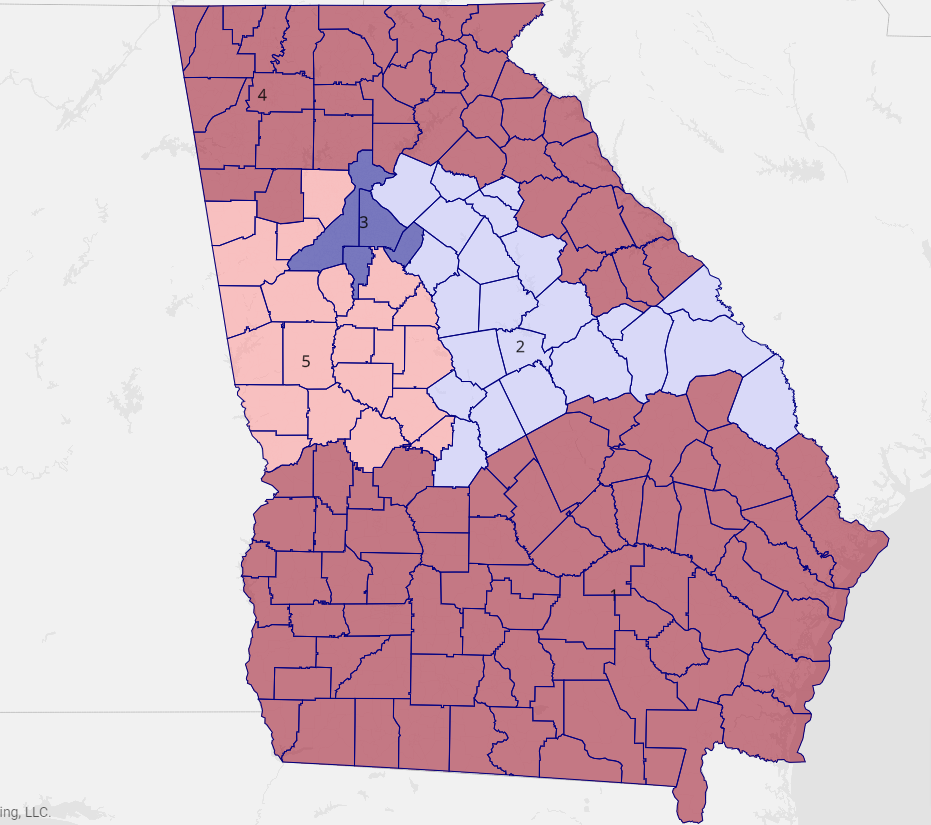
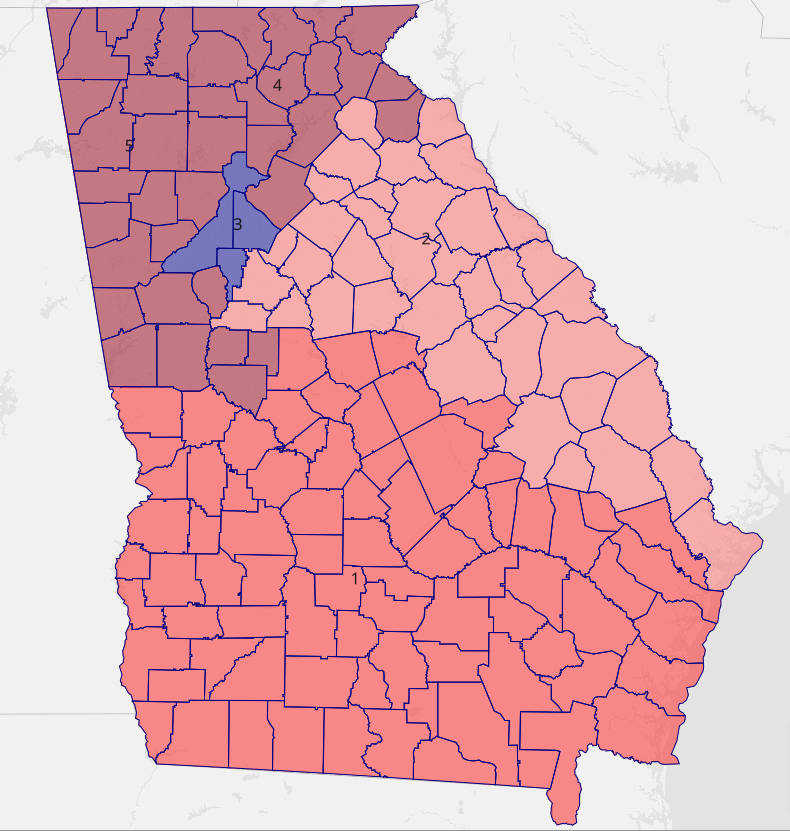
And if so, what of Georgia’s PSC map? Could Districts 3 and maybe 2 be redrawn to create VRA-compliant opportunity districts? District 3, centered around only Fulton, Clayton and DeKalb counties, could count as a racial packing of Black voters in a state where Black people account for 33% of the population. The legislative Democratic caucus submitted a map in which District 2 would obviously be an opportunity district with 33% Black VAP. And does District 3 really need to be contiguous with the core counties of Metro Atlanta? Lots of opportunities here.

And finally, should Alabama’s PSC, an at-large body of 3 members with no districts, be given this treatment as well? If the plaintiffs prevail in Rose and force changes in Georgia, there is an opportunity for Black Alabamians to sue under Section 2.

Recent Notable Voting Rights Act-related Actions in Federal Court

Two federal VRA cases of note:

  1. Georgia Public Service Commission election case, arguing that the at-large election method in the state constitution for the Public Service Commission violates the Voting Rights Act. Federal judge just ruled (1/24) against the state’s motion for a summary judgment, in favor of plaintiffs’ request for partial summary judgment. Georgia law holds that candidates for PSC run statewide but must live in their home districts.
  2. Alabama congressional map struck down (1/24) by federal court (surprisingly consisting of two Trump and 1 Reagan/Clinton appointees) due to packing Black-majority areas into one district, ruling that Alabama could create two Black-majority districts (ruling in PDF). Huge implications for in-process Louisiana congressional map as well (maybe even South Carolina?). Alabama AG announced an appeal to SCOTUS on the ruling.

VRA Implications for Alabama, etc

It is already well-documented that Republicans and their judicial sycophants like John Roberts despise the Voting Rights Act when it comes to its pre-Shelby federal intervention powers, i.e., U.S. DOJ preclearance of legislative and congressional maps. What is less well-known is how Republicans see the VRA’s insistence on majority-minority representation in redistricting as a tool for packing and cracking districts to minimize Democratic-preference representation and protect Republican incumbents.

I’m not prepared to say what implications could arise if SCOTUS reverses the Northern District of Alabama ruling.

VRA Implications for Georgia PSC

On the PSC issue, if the court rules for the plaintiffs (and the decision survives SCOTUS), Georgia would join Mississippi, Louisiana, Montana, Nebraska and New Mexico in holding elections for PSC from voters of individual districts rather than statewide. Alabama, Arizona, Illinois, North Dakota, Oklahoma and South Dakota all hold statewide elections, but seats do not represent districts. All other PSCs in other states are appointed, usually by the governor.

A victory for the plaintiff would likely recommend that Georgia changes either Article IV, Section I of the state constitution and/or O.C.G.A. 46-2-1(a) to clarify how PSC members are elected, either removing any mention of the five PSC districts or removing any mention of statewide election for PSC members. It would also mean the return of Democratic Party representation to the PSC for the first time since 2006, when David Burgess was defeated in his re-election bid. Notably, out of those PSCs which are currently elected by district, only Montana lacks any Democrats among their membership (since 2012).

What may become an issue is if the districts of the PSC, currently based around counties, are subsequently redrawn further for Republicans’ base benefit, even though the current map would likely go 4R-1D anyway (which would be an improvement).

Or is there a further opportunity to redraw this map for VRA compliance? But then would the basis exclusively around multiple counties rather than around equal population get in the way?

District 2 is easily the most competitive district on this map, having voted 51% Trump-46% Biden. The current District 2 is also a minority opportunity district which is 51% minority (30.25% Black, 11.94% Hispanic), anchored between Athens, Macon, Warner Robins and the eastern Metro Atlanta counties.

Richmond County being moved from District 4 to District 2 would make District 2 knife’s-edge, easily flippable for either party depending on the year.

District 5 is not as competitive, having voted 54% Trump-43% Biden, but moving Muscogee County from out of District 1 would make District 5 a little bit more competitive, shifting to 53% Trump-44% Biden.

State supreme courts

Somewhat related: I did research on state supreme courts and how they are elected. Only Illinois, Kentucky, Mississippi and Louisiana hold district elections for state supreme court justices; all others, including Georgia, are either elected statewide or appointed/nominated by the governor. Recent actions by Republicans regarding elections of state supreme courts: November ballot question in Montana to elect justices by district rather than statewide, and a new law in Ohio to hold partisan elections for justices.

The idea of having justices represent districts may conflict with the fact that state supreme courts usually take cases from, and deliver interpretations of the law which impact, all areas of their states. This is in contrast to legislatures and commission bodies like PSCs, which enact new policies.

On the Brnovich and AFP decisions, and why federalism is terrible for voting rights

Part 1

After these voting rights and campaign finance decisions by SCOTUS today, state governments which purport to be the leaders on voting rights should be having a long, serious think about how to work together and strengthen each other against a SCOTUS which wants to devolve everything about elections to the state level, feed their most craven aristocrats and gut the social safety net.

This fight should not entirely rest on non-profit orgs working together, nor on attorneys-general mounting multi-state fights in the federal judiciary, nor on mere voting rights expansion at the state level. How are these state legislatures working together? Enacting interstate compacts between each other? Blurring the bureaucratic lines between each other?

How are these pro-voting rights states counteracting the Federalist Society’s obsession with states’ rights when it comes to elections? How are these pro-voting rights states maximizing their own impact beyond state lines? Or are any and all of these voting rights expansions simply for those residents who are “lucky” to still live in these pro-voting rights states?

The VRA is dying by 1,000 papercuts. Be a bit more creative.

Part 2

How many other countries have these legal fights over voting rights? I NEVER hear about fights over redistricting in other countries.
In other countries, I never hear about “color-blind” opportunistic attacks by random regional poobahs on the ability and confidence of urban residents, car-less people, people on reservations, people who have been released from prison and finished their sentence, disabled residents, illiterate residents, introverted people, working-class people, elderly people, college students, and homeless people to register to vote, cast a vote, have that vote counted, and have proportionate legislative representation based on that vote.

What do I hear about in other countries’ elections? Citizenship being stripped. Ballot stuffing. Candidates being removed from the ballot over specious reasons. Mis- and dis-info trafficking. Violent voter intimidation at the polls. The John Howard government in Australia ending the week-long grace period for federal voter registration in 2006, which was then reversed by their Supreme Court.

But here? It’s bureaucratic and systemic. And so many people strongly believe that all of these opportunistic attacks are worth it for the sake of maintaining a majority which protects their “way of life” against some random bunch of out-groups which may undermine it.

And yet, we continue to fight these state governments because we live in these states, we have higher, broader expectations about our basic rights than the limitations of the privileged in-group, we can’t up and relocate ourselves as the monied and able-bodied can, and people don’t really factor voting rights into their reasons for relocating to any state.
But so much of how our elections are ran, and how our voting rights are put through the meatgrinder, results from the fact that we use single-winner districts and first-past-the-post elections for our legislative bodies and assume that this winner-take-all system can be improved in any way.

If our legislative elections, from local to federal, are opportunistic winner-take-all exercises, then why the hell do we expect our legislative districts or operations of legislative sessions or appointments to judicial and bureaucratic bodies to be any different? How could we possibly think that nonpartisan redistricting would make for fairer boundaries in a winner-take-all system? How could we possibly think that the Federalist Society, Heritage Foundation, Manhattan Institute, and other chronically-aristocratic actors would have any interest in inserting nonpartisan mechanisms when the winner can literally win EVERYTHING and nonpartisanship does not exist in a two-way fight? How could we think that Democrats who hold office by virtue of winner-take-all in captive jurisdictions like VRA districts would want to give that up by virtue of their own magnanimity?

We sleptwalked right into this over the last 50-60 years, and our “nonpartisan”, “bipartisan” solutions for fixing this two-player, winner-take-all system aren’t worth shit.

These decisions from SCOTUS today should be your wake-up call. Your winner-take-all elections are the utter rot that is sinking your community. Stop with the “nonpartisan” narrative. Use a better election system than winner-take-all, or suffer the consequences as you already were.